
PRVS Blog
Diesel Motorhome Maintenance Schedule Guide
Skipped chassis service can turn a North Texas trip into a costly roadside delay. A clear interval-based plan protects your Class A diesel motorhome and keeps Freightliner chassis work from slipping through the cracks.
Need a diesel chassis inspection before your next trip? Book service with Patriots RV Services in Denton, TX so your fluids, brakes, tires, suspension, and Freightliner chassis concerns are reviewed before they become roadside problems.
A diesel motorhome maintenance schedule organizes engine, generator, air-system, chassis, and safety service by mileage, operating hours, and time. Use the coach, engine, generator, and Freightliner manuals as the final authority because intervals and approved fluids vary by model. As a practical baseline, plan yearly oil, air-filter, and fuel-filter service, then track longer-term coolant, belt, hose, bearing, transmission, and air-dryer work. Generator oil and filter service is commonly due every 100 operating hours and at least yearly. A published chassis schedule recommends front-axle alignment every 15,000 miles. Consistent professional inspections help Class A owners catch wear early, protect braking and ride systems, and reduce avoidable downtime before longer trips.
The key question is not whether your coach needs service, but which items are due before the next North Texas or interstate trip. Diesel motorhome maintenance schedule by interval turns that question into a practical checklist. The path begins with:
Diesel motorhome maintenance schedule by interval
A useful diesel motorhome maintenance schedule tracks time, mileage, and generator hours. Service the item when its first limit arrives, even if the coach has spent months parked. The schedule below is a planning guide, not a replacement for the manuals supplied with your motorhome.
Annual service priorities
At least once each year, inspect the engine, generator, air system, and chassis as one connected system. Change engine oil and filters at the interval set by the engine maker. For context, this diesel engine service guide discusses oil and filter changes every 5,000 to 7,000 miles or six months.
Check fuel filters, the engine air filter indicator, coolant condition, belts, hoses, and the air dryer. Lubricate all chassis points listed by the chassis maker. Also inspect for leaks, loose parts, worn hoses, and belt cracks before they cause downtime.
| Service interval | Core checks and service | What controls the final interval |
|---|---|---|
| Before each trip. | Check fluid levels, visible leaks, belts, hoses, tires, and air-system operation. | Coach and chassis manuals. |
| Annual or mileage limit. | Change engine oil and filters; inspect coolant, air dryer, belts, hoses, and chassis lubrication points. | Engine and chassis manuals. |
| Generator hours or annual limit. | Change generator oil and filter; inspect its air filter, fuel system, cooling system, and belt. | Generator manual and hour meter. |
| Multi-year interval. | Replace air-dryer cartridge, coolant, belts, and hoses when due; inspect wheel hubs and driveline fluids. | Chassis-specific schedule. |
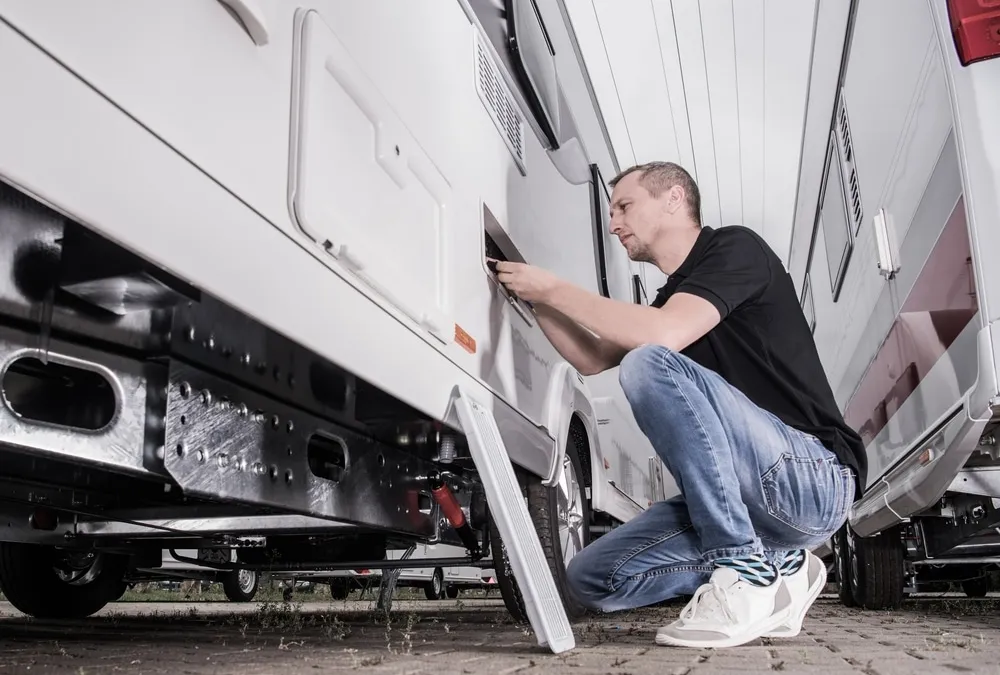
Separate mileage and generator-hour logs
Low road mileage does not mean every service item can wait. Oil, coolant, rubber parts, and air-dryer desiccant also age with time. A chassis schedule may call for an air-dryer cartridge at 36 months and a coolant flush at five years. Those examples appear in this scheduled maintenance guide.
The generator needs its own log because its hours rise while the motorhome is parked. Record each oil and filter service, then note the next due hour beside the date. Include chassis lubrication in the road-mileage log so grease points do not get missed.
Chassis-specific requirements
Class A diesel motorhomes use different engines, chassis, generators, coolants, filters, and air systems. Their required fluids and intervals can differ. Follow the shortest applicable limit from the engine, chassis, generator, and coach manuals.
Keep the records together and bring them to each service visit. A technician can compare the logs with current mileage, hours, and component condition. Patriots RV Services offers diesel chassis maintenance for owners who need a chassis-specific plan near Denton, Texas.
Freightliner RV chassis maintenance priorities
A diesel motorhome maintenance schedule should treat the Freightliner chassis as a group of linked systems, not just an engine and transmission. Routine service pairs a full visual inspection with fluid checks, lubrication, testing, and a review of past work. This approach helps a technician spot wear before it affects handling, braking, or travel plans.
Freightliner RV chassis maintenance should prioritize inspection, lubrication, steering, suspension, air systems, brakes, driveline components, cooling access, and service records. These systems work together, so a single warning sign can point to a broader chassis problem.
Inspection, lubrication, and steering
Chassis service starts with a careful inspection for leaks, loose hardware, damaged mounts, worn bushings, and signs of uneven tire wear. The technician should also inspect steering linkage, suspension parts, shocks, and ride-height components. Grease points then receive the correct lubricant based on the chassis service guide.
Steering play, poor tracking, or a change in ride quality can point to wear that needs closer testing. Alignment also matters for handling and tire life. One chassis manual recommends front axle alignment every 15,000 miles, but owners should follow the schedule for their exact coach.
- Inspect steering joints, suspension mounts, shocks, bushings, and fasteners.
- Check tire wear patterns and look for signs of alignment trouble.
- Lubricate listed chassis points with the specified grease.
Air system, brakes, and driveline
Many diesel pushers use an air system for braking and suspension support. Maintenance should include checks for leaks, slow pressure build, moisture, damaged lines, and worn air-system parts. Brake inspection should cover linings, drums or rotors, hoses, chambers, and related hardware.
The driveline also needs attention during diesel chassis maintenance. A technician can inspect the driveshaft, universal joints, differential, axle areas, and transmission for leaks or wear. Service intervals and approved fluids vary by chassis, transmission, and axle setup, so the correct manuals guide each task.
Cooling access and service records
Rear-engine diesel coaches can collect dirt and oily film around the cooling package. Inspection should cover visible radiator and charge-air-cooler surfaces, hoses, clamps, belts, and coolant leaks. Access differs by coach body design, so safe cleaning and repair may require trained service staff.
Good records make the next service more precise. Save dates, mileage, engine hours, parts, fluid specifications, inspection results, and open concerns after every visit. Diesel engine service commonly includes inspection, system testing, and tuning, according to Universal Technical Institute.
Patriots RV Services in Denton can service diesel chassis platforms, including Freightliner, without treating every coach as identical. Bring the chassis manual and past records when possible. They help the team match the work to the coach, its use, and its service history.
What should you check before a long diesel motorhome trip?
Before leaving Denton or North Texas, work through a full pre-trip check while the coach is parked on level ground. This check should support your diesel motorhome maintenance schedule, not replace the service intervals in the chassis and coach manuals.
Before a long diesel motorhome trip, check fluid levels, visible leaks, belt and hose condition, tire pressure, tire age, brake response, air-system pressure, batteries, lights, generator operation, and any active warning lights. Book shop service before departure if anything feels abnormal.
Start several days before departure, not on travel morning. That gives a shop time to inspect any warning light, leak, brake issue, or damaged part before the coach carries passengers.
Chassis and engine checks
Check fluids and look for leaks. With the engine cool, verify engine oil, coolant, transmission fluid, power steering fluid, and washer fluid. Check the ground and engine bay for fresh drips, damp fittings, or stained hoses.
Inspect tires, wheels, belts, and hoses. Set cold tire pressures to the coach maker's guidance for its loaded weight. Look for sidewall damage, uneven wear, loose wheel hardware, cracked belts, soft hoses, bulges, and worn clamps.
Test the air system and dash warnings. Start the engine and confirm the air system builds pressure as the chassis manual describes. Do not leave with slow pressure build, active warning lights, unusual air loss, or poor brake response.
Check chassis and house batteries. Inspect terminals for corrosion, loose connections, swelling, or damaged cables. Confirm both battery banks charge and can support their assigned loads without weak starts or sudden voltage drops.
Run the generator under load. Start it, listen for rough operation, and power a normal coach load. Confirm its service is current, then check for fuel, oil, exhaust, or cooling concerns.
Inspect roof and coach systems. Check roof seals, vents, awnings, slideouts, lights, steps, propane equipment, water systems, and safety alarms. Secure loose items and confirm exterior doors, tow gear, and cargo are ready for highway travel.
Complete a final walkaround. Retract jacks, disconnect utilities, close windows, latch compartments, and remove wheel chocks. Test headlights, brake lights, turn signals, mirrors, cameras, horn, and wipers before moving.
Warning signs that should stop departure
A pre-trip check is not the time to clear a warning and hope it stays off. Stop and arrange service for fluid leaks, damaged tires, brake warnings, overheating, weak charging, unusual smoke, or a generator exhaust concern.
Routine diesel service uses inspections, system tests, and tuning to support reliable performance. The diesel engine service overview from Universal Technical Institute explains why these checks work together rather than as isolated tasks.
When to book service before travel
Book shop service before departure when a scheduled interval will come due during the trip. Service is also wise after long storage, a recent breakdown, or any failed pre-trip check.
Owners near Denton can schedule diesel chassis maintenance before a long route. Bring the chassis manual, service records, trip distance, towing plan, and a clear list of symptoms for a focused inspection.
Fluids, filters, and cooling systems that protect diesel coaches
Build each service interval around the engine, chassis, and transmission maker's instructions, not a generic calendar alone. Hours, miles, fluid type, operating conditions, and time in storage can all change what the coach needs.
Fluids and filters protect the engine, transmission, generator, cooling system, and fuel system. Track each item by date, mileage, hours, and fluid specification so overdue service is easy to spot.
Oil, fuel, and air filters
Engine oil carries heat and protects moving parts, while the oil filter traps debris. The correct oil grade and change interval depend on the engine. One diesel service guide lists an oil and filter interval of 5,000 to 7,000 miles or six months for general diesel service. Review the diesel engine service guidance, then follow the coach maker's exact schedule.
Fuel filters help keep dirt and water from reaching the fuel system. A restricted filter can reduce fuel flow and may leave the engine short of power under load. Replace both primary and secondary filters when the chassis schedule calls for it. Record each change in your diesel motorhome maintenance schedule.
- Check engine oil level before long travel days and look for fresh leaks.
- Inspect the air filter restriction indicator instead of judging the filter only by appearance.
- Carry the correct spare fuel filters if remote travel is planned.
- Use only the specified fluid and filter part numbers for the installed engine.
Coolant and heat control
Coolant condition matters as much as coolant level. The wrong coolant, poor concentration, or contamination can weaken cooling system protection. Never mix unknown coolant types or add plain water unless the maker allows it. One chassis scheduled maintenance guide calls for a full drain, flush, and refill every five years.
Inspect hoses, clamps, the surge tank, and visible connections for seepage or damage. Also keep the radiator and charge air cooler, often called the CAC, clear of road film and debris. Restricted airflow makes it harder for the cooling system to shed heat. A rising temperature reading needs prompt attention.
Overheating can turn a manageable cooling problem into major engine damage. If temperature climbs, stop safely and follow the chassis maker's shutdown steps. Do not open a hot cooling system. Professional inspection can find leaks, weak hoses, airflow limits, or other faults before the next trip.
Transmission, hydraulic fluid, and DEF
Transmission fluid must be the specified type and kept at the correct level. Do not mix synthetic transmission fluid with mineral oil or another fluid. Check the transmission filter interval as well. Coaches with hydraulic steering, leveling, or fan systems also need the correct hydraulic fluid and routine leak checks.
Diesel exhaust fluid, or DEF, belongs only in its marked tank. Keep the fill area clean, use sealed DEF, and avoid contamination with diesel fuel or water. A DEF warning should not be ignored because the system can limit coach operation when a fault remains active.
These systems work together under heavy loads and North Texas heat. Patriots RV Services provides diesel chassis maintenance in Denton, TX, including checks for complex fluid, filter, and cooling concerns.
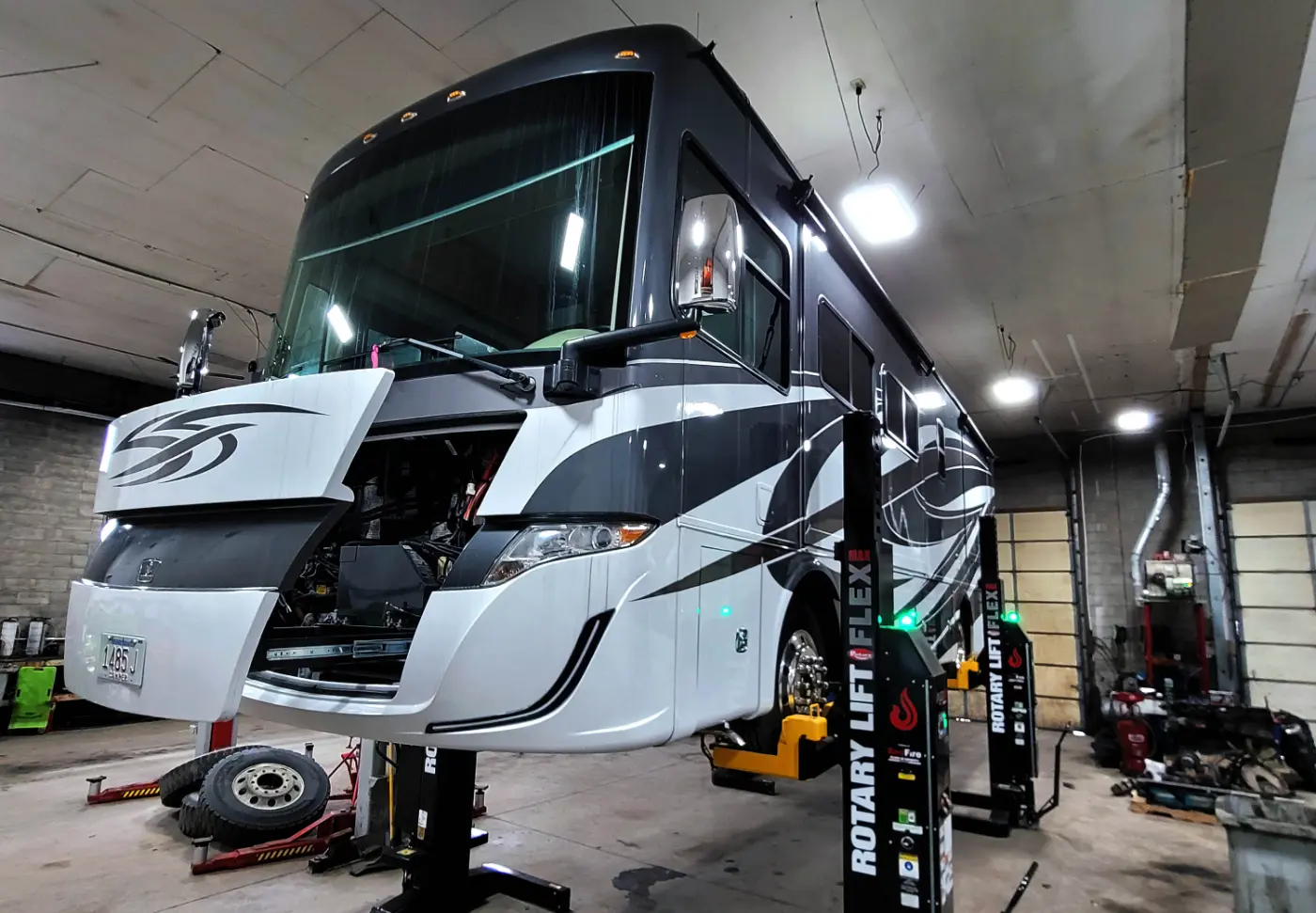
Air brakes, suspension, and tires need shop-level attention
Air brakes, suspension parts, and tires carry the coach and control how it stops. Add these systems to every diesel motorhome maintenance schedule, with checks before long trips and full shop inspections at the proper intervals. Their service needs vary by chassis, load, mileage, storage conditions, and the maker's instructions.
Air brake and air dryer checks
A qualified technician should inspect brake linings, drums or rotors, hoses, chambers, slack adjusters, and the parking brake. The inspection should also test pressure build-up, warning devices, and the system for air leaks. Diesel service often calls for routine inspections and component testing, as explained in this diesel engine service overview.
Watch for slow pressure build-up, frequent compressor cycling, warning lights, alarms, or a change in pedal feel. Do not ignore a coach that pulls while braking or takes longer to stop. These signs call for shop service before the next trip, not a casual driveway repair.
The air dryer helps remove moisture and oil from the air system. Its desiccant cartridge and purge valve need scheduled service, while air tanks need checks for excess moisture. One chassis manual calls for desiccant cartridge replacement every 36 months. Always follow the interval and parts listed for your chassis.
Suspension and alignment clues
Airbags should hold the coach at the correct ride height without cracks, rubbing, or leaks. A shop can measure ride height and test valves before poor geometry affects handling. Technicians should also inspect shocks, bushings, steering joints, mounts, and related hardware for wear or movement.
Uneven tire wear, steering pull, excess bounce, or a coach that sits low on one corner can point to suspension trouble. Wandering and a crooked steering wheel can also suggest an alignment issue. Follow the chassis maker's alignment schedule, since proper alignment supports tire life and steady handling.
Tire condition, pressure, and load
Check tire pressure when the tires are cold, then compare it with the pressure needed for the coach's actual load. A shop can weigh the motorhome and help set pressure without guessing. It can also inspect tread, sidewalls, valve stems, and wheel hardware.
Do not judge a motorhome tire by tread depth alone. Read each tire's date code, look for cracks or bulges, and follow its maker's age guidance. Replace damaged or aged tires before travel, even when the tread still looks usable.
Brake, suspension, and tire work requires heavy-vehicle tools, safe lifting equipment, and trained judgment. Patriots RV Services provides diesel chassis maintenance in Denton, TX for these linked safety systems. A shop-level inspection can find faults that a quick visual check may miss.
When does a diesel motorhome need shop service?
A diesel motorhome maintenance schedule helps prevent trouble, but warning signs should never wait for the next planned service. Early diagnosis can keep a small fault from becoming a roadside problem. Schedule shop service in Denton before driving across North Texas, Oklahoma, or Arkansas.
Engine, cooling, and fuel warnings
A recurring check engine light needs a diagnostic scan, even when the motorhome still drives normally. Hard starts, poor power, surging, or hesitation under load may point to fuel restriction or another engine fault. Rising coolant temperature, coolant loss, or frequent fan operation also calls for prompt inspection.
Do not keep driving if the temperature climbs into an unsafe range or a stop-engine warning appears. Shut down safely and arrange service. A trained shop can test the related systems instead of guessing. This diesel engine service process includes inspections, system tests, and tuning.
Air brakes, steering, and tires
Low air pressure alarms are urgent because many diesel motorhomes use air systems for braking and suspension. Stop in a safe place and follow the chassis maker's instructions. Do not continue a trip until a qualified shop finds the cause and confirms that the system works correctly.
Brake pull, new vibration, steering wander, or uneven tire wear also needs attention before highway travel. These signs can involve brakes, tires, alignment, suspension, wheels, or driveline parts. Patriots RV Services provides diesel chassis maintenance for complex motorhome systems in Denton, TX.
Leaks, smells, and electrical faults
Check the parking area and engine bay for fresh fluid spots. Note each fluid's color, location, and amount without touching hot parts. A growing leak, low fluid level, or active drip should be inspected before the coach moves.
Strange smells can give early notice of trouble. Burning oil, hot brakes, coolant, diesel fuel, or melted wiring odors require shop diagnosis. Smoke or a strong fuel smell calls for an immediate safe shutdown and help.
Electrical and charging faults can also interrupt a trip. Watch for slow cranking, dim lights, battery warnings, repeated dead batteries, or unstable gauge readings. A shop can test batteries, cables, grounds, the alternator, and charging controls to find the fault.
When several warning signs appear together, treat them as one diagnostic problem rather than separate annoyances. Record when each symptom occurs and which dash warnings appear. That detail helps the technician trace the cause faster and verify the repair before departure.
How to keep records and plan seasonal RV maintenance
A usable maintenance record
Keeping one clear service history makes a diesel motorhome maintenance schedule easier to follow. It also helps a technician see what was done, which parts were used, and what may be due next.
Start a digital file or binder for service invoices, inspection reports, receipts, and warranty records. Record the date, odometer reading, generator hours, work completed, fluid types, filter part numbers, and the next service target.
- Update mileage and generator hours after each trip.
- Keep receipts with the related service entry.
- Note leaks, warning lights, unusual sounds, and changes in handling.
- Store copies of the chassis, engine, generator, and coach manuals.
For any interval, track both elapsed time and equipment use because a low-mileage motorhome still ages while parked. This habit also gives a service shop better context when a problem appears.
Seasonal service windows
Book service before peak travel periods, not the day before departure. A practical window leaves time for inspection, parts ordering, repairs, and a short test drive before a summer trip.
Before winter storage, review the coach plumbing, batteries, tires, roof, seals, fluids, and generator. Patriots RV Services can help owners plan seasonal RV maintenance before cold weather reaches North Texas.
Use the calendar to mark future service windows, then add mileage or hour reminders between them. This two-part system reduces the chance that light seasonal use will hide an overdue task.
One plan for chassis and coach
Do not keep the chassis schedule separate from coach care. During each planning review, compare engine, transmission, brakes, suspension, tires, generator, electrical, plumbing, appliance, roof, and seal needs.
Diesel engine service includes routine inspections, component tests, and system tuning. Pair that work with comprehensive RV maintenance so one visit can address both driving systems and living systems.
Bring the complete record to each appointment and ask the technician to note the next due date, mileage, or generator-hour mark. After service, add the invoice and update every reminder while the details are still fresh.
Prepared by Patriots RV Services, Your Mission Critical RV Service Center in Denton, TX.
Frequently Asked Questions
What maintenance should be done before a long diesel motorhome trip?
Before a long trip, inspect engine fluids, belts, hoses, tires, batteries, brakes, suspension, and the air system. Test the generator and leveling system, then address warning lights or leaks before departure. Because diesel pushers often use air for braking and ride quality, have safety-critical air system concerns checked by a qualified technician.
How often does a diesel RV generator need an oil change?
A common diesel RV generator interval is every 100 operating hours or once each year, whichever comes first. The published maintenance schedule also calls for changing the generator oil filter at that interval. Always follow the generator manufacturer's manual because the required interval can vary by model, usage, and operating conditions.
When should I service the wheel bearings on a diesel motorhome?
A common service interval is every three years or 25,000 miles, whichever comes first. This interval appears in a diesel pusher maintenance guide, but the correct schedule depends on the axle and hub design. Have the bearings and seals inspected sooner if there is leakage, unusual heat, noise, or wheel play.
What diesel motorhome maintenance is required every four years?
Four-year service commonly includes replacing engine coolant, engine belts, hoses, and the generator belt. These intervals come from a diesel RV maintenance schedule, but owners should confirm them against the chassis, engine, and generator manuals. Inspection findings, mileage, climate, and fluid specifications may require earlier service or a different coolant interval.
Do I need to check tire pressure on my diesel motorhome?
Yes. Check tire pressure when the tires are cold before travel, and use the coach maker's load-based specifications rather than the tire sidewall maximum. Also inspect for cracks, uneven wear, damage, and aging. Proper inflation supports safe handling and tire life, while a qualified shop should investigate repeated pressure loss or unusual wear.
Ready to Keep Your Diesel Motorhome Road-Ready?
Delaying scheduled chassis care can turn small wear issues into expensive repairs, unexpected downtime, and missed travel plans during your busiest season. Starting now gives technicians time to inspect your Freightliner chassis, address maintenance needs, and prepare your motorhome before your next long trip. A clear service plan also helps you track upcoming intervals, budget for needed work, and travel from North Texas with greater confidence.
Ready to protect your schedule and reduce avoidable downtime? Call (940) 488-5047 to book diesel chassis service with Patriots RV Services in Denton, Texas. Starting before your next departure gives you more time to handle needed maintenance without rushing important decisions. Ask about a practical maintenance plan that fits your motorhome, travel calendar, and current mileage.