PRVS Blog
RV Awning Repair vs Replacement: Denton Guide
One North Texas wind gust can turn a small awning flaw into major damage. The right decision protects your RV without replacing parts that still have years of service left.
Ready to get your RV awning assessed? Book a service appointment with Patriots RV Services in Denton, TX.
RV awning repair vs replacement in North Texas comes down to whether damage is isolated, the frame still moves squarely, and a lasting repair is practical. Repair usually makes sense for a small clean fabric tear, loose hardware, or one failed motor when the arms and roller remain straight. Replace fabric when it is brittle, badly stretched, or torn beyond six inches, a threshold supported by Lippert's repair guidance. Bent arms, twisted mounts, repeated water pooling, or broad wind damage require expert inspection before anyone powers or extends the awning. A precise diagnosis can limit replacement to the failed section while preventing damaged hardware from straining good parts or the RV wall.
The question is not simply whether the awning still opens; it is whether each part can work safely. Next, RV awning repair vs replacement: the quick decision rule sorts visible damage and warning signs. It also shows when RV service and repair team should inspect the system, and here is how.
RV awning repair vs replacement: the quick decision rule
Start with one question: is the damage limited to the fabric, or does it affect the awning's structure and movement? A small, isolated fabric tear may be repairable when the rest of the material still feels sound. Replacement becomes more likely when damage affects several parts, creates a safety risk, or keeps returning after a prior fix.
Fabric damage versus system damage
Fabric-only damage is often the clearest repair case. Look for one small tear, a loose edge, or a worn seam while checking the full canopy. If the fabric is brittle, badly stretched, or torn in several places, replacing the fabric is usually the sounder choice.
Water pooling also deserves a closer look. The cause may be stretched fabric, poor pitch, bent arms, or a roller tube that no longer sits straight. Good RV fabric protection and care can reduce wear, but it cannot correct bent hardware or poor alignment.
| What you find | Repair may fit | Replacement may fit |
|---|---|---|
| Fabric. | One small tear or loose seam. | Brittle fabric or several large tears. |
| Arms and brackets. | Loose fastener with straight parts. | Bent, cracked, or twisted hardware. |
| Motor and controls. | Loose connection or isolated switch fault. | Failed motor with wider system wear. |
| Storm or wind damage. | Minor damage after a full inspection. | Multiple damaged or unsafe parts. |
| Water pooling. | Pitch or tension can be corrected. | Stretched fabric or bent support parts. |
Bent hardware, motors, and storm damage
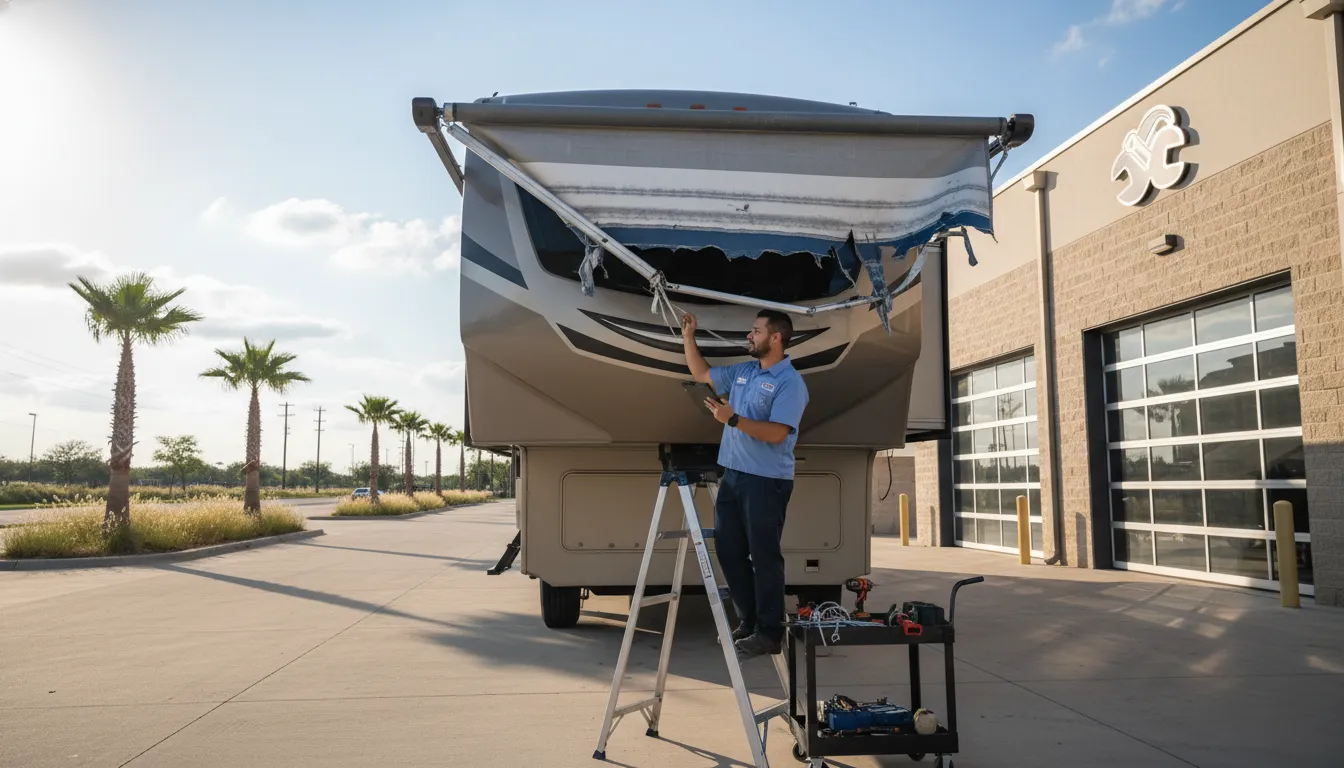
Bent arms, cracked brackets, or a twisted roller tube change the decision. These parts carry load and guide the awning as it opens and closes. A patch on the fabric will not solve that problem. Keep the awning closed until the damaged parts and mounting points have been checked.
A motor that stops working does not always mean the whole awning needs replacement. The fault could involve power, wiring, a switch, the motor, or resistance from bent hardware. Do not keep cycling the controls when the awning binds, tilts, or makes harsh sounds.
Storm and wind damage can affect several parts at once, including mounts attached to the RV wall. Avoid repair work beyond your normal skill level after severe weather. This storm cleanup safety guidance supports stepping back when a damaged setup creates unfamiliar risks.
Why diagnosis comes before parts
Do not order fabric, arms, or a motor based on the first visible symptom. A torn canopy may hide a bent roller tube. A stalled motor may be reacting to an arm that is out of line. Diagnosis separates the failed part from the condition that caused it to fail.
Check the fabric, roller tube, arms, brackets, mounts, wiring, motor, and controls as one system. Note where water gathers and whether both sides move at the same rate. If the cause is unclear, awning repair inspection can assess the full assembly before you buy parts.
What RV awning damage is usually repairable?
Repair is often practical when damage stays in one small area and the main awning still works as designed. In the RV awning repair vs replacement decision, the condition of the fabric, arms, roller, and controls matters more than age alone.
Small fabric and seam damage
A short, clean tear may be patched before wind pulls it farther across the awning. Loose stitching along an edge can also be resewn if the nearby fabric remains flexible and strong. Small worn spots may respond well to prompt repair and better RV fabric protection and care.
Repair makes less sense when a patch has no sound material around it. Check the full awning for brittle areas, thin spots, peeling layers, and several tears. A local repair should solve a local problem, not hide wider fabric failure.
- Small tears with strong fabric around every edge.
- Loose stitching limited to a short seam.
- Minor wear that has not weakened a wide area.
- A loose awning bead that can be secured again.
Hardware adjustments and simple component issues
An awning that rolls unevenly may need an adjustment rather than full replacement. Loose fasteners, shifted brackets, or a minor alignment issue can keep the fabric from tracking straight. These repairs depend on the mounting points and arms remaining sound.
Simple electrical faults may also be repairable after proper testing. A switch, connection, sensor, or other single component can fail while the rest of the system remains useful. A technician should test the cause before replacing parts, since strain elsewhere may have caused the fault.
Bent arms, cracked mounts, or damaged spring parts need more caution. Stored tension and heavy moving pieces can cause injury. If the work is outside your normal skill set, follow storm repair safety guidance and leave the repair to a trained technician.
When a repair can extend awning life
A repair can add useful life when it restores smooth movement and stops damage from spreading. The awning should open evenly, hold its position, and retract without binding after the work. Fabric should also stay secure at the roller and RV wall.
North Texas sun, wind, hail, and sudden storms can turn a small flaw into a larger failure. Inspect the awning after harsh weather and address fresh damage before the next trip. Retract it when strong wind approaches, even after a sound repair.
A full inspection gives the clearest answer when damage affects more than one part. Patriots RV Services can assess fabric, hardware, mounts, and controls through its RV repair technicians. The goal is an honest repair when it will last, not a short-term fix that leaves hidden strain behind.
When should you replace an RV awning instead?
Replacement is usually the safer choice when damage affects the awning's strength, shape, or reliable operation. The key question in RV awning repair vs replacement is whether a repair can hold through normal use. If several parts have failed, replacing the full assembly may prevent repeated repairs and an unsafe collapse.
Fabric that has lost its strength
A large rip, several repeated tears, or fabric pulling away from its edge often points toward replacement. Patches may close a small opening, but they cannot restore strength across a worn sheet. Tears that return near an old patch also show that the surrounding material is failing.
Check the full awning in bright light. Replace fabric that feels brittle, looks badly stretched, or has thin areas that let light pass through. Deep sagging and frequent water pooling also matter because the fabric may no longer hold its proper shape. Good RV fabric protection and care can slow wear, but it cannot reverse failed material.
Damage to arms, tube, or motor
Fabric is only one part of the decision. Bent arms, a damaged roller tube, or loose mounting points can keep an awning from opening evenly. They can also cause binding, sudden movement, or poor support. Stop using the awning if it leans, twists, or will not lock into place.
An electric awning may need more than a simple motor fix when the motor assembly and support parts have both failed. Warning signs include harsh grinding, uneven travel, repeated stalls, or movement after the switch is released. A technician should inspect the full system before anyone approves a repair or replacement.
- Replace damaged arms that cannot stay aligned or support the awning safely.
- Replace a bent roller tube when it prevents smooth, even fabric movement.
- Consider a full assembly when several linked parts have failed together.
A clear diagnosis helps separate one repairable part from wider system damage. Patriots RV Services provides storm damage repair support for owners who need an honest assessment near Denton, TX.
Heavy wind damage and safety risks
Heavy wind can stretch fabric, bend hardware, pull mounts loose, and damage the roller tube in one event. Do not keep testing an awning that hangs unevenly or has partly separated from the RV. The assembly may move without warning and cause more damage or injury.
After a major storm, take photos from a safe distance and avoid work beyond your normal skill level. This storm cleanup safety guidance supports the same cautious approach. A shop can inspect the awning, wall mounts, and nearby body panels for hidden damage.
If insurance may apply, ask for an inspection and written damage record before work begins. Coverage and claim steps depend on the policy, so the owner should confirm details with the insurer. The inspection should focus on what failed, what remains safe, and whether repair would provide a sound result.
How do you inspect an RV awning before deciding?
A careful inspection helps frame the RV awning repair vs replacement choice. Start with the awning dry, on level ground, and in calm weather. Keep people clear of the awning's path as it moves.
Do not force stuck parts or take apart spring-loaded hardware. After storm damage, avoid work beyond your normal skill level, as advised in Mayo Clinic safety guidance. Stop if the awning shifts, binds, or pulls away from the RV.
A safe inspection sequence
- Check the fabric and seams. Fully extend the awning only if it moves without strain. Look across both sides for small tears, large rips, worn patches, brittle spots, mold, and loose stitching. Note whether damage is isolated or spread across the fabric.
- Inspect the arms and brackets. Sight down each arm to find bends, twists, cracks, missing fasteners, or uneven movement. Check that brackets sit flat and firm. Stop if an arm jumps, sags, or looks ready to slip from its mount.
- Study the roller tube. View the tube from end to end and look for a bow, dent, or uneven roll. Watch whether the fabric tracks straight as the awning moves. A bent tube or crooked roll can strain the fabric and arms.
- Test the motor and controls. On a powered awning, use the normal switch and listen for grinding, clicking, or changes in motor speed. Stop at once if the motor runs but the awning does not move. Do not open the motor housing or bypass its controls.
- Check pitch and drainage. From a safe position, compare both sides and confirm the awning slopes enough to shed rain. Look for stretched low spots that could hold water. Pooling can add weight and may point to poor pitch, weak arms, or loose fabric.
- Inspect wall attachment points. Look where the brackets and awning rail meet the RV wall. Check for gaps, loose sealant, stains, soft wall areas, or fasteners pulling outward. Do not extend the awning again if an attachment point moves or the wall looks damaged.
Repair signs versus replacement signs
Small, local fabric flaws and loose fasteners may support a repair. Widespread fabric wear, repeated seam failure, a bent roller tube, or several damaged parts can favor replacement. The full pattern matters more than one mark.
Take clear photos of every concern before retracting the awning. These records help a technician compare parts and explain the safest path. Routine RV fabric protection and care can also make wear easier to spot early.
When to stop and call a professional
Stop the inspection if you find bent arms, loose wall mounts, electrical faults, a bowed roller tube, or signs of hidden wall damage. Also stop when the unit will not move smoothly. Trying again can turn one failed part into wider damage.
A technician can test the system under controlled conditions and check whether repair parts remain a sound choice. Patriots RV Services provides Denton RV service team near Denton, TX for owners who need a full awning damage assessment.
Why North Texas storms change the awning decision
Storm loads and hidden damage
North Texas weather can turn a minor awning flaw into a wider system problem. A sudden gust may pull on the arms, brackets, roller tube, and mounting points at once. Hail can mark fabric, while hard rain can collect in a low spot and stretch it.
Heat and sun add a slower form of wear. Fabric may fade, dry, or lose flexibility, and seals near the mounting area can age. Regular RV fabric protection and care helps owners find weak areas before the next storm tests them.
What the damage pattern means
For RV awning repair vs replacement, the cause matters as much as the visible tear. A clean, limited fabric flaw may support repair if the frame still opens, closes, and sits square. Repeated tears, bent arms, loose mounts, or a strained motor point to a larger issue.
Water pooling deserves close review because it can hide more than a wet canopy. Check whether the roller stays level and whether mounting points moved under load. If storm damage is beyond your normal experience, follow storm cleanup safety guidance and leave the work to a trained technician.
Campsite wind can also reveal damage that is easy to miss at home. Light movement may make a loose bracket shake or cause worn fabric to flap at one edge. Those signs call for a full check before the awning is opened again.
A decision built for future storms
A repair should restore stable operation, not just cover the first symptom. Before choosing it, ask whether the same fabric and hardware can handle another gust or fast rain shower. If several parts are worn, replacement may be a sounder path than repeated fixes.
After hail or strong wind, keep the awning closed until its main parts have been checked. The review should cover fabric, arms, mounts, the roller, the motor, and nearby RV surfaces. Patriots RV Services' RV awning repair help can assess the full damage pattern, including issues beyond the awning.
That broad view matters in Denton and across North Texas. A patch may fit isolated fabric damage, while bent hardware or several worn parts may support replacement. The right choice fixes today's damage without ignoring the weather that caused it.
What can a professional RV awning service check?
A professional inspection looks beyond the visible tear or bent arm. It checks the full awning system and the RV wall supporting it. This wider view helps settle the RV awning repair vs replacement question without replacing sound parts.
Fabric, arms, and spring tension
The inspection starts with the fabric, roller tube, arms, joints, and fasteners. A technician looks for brittle areas, stretched seams, uneven rolling, bent hardware, and loose connections. They also check whether the fabric still fits the roller and rail correctly.
Manual awnings rely on loaded springs that help the fabric roll up. A technician can check torsion and spring tension without asking the owner to handle a risky assembly. After storm damage, owners should avoid work beyond their normal experience, according to Mayo Clinic safety guidance.
Motor, switch, and mounting points
For an electric awning, the inspection can cover the motor, wall switch, wiring, and power supply. A slow or stalled awning does not always mean the fabric needs replacement. The fault may sit in the drive system or its controls.
Mounting brackets also need close review. A technician checks for movement, damaged fasteners, cracked sealant, and signs that the RV wall has weakened. These findings may call for more than an awning part. Patriots RV Services can assess related damage through its service and repair team.
Seals, water risk, and matching parts
An awning mount can hide a path for water. The service check can trace stains, soft spots, failed seals, and gaps around mounting points. If moisture has reached the wall or roof edge, the repair plan should address that source before new fabric goes on.
A technician can then match replacement fabric or components to the awning model, size, mounting style, and drive type. The result may be a fabric-only replacement, one new arm, a motor repair, or a full assembly. When water damage extends above the awning rail, an RV roof repair assessment can clarify the full scope.
The final estimate should separate required work from optional work. It should explain which parts remain safe to use and why. Photos and measured part details can make the repair plan easier to review. For storm or impact damage, written findings can also help an owner discuss the loss with an insurer or warranty provider.
How can you prevent repeat awning damage?
Good habits can keep a minor awning issue from becoming a full replacement. They also make the RV awning repair vs replacement decision less likely after each trip. Start by treating wind and pooled rain as early warnings, not problems to handle later.
Safe use in changing weather
Retract the awning before winds rise or whenever you leave the campsite. A sudden gust can stretch fabric, bend an arm, or pull mounting hardware loose. During light rain, set the awning pitch so water can run off instead of collecting in the center.
After a storm, inspect the fabric, arms, roller tube, and wall mounts before opening the awning again. Stop if an arm looks bent or the unit moves unevenly. Storm cleanup and repairs can cause injuries when they fall outside your normal experience, according to Mayo Clinic storm safety guidance.
Clean, dry fabric and secure hardware
Remove dirt with products made for your awning material, then let the fabric dry fully before rolling it up. Stored moisture can leave stains and unwanted growth. Never mix ammonia and bleach during cleanup because the blend creates dangerous fumes.
Check fasteners, brackets, and arm joints before travel. Do not tow or drive with loose hardware, a sagging roller, or fabric that will not roll tight. A pre-trip check takes little time and may prevent road vibration from making damage worse.
Sun exposure can also weaken and fade awning fabric over time. Keep the awning rolled in when it is not needed, and follow the maker's care guide. Patriots RV Services also explains RV fabric protection and care for surfaces exposed to sun and rain.
Changes that call for service
Pay attention to new sounds, slower movement, uneven rolling, or arms that no longer sit square. These changes may point to loose parts, alignment trouble, or motor strain. Continued use can turn a small repair into damage across several parts.
Schedule an inspection when the awning's movement changes or the same fault returns after a basic fix. A technician can check the fabric, hardware, mounts, and drive parts as one system. This helps find the cause before another trip or storm adds more damage.
For an honest assessment near Denton, use professional RV repair services before forcing a stuck or uneven awning. The goal is to fix the source of the problem, not only its latest symptom.
Need a clear repair-or-replace recommendation before your next trip? Book RV awning service with Patriots RV Services and get practical next steps.
Frequently Asked Questions
Is it better to repair or replace an RV awning?
Repair usually makes sense for a small, isolated fabric tear, loose hardware, or a replaceable motor component. Replacement is safer when damage affects several parts, the frame is badly bent, or the fabric has large tears. Lippert recommends replacing awning fabric when a hole exceeds six inches. A professional inspection can identify hidden wind damage before the decision is made.
Can I replace RV awning fabric myself?
RV awning fabric replacement can be a DIY project, but it usually requires two people. The roller tube may contain a tensioned spring, and mishandling it can cause injury. Owners should confirm the awning model, follow its service manual, and use proper supports. If arms are bent or storm damage is present, schedule professional RV repair services instead.
How much does RV awning replacement cost?
RV awning replacement cost depends on awning length, fabric grade, arm condition, motor type, labor, and parts availability. One published estimate places a 16-foot manual fabric replacement at $325 to $600. Electric models can cost more when motors, sensors, wiring, or complete arm assemblies also need replacement. Request an itemized inspection before approving work.
Should I repair bent RV awning arms or replace them?
Replace an RV awning arm when it is sharply creased, cracked, twisted, or unable to hold the roller square. Minor alignment problems or loose mounting hardware may be repairable after inspection. Do not force a bent arm closed because added pressure can damage the RV wall or roller tube. After North Texas wind damage, check both arms, brackets, wiring, and mounting points.
Can insurance cover RV awning replacement?
Insurance may cover RV awning replacement when wind, hail, a collision, or another covered event caused the damage. Coverage depends on the policy, deductible, exclusions, and whether the awning was properly secured. Wear, aging fabric, and neglected maintenance are often handled differently from sudden damage. Photograph the awning, surrounding RV damage, and weather conditions before moving or repairing components.
Ready to Make the Right Call on Your RV Awning?
A torn awning or bent support arm can worsen when North Texas wind and rain keep stressing damaged fabric, hardware, or mounting points. Delaying an inspection may also let water pooling or motor problems interrupt your next trip and turn manageable damage into a harder repair. Starting now gives a technician time to find the cause, compare repair and replacement, and prepare the right solution before your departure.
Protect your travel plans before a small awning problem becomes a larger repair. Book service online or call (940) 488-5047 to schedule RV awning service and get clear next steps for your RV.