
PRVS Blog
RV Wash and Wax Basics for North Texas Owners
Harsh North Texas sunlight turns a glossy RV finish into a chalky, oxidized mess in one season. Leaving your rig unprotected during intense summer heat and sudden storms guarantees costly damage to your exterior gel coat.
A thorough RV wash and wax is the single most effective way to shield your expensive motorhome or trailer from the harsh, year-round weather patterns of North Texas. Regular washing removes acidic rain, gritty road grime, and stubborn bug splatters, while applying high-grade wax or polymer sealants blocks ultraviolet rays to prevent severe gel coat oxidation. State regulators like the Texas Commission on Environmental Quality publish strict rules on wash water disposal to prevent chemical detergents and gritty sediment from polluting local waterways. Ultimately, keeping your exterior clean and properly sealed preserves your paint job, protects rubber slide seals, prevents roof leaks, and maintains your asset's maximum aesthetic and resale value.
Understanding the basics of exterior care is the first step toward protecting your investment from environmental wear. In our next section, we detail Why RV Wash and Wax Matters in North Texas and how the climate ruins your paint. The path begins with
Schedule professional RV wash and wax service in Denton, TX today.
Why RV Wash and Wax Matters in North Texas
Keeping your RV clean is more than just a matter of pride. In North Texas, a regular RV wash and wax routine is a vital step to keep your rig in top shape. The local weather is tough on large rigs. If you leave your RV out in the open, the harsh climate will quickly take a toll on its body.
The Threat of North Texas Sunlight
The sun in our region is intense. Harsh UV exposure in North Texas can accelerate RV paint oxidation if you do not seal the exterior surfaces. Both gel coat and clear coat finishes suffer under this steady heat. Once this happens, you must take extra steps to restore your RV finish and bring back its clean look.
Without a layer of wax or a UV sealant, the sun damages the outer shell of your rig. The heat also makes the body expand and contract, which causes tiny cracks in the fiberglass. When you apply a high-grade wax, you stop this process.
A Shield Against Road Grime
Roads in Denton and across North Texas are full of dust, dirt, and tar. When it rains, these elements mix to form a sticky film. Proper wax application serves as a barrier against North Texas road contaminants, salt, and acidic rainfall that can damage RV paintwork. If you do not wash your rig, these harsh elements will eat into the clear coat.
A coat of wax creates a slick surface. Dirt and grime cannot stick to a waxed body as easily. When you wash the rig next time, the dirt slides off without scratching the paint. State experts with the Texas Commission on Environmental Quality warn that dirty wash runoff can carry harmful chemicals.
Protecting Your RV Investment
Buying an RV is a big step. Routine RV maintenance, including washing and waxing, prevents long-term problems and protects the overall RV investment. If you let oxidation set in, the cost to repair the body can be high. In contrast, regular care is simple and saves money.
Taking care of the exterior also lets you spot small issues before they grow. For example, you might find loose trim, a dry seal, or a cracked light cover while washing. Finding these details early saves you from water leaks. A clean, waxed RV is your best defense against the harsh Texas climate.
How Often Should You Wash and Wax an RV?
Weather factors in North Texas
The strong Texas sun and heavy storms can damage your coach finish. If you travel or live near Denton, the local weather is tough on your paint. High heat and UV rays speed up paint damage, which makes routine care vital. A fresh coat of wax acts as a shield against road dirt, salt, and acidic rain, preventing the sun from quickly dulling your clear coat.
Storage versus outdoor parking
Where you park your rig changes how often you must clean it. An RV parked outside all year needs far more care than one kept in a dark barn. If you keep your coach outdoors in North Texas, you should wash it every month to stop grime from building up. You will also need to wax the coach more often to block the sun.
If your rig sits under trees, falling leaves and sap can ruin the roof. Leaves and sap hold moisture and can lead to mold or mildew growth on your seals. Routine washing removes these threats before they can cause deep damage.
A recommended wash and wax schedule
Road grime and bugs also change your wash schedule. When you drive down Texas roads, bugs will smash onto your front cap. These bugs have acids that eat into your paint finish. You must wash them off right away before they bake in the hot sun.
Black brake dust and road tar can also stick to your wheels and lower panels. If left alone, these dirty spots can pit the metal and stain your rims. Cleaning these areas is one of those little details that can prevent bigger problems down the road.
For most owners, a regular RV wash and wax routine keeps the rig in prime shape, so plan to wash your coach once a month. This routine wash keeps dirt and dust from scratching your gel coat. We suggest waxing two to three times each year, with fresh coats applied in the spring and fall. Doing this creates a strong shield before the summer heat waves and winter storms arrive.
Washing your rig at home can wash grime and soap down the street. Texas rules warn that wash water with soap can pollute local creeks and storm drains, as shown by the Texas Commission on Environmental Quality. Pairing this routine with proper North Texas RV protection steps, like checking roof seals, prevents water leaks. If your paint looks dull or chalky, you must polish it to restore your RV finish before you wax.
DIY vs Professional RV Wash and Wax Services
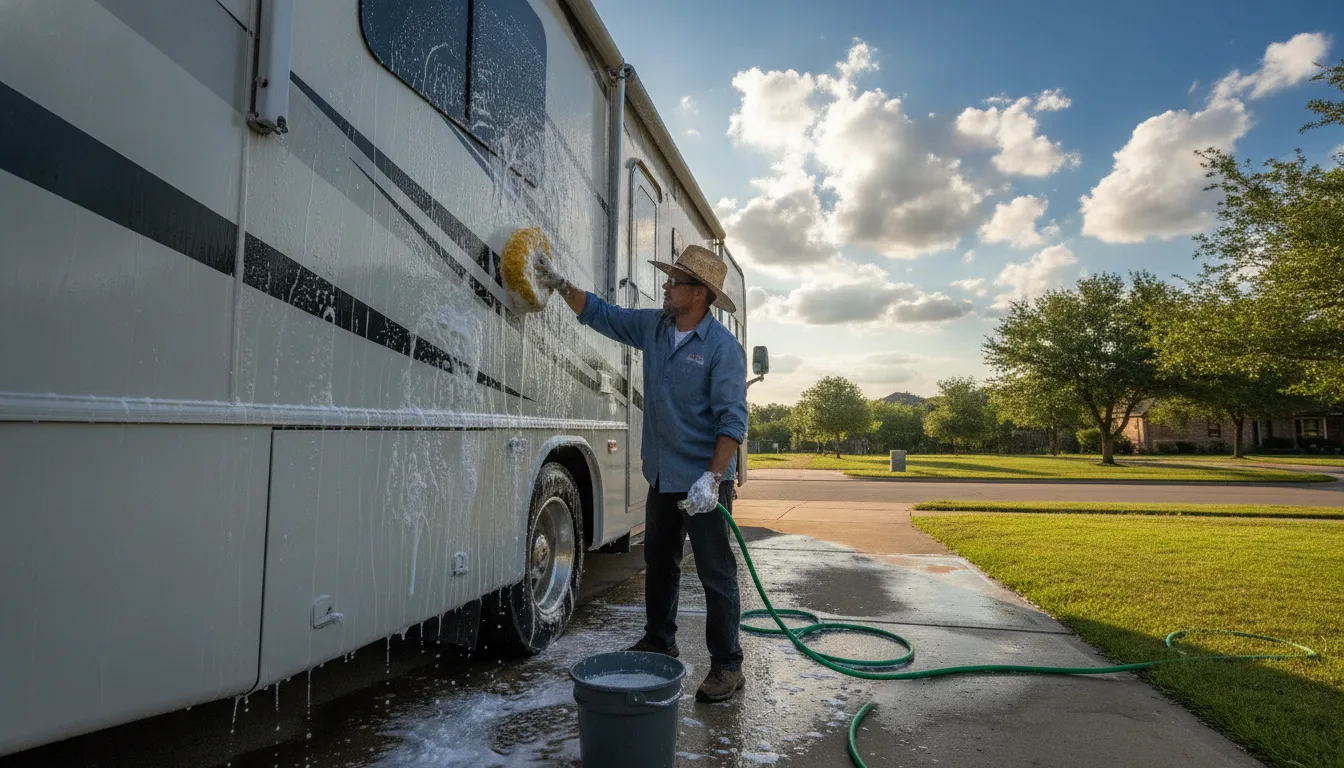
Many owners face a common choice when their rig gets dirty. Should you spend a weekend on a DIY RV wash and wax, or is it better to hire a professional crew? Both paths have real benefits and drawbacks. To protect your investment, you must weigh these options based on your budget, your tools, and your local rules.
Pros and cons of the DIY route
Washing and waxing your own rig can save you some money upfront. It lets you inspect the exterior close up to find small dings. But the job takes a massive amount of physical labor.
You will need to climb tall ladders and scrub hard under the hot Texas sun. If you make a mistake, you can damage the delicate clear coat or scratch the finish. Many owners find that the high physical cost outweighs the savings. This is true when you look at professional RV detailing costs in Denton.
| Feature | DIY Wash and Wax | Professional Detailing |
|---|---|---|
| Cost | Low cash cost but high tool expense | Higher upfront cost for service |
| Time | Full weekend of hard work | A few hours while you relax |
| Equipment | Basic ladders, hoses, and bucket | Commercial lifts, foam cannons, and buffers |
| Results | Decent but often uneven | Flawless shine with full UV protection |
| Compliance | Risk of storm drain runoff fines | Approved water capture and permits |
Environmental and water compliance issues
Local water rules are a huge factor that many owners forget. When you wash your rig at home, the runoff goes into the street. The Texas Commission on Environmental Quality warns about this runoff. Wash water containing soap and grime can pollute local drinking water supplies if it enters storm drains.
Anything that runs down your driveway ends up in nearby creeks or lakes without any treatment. In fact, cities in our area enforce strict rules to protect the water. For example, the City of Fort Worth requires mobile washing businesses to get a special permit to operate. Without the right setup to catch and filter dirty water, you could face big city fines.
Why professional care makes a difference
Professional detailing services use commercial tools and safe water rules. They have the right lifts and brushes to clean hard-to-reach spots safely. They also use special soaps that will not strip your wax or harm local water.
Pros know how to wash your rig without breaking local environmental codes. This keeps you safe from fines while giving your RV a deep, protective shine.
A Step-by-Step RV Wash and Wax Routine
Washing your rig is more than just a quick chore. It is a vital maintenance step that guards your paint from the harsh North Texas heat. You should always work in late-day shade or on an overcast day. Avoid working under the blazing sun, as heat dries soap too fast and leaves spots. Doing this chore in the heat can ruin your day and damage your gel coat. Using a clear plan keeps your coach looking great and protects your investment.
Prepare Your Rig in the Shade
Before you begin, gather all your gear. You will need a clean bucket, soft wash mitts, a mild soap, and fresh wax. Do not use dish soap, as it can strip your existing protective coatings. Park your RV in a safe spot away from direct light. If you wash on a hot driveway, the water will dry before you can rinse. Keeping the surface cool makes the entire job much easier and yields a better shine.
The Six-Step Cleaning Process
- Cool and rinse the exterior: Spray your entire coach with clean water from top to bottom. This cools the outer walls and washes away loose dust, road grime, and grit before you scrub.
- Wash top-to-bottom with proper soap: Use a pH-balanced soap made for RV gel coats. Keep your runoff in mind since chemicals can harm local creeks. The Texas Commission on Environmental Quality recommends preventing soapy water from entering storm drains.
- Dry the coach quickly: Wipe the walls with soft microfiber towels or use a leaf blower. Drying the surface fast prevents mineral spots from the hard water common in the Denton area.
- Apply wax or ceramic protectant: Work in small three-foot sections to keep the product workable. Applying a quality coat of wax will help restore your RV finish and block UV rays.
- Buff the surface to a clean shine: Use a clean microfiber cloth to buff away the dried wax haze. Work in circular motions to avoid streaks and to reveal a bright gloss.
- Inspect the roof and wall seals: Check the caulking around your vents, doors, and seams. Finding small cracks during your wash is a key part of North Texas RV protection.
Protect Your Seals and Finish
This simple routine is the foundation of solid paint care. Working in small sections prevents the wax from drying too hard before you can buff it. Paying attention to these details will prevent major gel coat damage down the road. It keeps your coach looking like new and helps maintain its value. If you find deep cracks in your seals or heavy chalking on your paint, you may need professional help to fix them. You can reach our Denton shop at (940) 488-5047 to schedule expert exterior care.
Protecting Against Oxidation and UV Damage
The mechanics of sun damage
Sunlight in North Texas is intense. The ultraviolet rays beat down on your RV gel coat or clear coat day after day. When UV light hits the surface without a shield, it harms the paint. This process, known as oxidation, causes the binder in the gel coat to break down. You will first notice this as a dull, chalky haze on the surface. If you do not stop it, the paint will fade and soon crack, which leads to costly repairs.
Testing for oxidation on your RV
How do you know if your RV is safe or has damage? You can run a quick test at home with just your hand. Wipe your palm across the dry side of your RV. If your hand comes away with a white, chalky powder, you have active oxidation. This means the clear coat is gone, and the gel coat is breaking down.
A second test is to spray water on the side panel. On a well-sealed RV, the water will bead up into tight, round drops. On an oxidized finish, the water will flat out pool or run off in sheet form. If the finish is dull, you will need to restore your RV finish before you apply any new wax. Waxing over old chalky powder will only lock in the hazy look.
How sealants create a barrier
A proper RV wash and wax does more than make your rig look shiny. It builds a thin, tough shield over the gel coat. This shield acts as a guard. It absorbs the harsh UV rays so your paint does not have to. Strong UV rays in Denton and across North Texas can speed up paint oxidation if the paint is not sealed.
Besides sun damage, the wax layer acts as a guard against road grime, salt, and acidic rain. These outdoor elements can stick to a dry gel coat and eat into the finish. When you wash your RV, make sure to follow local clean water laws. The Texas Commission on Environmental Quality states that wash water must be managed to avoid harming local storm drains. A clean, sealed finish keeps dirt from sticking, which makes your next wash much easier.
- Wash your RV with a pH-neutral soap to avoid stripping the wax.
- Park in shaded spots or use an RV cover when storing your rig.
- Apply a fresh coat of wax every six months to keep the shield strong.
When to Call a Professional RV Detailer in Denton
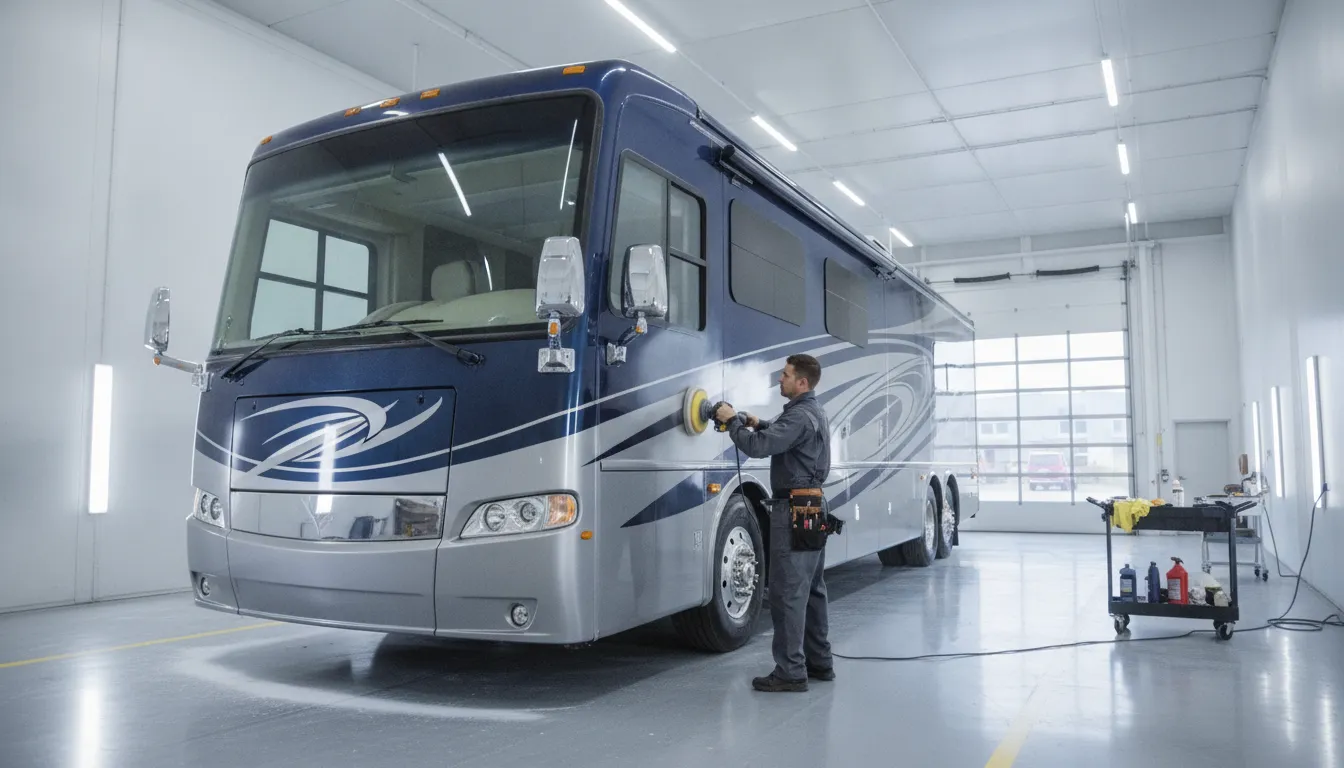
Washing your own rig can be a big chore. Sometimes, a simple DIY job is not enough to protect your paint. You should know when to hand the work to a pro. If you see deep spots or a dull, chalky look, your finish has oxidation. A standard DIY RV wash and wax will not fix this deep damage. You will need expert tools to bring back the shine.
Signs your rig needs expert care
Safety is another key factor. Tall rigs need climbing on high ladders. A wet, slick roof is a major slip hazard. Working on a hot roof can also warp the thin metal or rubber seal. If you lack the proper gear, reaching the top of your coach is unsafe. Hard grime and black streaks are also tough to clean. It is best to let a trained team handle these high, hard areas.
Time is a big factor. A full wash and wax on a large coach can take all weekend. Scrubbing every square inch by hand is hard work. A pro shop has the staff to finish the job fast. They focus on the little details that prevent big problems down the road.
Why local water laws matter
Water laws are strict in Texas. RV wash water contains soap, dirt, and heavy metals. If you wash your rig on the street, this runoff flows into local storm drains. These drains lead straight to our creeks and lakes without any treatment. The state bans this dirty discharge to protect our drinking water. You can read more about these rules in the TCEQ water guide.
Local towns enforce these clean water rules. In Fort Worth, the city regulates mobile wash business runoff. Code officers can issue heavy fines for illegal discharges. Using a certified shop ensures your rig stays clean without harming our local creeks. You can check the Fort Worth stormwater site for local rules.
How Patriots RV Services can help
At Patriots RV Services, we do not use cheap methods. We wash every rig by hand at our shop in Krum, Texas, just outside Denton. Our crew uses professional tools to remove oxidation and restore the shine. We use high-grade sealants that shield your coach from North Texas sun. We also provide clear, per-foot pricing.
When you need professional RV washing and detailing, our team is ready to help. We treat your coach like our own asset. Do not let harsh weather ruin your finish. Call our shop at (940) 488-5047 to talk about your detailing needs.
Ready to protect your RV from North Texas weather? Schedule your professional RV wash and wax today.
Frequently Asked Questions
How often should you wash and wax an RV in North Texas?
In North Texas, you should wash your RV every month and apply a high-quality wax or sealant at least twice a year. The intense Texas sun and heat can degrade the protective gel coat quickly. Regular wash and wax maintenance creates a vital barrier against harsh ultraviolet rays, heavy seasonal rain, and road grime. This routine helps prevent oxidation and preserves the value of your vehicle.
Can you use standard car wash soap on an RV?
No, you should not use standard car wash soaps on an RV finish. Car soaps are often too mild to cut through heavy RV road grime. Some household detergents are too harsh and can strip the protective gel coat. Specialized RV wash and wax formulas are designed to clean fiberglass, decals, and rubber seals safely. Using the correct products protects your finish and prevents costly damage to the outer coat of your vehicle.
How do you legally wash an RV at home in Texas?
To wash an RV at home legally, you must prevent wash water from entering the municipal storm drain system. According to the City of Fort Worth, anything discharged into the street ends up in local creeks and rivers untreated. This means you must direct wash water to a grassy lawn or soil area where it can soak into the ground safely. You can also use a waterless wash and wax product to avoid runoff completely.
How much does a professional RV wash and wax cost?
The cost of a professional RV wash and wax varies based on the size and type of your vehicle. Generally, you can expect to pay between fifteen and thirty-five dollars per linear foot. For a standard thirty-foot RV, this ranges from four hundred fifty to over one thousand dollars. To learn more about current pricing for local services, check out this guide on professional RV detailing costs in Denton.
Ready to Protect Your RV From North Texas Weather?
Leaving road grime and harsh Texas sun on your coach will cause dull paint, fading, and ruined clear coats. Waiting to wash your RV allows road salt and dirt to eat into the finish, which leads to costly gel coat repairs. Taking care of your exterior now prevents permanent weather wear and keeps your rig looking brand new. You can protect your valuable asset, maintain its resale value, and prepare for your next trip by getting a professional cleanup today.
Contact Patriots RV Services today to schedule professional RV washing and detailing in Denton, North Texas. Our expert team is ready to help, so call us at (940) 488-5047 to set up your appointment today.