
Spotting hidden RV water damage signs early can save you from catastrophic repair bills and preserve the structure of your travel trailer or motorhome. For RV owners in Denton and North Texas, where intense summer heat baked-on sealants can dry out and crack before heavy seasonal downpours, regular vigilance is the only way to protect your investment. Water does not just pool on the floor; it creeps quietly through roof seams, wall panels, and window frames, rotting wood studs and subfloors long before you notice a single drip inside the cabin. For seasonal protection, schedule North Texas winterization services before cold weather can worsen existing seal failures. Are you worried about hidden leaks in your travel trailer or motorhome? Contact Patriots RV Services today to schedule a thorough professional leak inspection at our Krum, TX service center, or call us at (940) 290-7800.
The True Cost of Neglected RV Water Leaks
Unlike a traditional home built with thick lumber and plaster, an RV is engineered to be lightweight. Its walls are thin sandwiches of fiberglass or aluminum, a wood or metal frame, insulation, and a thin interior panel. When water penetrates these layers, the lightweight materials absorb moisture like a sponge. Laminated panels swell, wood framing rots, and steel components rust. According to repair records from major service centers, a simple roof reseal might cost a few hundred dollars, whereas rebuilding a rotted subfloor or replacing water-damaged slide-out walls can easily cost $5,000 to $10,000. In severe cases of structural decay, the repair costs can exceed the actual cash value of the RV, rendering it a total loss. Understanding how to find these issues before they spread is critical to keeping your coach on the road and out of the salvage yard.
How to Identify the Most Common RV Water Damage Signs
Because water intrusion often begins behind the scenes, you must know what to look for and where to look. Let us examine the key warning indicators of hidden water damage inside your RV.
1. Soft, Spongy, or Bouncy Floors
A solid floor is critical to the structural integrity of your coach. If you notice a spot on your floor that feels soft, spongy, or gives slightly under your weight, you are likely dealing with advanced subfloor rot. RV subfloors are typically constructed from OSB (oriented strand board) or thin plywood. When water leaks from window frames, plumbing lines, or slide-out seals, it flows downward and pools on the subfloor. Over time, the wood fibers separate, the adhesive dissolves, and the wood rots away. Walk slowly throughout your entire coach, paying close attention to the areas around the toilet, under the kitchen sink, near the main door, and in the corners of slide-outs.
2. Discoloration and Staining
Discoloration on your interior panels or ceiling is one of the most obvious indicators of an active leak. Look for brown, yellow, or dark stains in the corners of your ceiling, inside overhead cabinets, or around window frames. Stains on the ceiling usually point to roof seam failures, while stains around window frames indicate degraded window caulking. Even small, faint water marks should never be ignored, as they indicate that moisture has already traveled completely through the outer wall cavity to the interior finish.
3. Musty, Moldy, or Mildew Odors
Your nose is often your best diagnostic tool. If you step inside your travel trailer or fifth wheel after it has been closed up for a few days and notice a damp, musty smell, you are smelling active mold or mildew. Mold thrives in dark, humid environments with poor airflow, which is exactly what exists inside your wall and ceiling cavities. Mold can begin growing within 24 to 48 hours of water exposure, posing serious health risks to you and your family, while destroying the insulation and wood framing within your walls.
4. Bubbling Walls and Peeling Wallpaper
The interior walls of most RVs are finished with a thin vinyl wallpaper or laminate sheet. When moisture enters the wall cavity from an exterior leak, it dampens the backing of this wallpaper. As the wood substrate swells and releases water vapor, the wallpaper adhesive fails, causing the vinyl to bubble, wrinkle, or peel away from the wall. If you run your hand along a wall and feel bubbling or soft spots under the vinyl, water has penetrated the wall assembly and immediate inspection is required.
Roof Seam Failures: The Primary Source of RV Water Leaks
The vast majority of water intrusion issues stem from roof seam failures. Your RV roof is constantly subjected to vibration, wind resistance, and thermal expansion while driving. This movement strains the sealants around roof vents, skylights, air conditioning units, and the front and rear caps. In the North Texas region, sealants face an extra challenge. The intense Texas sun dries out traditional self-leveling lap sealants, causing them to shrink, crack, and pull away from the roof material. Once a crack forms, rainwater from heavy storms will find its way in. Regular inspection of these sealants is essential. Look for small hairline cracks, pinholes, or spots where the sealant has detached from the roof membrane. Resealing these areas before they fail is your best defense against water intrusion. Keep your travel trailer or motorhome leak-free. Schedule a professional roof inspection at Patriots RV Services today to identify sealant cracks and prevent major wood rot. Link: Patriots RV Services Roof Repair.
The Extreme Danger of Hidden Structural Damage
The water damage you can see is only a fraction of the actual problem. The real danger lies in the hidden structural damage that occurs within your walls and floors. When water leaks through a roof seam, it trickles down the wall studs, wetting the fiberglass insulation and wood framing. This wet insulation holds moisture against the wood, preventing it from drying out and creating the perfect environment for rot. Wood rot destroys the load-bearing capacity of your framing. Rotted wall studs can cause your RV walls to bow or sag, while rotted subfloors can lead to heavy appliances, like your refrigerator or water heater, cracking through the floor support. Also, if your RV has metal framing, moisture can cause corrosion and rust, weakening the metal joints. By the time water damage becomes visible on the interior wallpaper or ceiling, the structural framing behind it may already be compromised, requiring complex and expensive rebuilding work.
Why Early Professional Inspection and Repair Matters
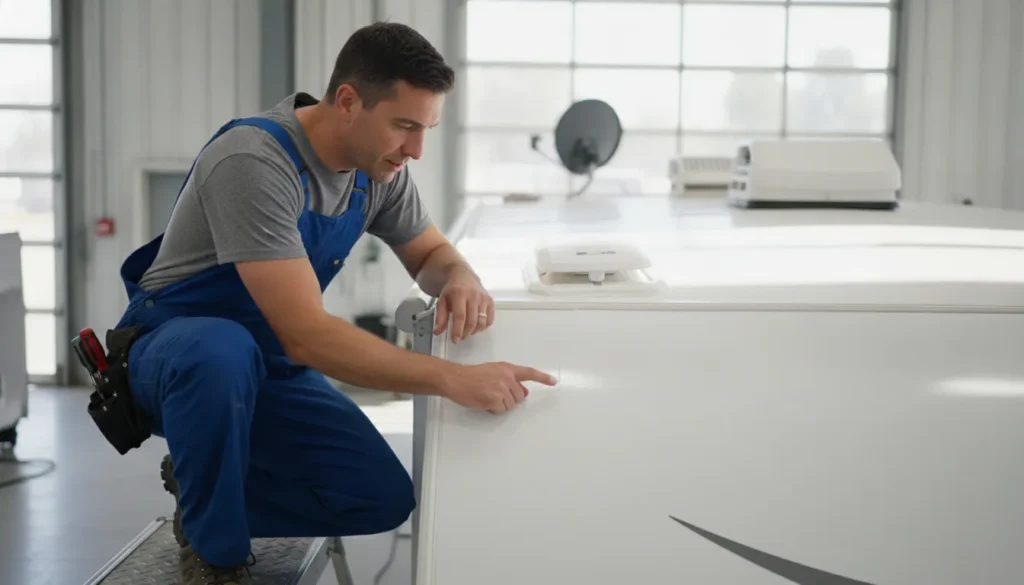
Detecting and repairing leaks early is the single most important factor in extending the lifespan of your RV and protecting your wallet. A professional leak inspection uses advanced diagnostic tools, such as electronic moisture meters and pressurized leak detection systems, to locate water intrusion points before they cause visible damage. These systems can find tiny leaks that are invisible to the naked eye, allowing you to address them before they lead to structural rot. At Patriots RV Services, our team has over 45 years of combined technical experience identifying and repairing complex water intrusion issues. Whether your travel trailer needs a roof reseal, slide-out seal replacement, or complete structural reconstruction, we fix your RV right the first time. We work directly with insurance companies and extended warranties to make the repair process as easy and stress-free as possible. For a permanent solution to roof leak worries, we offer specialized roof systems like the AeroArmor spray-on polyurea roof. This system creates a solid, maintenance-free barrier over your entire roof, eliminating seams and leak points permanently, and comes with a lifetime warranty. Investing in professional inspection and repair today is the best way to ensure your RV remains safe, structural, and ready for your next adventure. Stop minor leaks from turning into total floor replacements. Book your professional RV service and repair appointment at Patriots RV Services today. Link: Patriots RV Services General Services and Repairs.
Frequently Asked Questions About RV Water Damage
How often should I inspect my RV roof sealants?
You should inspect your RV roof sealants at least twice a year, ideally in the spring and autumn. In North Texas, the intense summer heat and UV rays degrade sealants quickly, so checking them before the heavy spring rains and autumn storms is highly recommended. Look closely for cracks, peeling, or gaps in the self-leveling lap sealant around all vents, skylights, and seam edges.
Can I use regular silicone sealant on my RV roof?
No, you should never use household silicone sealant on your RV roof. Regular silicone does not bond properly to RV roof materials like TPO, EPDM, or fiberglass, and it will quickly peel away under UV exposure and road vibration. Instead, always use specialized RV self-leveling lap sealants (like Dicor) for horizontal surfaces, or non-sag sealants for vertical seams, to ensure a durable, water-tight bond.
How do professionals detect hidden RV water leaks?
Professionals use specialized tools like non-destructive pinless moisture meters and thermal imaging cameras to detect moisture behind walls and under floors without damaging your coach. They also perform pressurized leak tests by sealing the coach, blowing air inside to create positive pressure, and spraying a specialized soapy solution on the exterior seams to watch for bubbles where air (and water) escapes.
Is RV water damage covered by insurance?
Generally, RV insurance covers water damage if it is caused by a sudden, accidental event, such as a tree branch puncturing the roof or a collision. However, water damage resulting from lack of maintenance, such as neglected roof sealants or slow, long-term window leaks, is typically excluded from coverage. This is why regular inspections and prompt repairs are so critical for owners.
Schedule Your Professional Leak Inspection Today
Do not wait until a small leak becomes a major rebuilding project. Protecting your RV from water damage requires proactive care and expert attention. Bring your travel trailer, fifth wheel, or motorhome to Patriots RV Services for a thorough inspection and professional repairs that stand the test of time. Our state-of-the-art service center is located on West 380 outside Denton (Krum, TX), and we are dedicated to helping North Texas RV owners keep their rigs in peak condition. Let us identify and fix those hidden warning signs before they disrupt your travel plans. Need immediate help with hidden leaks, roof repair, or structural damage? Contact your mission-critical RV service center. Call Patriots RV Services at (940) 290-7800 to schedule your appointment today.