
PRVS Blog
RV AC Maintenance Checklist for North Texas
Your RV roof unit works much harder once summer temperatures in Denton hit triple digits. When you skip annual care, you risk a total system failure during the most humid months of the year. Preparing your rig now ensures you stay cool and comfortable all season long.
Schedule a professional RV AC inspection before the next North Texas heat wave.
An RV AC maintenance checklist is the most effective way to prevent costly repairs and system failures before the North Texas summer begins. You should clean or replace your air filters and check the condenser coils for dirt and debris to keep the airflow steady. It is also vital to check the roof seals for cracks and clear any blockages from the shroud that could stop heat release. Experts recommend doing these tasks every six months to keep your unit running at peak efficiency in high heat (Lippert). Taking these simple steps protects your investment and prevents the energy spikes that come from a struggling motor. By following a clear schedule, you can catch small issues like bent fins or loose wires before they turn into a major crisis. This early care keeps your living space healthy and ensures your cooling system can handle the harsh Texas sun.
RV AC maintenance checklist for North Texas heat
Staying cool in the North Texas heat takes a plan. Your RV AC unit works hard to fight high temps. Without care, dust and dirt can build up fast. This makes the system work more and use more power. A clear RV AC maintenance checklist helps you stay ahead of the heat. It keeps your unit running well and lowers the risk of a mid-trip break down.
Simple tasks for RV owners
You can do many basic chores to keep your AC in top shape. First, always cut the power before you start any work. Safety is the most vital step for any owner. Check your air filters once a month during the summer. Dirty filters block air and make the system less helpful. You should wash or swap your filters at least two times each year.
You can also look for trash on the roof unit. Leaves, twigs, and bird nests can block the air flow. If you have a roof that is not safe to walk on, use a piece of plywood. This helps spread your weight so you do not break the roof. Keeping the area clear helps the unit breathe better. These small steps go a long way in saving money on power bills.
Why expert help matters
Some tasks need an expert to ensure the job is done right. A deep clean of the coils is a big job. These coils help move heat out of the RV. If they get caked with mud, the AC cannot cool the air well. A pro has the right tools to wash these parts without bending the thin fins. They also check the wires and the motor to find small issues before they get big.
Experts can find leaks or worn parts that an owner might miss. They test the cold air flow to make sure the unit hits the right mark. If your unit is older, they can tell you if it needs a small fix or a new part. Using professional RV AC repair services ensures your system is ready for a long trip. This peace of mind is worth the cost when the Texas sun is at its peak.
| Task Type | What to Do | Best Timing |
|---|---|---|
| Owner Care | Wash air filters | Every 30 days |
| Owner Care | Clear roof debris | Before each trip |
| Expert Service | Clean deep coils | Once per year |
| Expert Service | Check wire bonds | Every spring |
| Full Check | System test | Every 6 months |
Best timing for upkeep
Timing is key to avoiding an AC outage when you need it most. Most experts say you should check the system every six months. In North Texas, the best times are spring and fall. A spring check gets you ready for the long summer. It finds issues caused by winter storage or cold temps.
A fall check is also helpful if you plan to travel south for the winter. It clears out the dust from the summer months. If you camp in dusty spots, you may need to check the unit more often. Routine care is the best way to stop system failure and costly repairs. Staying on a set plan keeps your RV cool and your trips fun.
What RV AC maintenance can owners safely do?
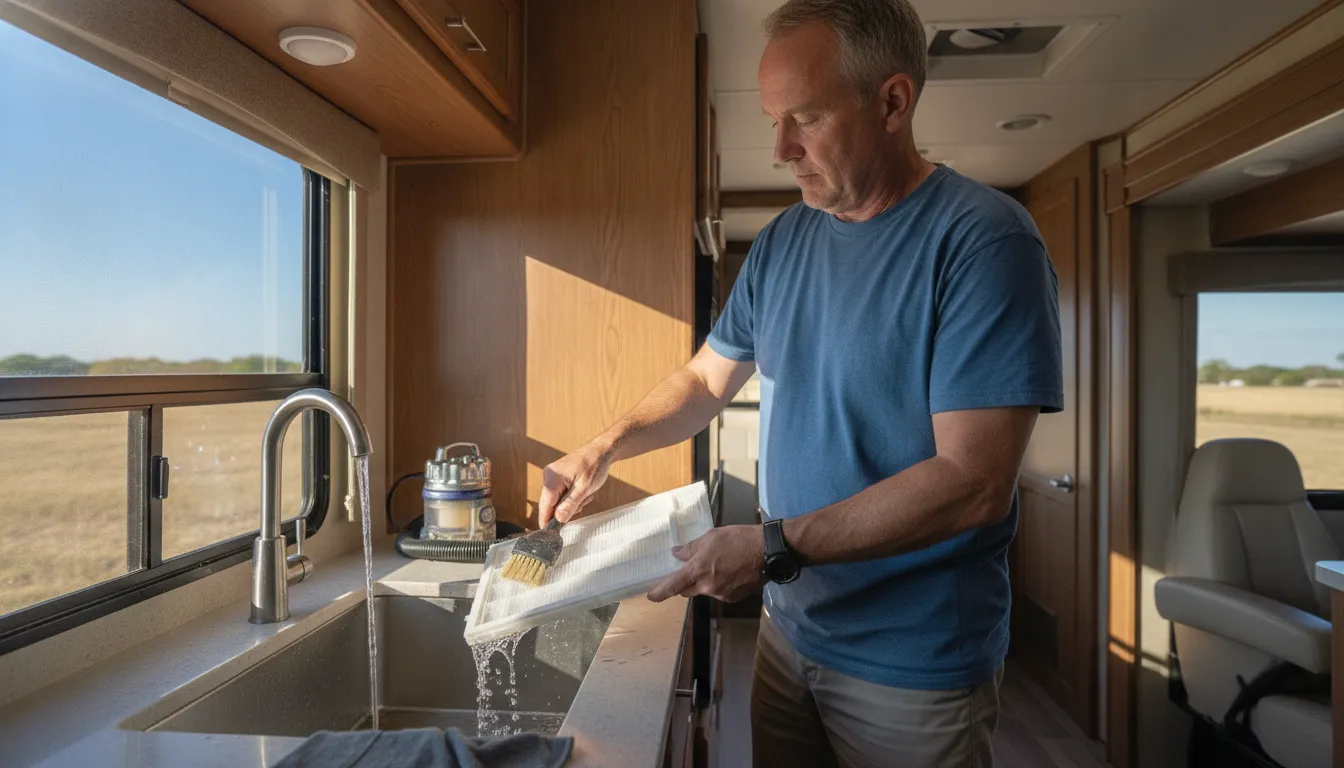
Many RV owners ask what tasks they can handle on their own. You do not need to be a pro for every job. Simple steps keep your unit running well and save you money. Routine care helps you find small issues before they become big repairs. This study on AC maintenance shows that proper upkeep is key to keeping costs low. Using an RV AC maintenance checklist helps you stay on track. Before you start any work, you must turn off all power to the AC unit to stay safe.
Check your air filters and vents
Dirty filters are a main cause of poor cooling in a camper. Dust, lint, and pet hair block airflow and make the system work too hard. This extra work can lead to a system failure over time. Most filters should be cleaned or replaced at least twice a year. If you stay in dusty spots, you may need to check them every month. Most RV AC filters are easy to reach from the inside of your rig. You can often wash foam filters with warm water and mild soap.
While the filter is out, take a look at the vents. Check for any dirt or mold that may have grown. A clean system helps keep the air in your RV fresh and healthy. If you have a Dometic unit, you can look at a guide for troubleshooting your Dometic RV AC for more good tips. Keeping your vents clear ensures the cold air can flow into your living space without any blocks. This simple step can keep your rig much cooler on hot days.
Inspect the rooftop unit and coils
You also need to look at the parts on top of your RV. The rooftop unit takes the most heat from the sun and dirt from the road. If your roof is not safe to walk on, use a piece of plywood to spread your weight. This protects the roof from leaks and cracks. Once you are up there, take off the plastic shroud to see the coils. These coils help move heat out of your RV. As shown in research on RV cleaning, dirty coils can slow down your cooling speed.
Gently brush the coils to remove dust and dirt. Be very careful not to bend the thin metal fins on the coils. If the fins are bent, the air cannot pass through them. You can buy a cheap tool called a fin comb to straighten them if they are flat. Also, check the base pan for any standing water. The drain holes must stay clear so water can run off the roof. If you find deep dirt or power issues, it is best to call for professional cooling-system diagnosis. Never try to fix wires or work on the gas lines yourself.
- Disconnect power: Turn off all power sources to the unit before you begin any work.
- Remove filters: Take off the indoor ceiling cover and remove the air filters for a close check.
- Wash foam filters: Use mild soap and water, then let them dry fully before you put them back.
- Use a ladder to reach the roof and check the AC cover for cracks or sun damage.
- Remove the shroud and clear out any leaves, dirt, or bird nests that have built up.
- Gently brush the outer coils to remove dust that keeps the unit from releasing heat.
- Check the roof seals around the base of the unit to make sure they are still tight.
Inspect the rooftop unit without taking unsafe risks
Your RV AC maintenance checklist must start with safety. Working on top of a rig can be risky. Before you climb up, you must cut all power to the AC. This helps you avoid shocks while you work. If your rig has a roof you cannot walk on, use a large piece of wood to spread your weight. This guards the roof from dents or leaks. Always use a sturdy ladder and have a friend watch you from the ground. Taking these steps prevents falls and keeps your rig in good shape.
Start with safety and tools
Once you are on the roof, your first task is a visual check. Look for any damage to the roof near the AC. Small cracks can lead to big leaks when it rains. You will also need a few basic tools like a nut driver or a soft brush. Make sure you have firm footing before you lean over the unit. If you feel unsafe, it is best to stop and call for help. Proper safety gear is a key part of full RV upkeep services. It is better to be safe than to risk a bad fall.
Check the shroud and seals
The plastic cover on top is called a shroud. Sun and heat can make this plastic brittle over time. Look for cracks or pieces that have broken off. A bad shroud lets rain and dirt get inside the unit. This can lead to mold or rust on the metal parts. While the cover is off, check the rubber seal at the base. This seal keeps water out of your living space. If the rubber looks flat or dry, it might be time to replace it. A good seal is vital for helping cooling work and keeping your cabin dry. You should check the shroud at least once a year to find small issues early.
Clear debris from the unit
Inside the unit, you will often find leaves, twigs, or bird nests. These items can block the air or stop the fan from spinning. Use a soft brush to clear away any dirt from the coils. Do not use a high-pressure hose, as it can bend the soft metal fins. If the fins are bent, the air cannot flow well, and the unit will work too hard. Check the drain holes to make sure water can flow out. If water pools on the roof, it can rot the wood or cause leaks inside. Keeping these parts clean helps you avoid the need for qualified RV air conditioner service later in the year. Clean coils allow the system to shed heat with less stress.
You should also look at the fan blade for any chips or dirt buildup. A dirty fan can cause the unit to shake and make a lot of noise. This extra stress can wear out the motor fast. If you see any loose wires or burnt marks, do not touch them. These are signs of a bigger issue that needs an expert. Make a note of what you see so you can share it with a pro. A quick look now can save you a lot of money and stress when the summer heat hits. Taking care of your AC helps it last for many years of travel.
Which warning signs mean it is time for professional service?
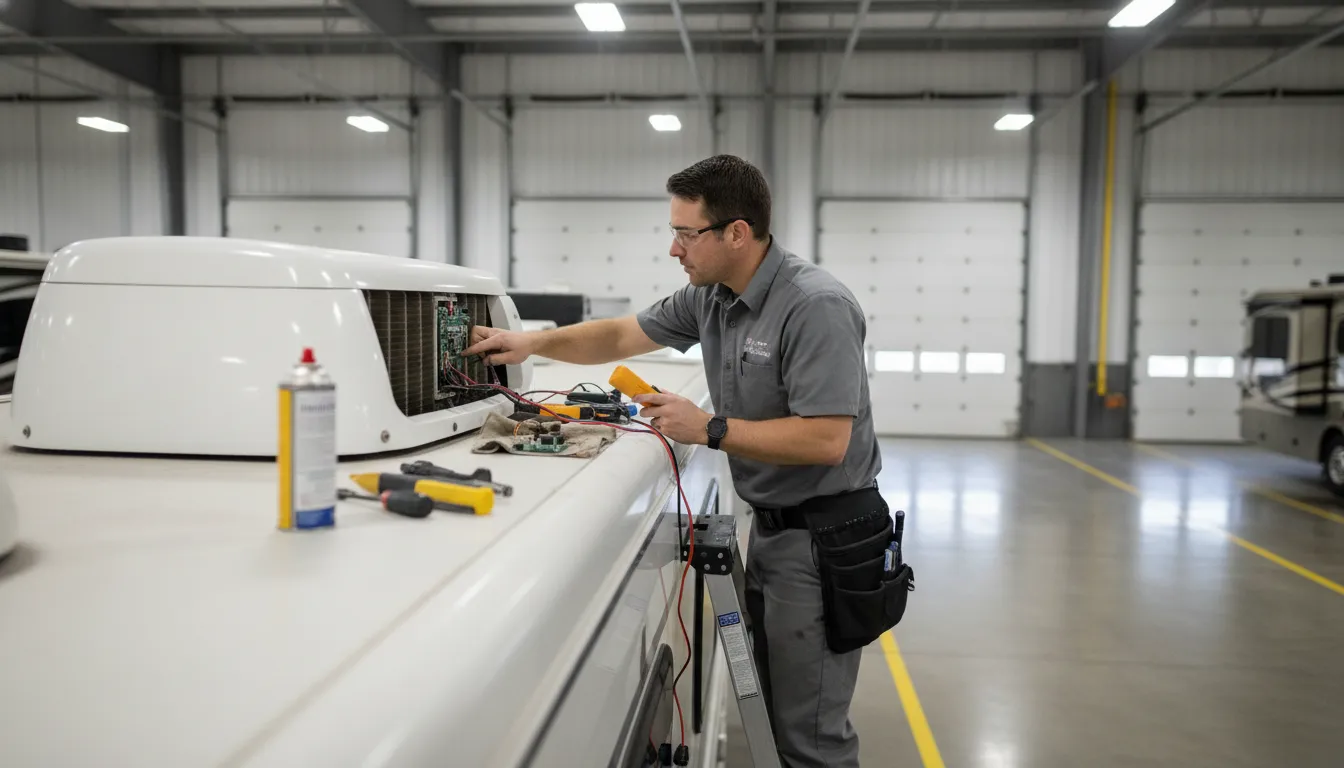
You can handle basic tasks like cleaning filters on your own. But some signs tell you that a job is too big for a DIY fix. Even the best RV AC maintenance checklist has its limits. When a system shows major trouble, an expert should look at it to prevent a total break. In the heat of North Texas or Oklahoma, a failed AC can ruin your trip. It can even put your safety at risk. Catching these signs early helps you get back on the road fast.
Strange smells and power issues
If you smell something burning, turn the AC off at once. This hot, sharp scent often means a wire is melting or a motor is failing. You should also watch out for a sweet smell, which could mean a leak. Another red flag is when your RV breaker trips often. If the power cuts out when the AC starts, the unit is pulling too much power. This is a sign of a short circuit or a weak motor. High-voltage parts are dangerous to touch. It is best to let a pro handle these power repairs.
Loud noises and shaking
A good AC unit makes a steady, low hum. You should be worried if you hear sounds like metal hitting metal. Loud banging, screeching, or grinding usually means the fan or compressor is failing. These parts are the core of your cooling system. If they break, the whole unit might need to be replaced. You may also feel the RV shake when the AC is on. This shaking can damage the roof seals and cause leaks over time. A quick check by an expert can find the source of the noise before it leads to a big bill.
Ice build-up on the coils
It sounds odd, but an AC unit can freeze in the middle of summer. If you see ice on the indoor coils, do not ignore it. This often happens because of a refrigerant leak or a big clog in the system. According to a report from Stanford University, pro guides help owners find these issues before they turn into major repairs. When ice forms, the unit cannot pull heat from the air. You should turn it off and let it melt. But the ice will just come back unless a pro fixes the root cause. This is a task that goes beyond a standard RV AC maintenance checklist.
Water leaks and wet air
Your AC unit should pull water out of the air to keep you dry. But that water should stay outside. If you see water dripping from the ceiling or running down the walls, you have a problem. This often means a drain line is clogged or a seal has failed. If water sits inside your unit, it can lead to mold. Mold is bad for your health and hard to get rid of. A pro can clear the lines and check the roof seals to keep your RV dry. They will make sure the unit is level and the water flows where it should.
Warm air or rapid cycling
The clear sign of trouble is when the AC blows warm air. If you have cleaned your filters but the air stays hot, you likely have a refrigerant issue. RV units are sealed, so you cannot just top off the gas yourself. You need special tools to find and fix leaks. Another sign is short cycling, where the unit turns on and off every few minutes. This puts a lot of stress on the compressor and wastes power. You should seek professional RV AC repair services to solve these deep cooling issues. Experts can test the pressures and sensors to get your system back to peak state.
Prepare your RV AC before peak summer temperatures
Why North Texas heat tests your AC
North Texas summers bring high heat and moist air. These times of year push your cooling system to the edge. Most RV air units can only cool the inside to about 20 degrees below the outside air. When it is 100 degrees in Denton, your RV might stay at 80 degrees. This is normal, but many owners want more. You should know that your AC works by moving heat from the inside to the outside. This is a big job when the sun beats down on your roof all day.
To get the best work, you must start with a clean system. Dust and dirt from local roads can block air flow. This makes your unit work harder and use more power. Without care, your AC may fail when you need it most. Regular maintenance is the best way to keep costs low and cooling high during the hot months. When you keep your unit clean, you also help the fan motors last longer. A hard-working motor can burn out if it cannot move enough air.
Simple steps for your RV AC maintenance checklist
A solid RV AC maintenance checklist starts with the basics. You can handle some of these tasks yourself to save time and money. Focus on these areas before your first summer trip:
- Clean or swap your air filters. Dirty filters slow down air and let grime build up on your coils.
- Inspect the rooftop shroud. Look for cracks or loose bolts that could let water in.
- Check the roof seals. Ensure the unit is tight to the roof to prevent leaks.
- Clean the coils. Both the indoor and outdoor coils need to be clear of dirt to move heat well.
Proper care of your cooling coils prevents air blocks. This helps your unit run well and last longer. You should also look for ways to help your AC. Park in the shade and use your awning to block the sun. Keep your blinds closed during the day to keep heat out of the coach. These small steps make a big difference when the sun is bright. You can also add more vents or a better fan to help move cool air through the RV.
The value of a spring checkup
Pre-trip testing is vital for a smooth summer. Do not wait until your first day at the camp to turn on the AC. Run the unit at home for a few hours. Listen for odd noises and feel for cold air. If you find a problem now, you can fix it before the shop is full. Testing your unit early gives you time to find parts if you need them.
Many owners prefer professional RV AC repair services for a full check. A pro can test power parts and check for leaks that are hard to see. At Patriots RV Services, we suggest a full check every spring. This reduces the risk of a surprise breakdown during your trip. A pro can also check the fan blade and the start parts to make sure they are in good shape.
While we cannot promise zero issues, a pro check finds most common faults early. Our team at Your Mission Critical RV Service Center in Denton is ready to help. We focus on fast, expert work to get you back on the road. We know how much your summer trips mean to you and your family. For expert help, call us at (940) 488-5047.
What does a professional RV AC inspection include?
Detailed system checks
A pro check goes much deeper than just looking at a dirty filter. When you bring your rig to a shop, the tech looks at the heart of the unit. They test the cold indoor coil and the hot outdoor coil to ensure they move heat well. One coil cools your air, while the other releases heat to the outside. These parts must stay clean to prevent your system from working too hard.
A tech also tests the fan motor and its speed. They look for worn parts that might fail in the middle of a trip. This deep look helps owners find symptoms of failing AC systems before they turn into big bills. It is a key part of your yearly full RV care services. Experts suggest these checks at least once a year to keep your system in top shape.
Cleaning and power safety
Dust and mold can hide in places you cannot reach easily. Pro cleaners remove the outer cover to find debris in the vents and coils. Mold growth is a real risk in damp units. Techs use safe tools to clear this out without hurting the thin metal fins. This cleaning is vital for good air flow and keeps your power bills low.
Power safety is another big part of the job. Pros check every wire and plug for heat damage or loose parts. They make sure the unit draws the right amount of power. Poor wiring is a fire risk that DIY checks often miss. For people near Denton, getting a professional RV AC inspection ensures these high-risk areas stay safe. They follow a strict RV AC maintenance checklist to ensure no part is missed.
How to prepare for your visit
You can help your tech by doing a few small things before you arrive. Clear the space under the AC unit inside your rig. Remove any items that might block the tech as they work. If you have noticed odd sounds or smells, write them down. Being ready for your visit saves time and helps the tech focus on the task.
Tell the shop if the air feels less cold than it used to. These small details help the tech find the root cause fast. While a pro check finds most risks, it is not a magic fix. It ensures your unit is in its best shape, but it cannot stop every future part failure. Steady care helps your unit last longer and keeps your rig cool and dry.
Frequently Asked Questions
How often should I service an RV AC?
RV AC systems need care at least once every six months to keep them running well. While most owners do a full check in the spring, you should check your unit twice a year. According to Lippert, regular upkeep helps the unit work at its best. If you live in a dusty area like North Texas, you may need to check your air filters more often. Good timing prevents breakdowns during the hot summer heat.
What is on a regular RV AC maintenance checklist?
A good checklist covers cleaning filters, checking coils, and looking for leaks. You must clean or swap your filters at least twice a year to keep air flowing. Experts at Keystone RV say to swap them in the spring and fall. You should also check the roof seals and the AC cover for any cracks. These simple steps help your unit cool better and last longer through the Texas heat.
Why is RV AC maintenance important before summer?
Cleaning your unit before the heat hits prevents high power bills and system failure. Dirty filters and coils make the unit work harder. This can lead to the unit breaking down. Research shows that proper care is key to saving money on power costs. Getting your AC ready early ensures you stay cool when North Texas heat rises. It also helps you find small issues before they turn into big, costly repairs.
How do you clean RV AC coils?
To clean the coils, first turn off all power to the unit for safety. Use a soft brush or a special cleaner to remove dust and dirt from the coils. Studies show that removing mold and dust from these parts is vital for good air flow. Rinse the coils gently with water, but be careful not to bend the metal fins. Clean coils help the system release heat the right way.
Ready to schedule your expert RV air conditioning service?
Ignoring your yearly RV AC checkup before the intense North Texas heat begins can cause sudden system breaks and lead to very high repair bills. If you wait until the peak of summer to find a problem, you will likely spend weeks waiting for parts while your family stays hot. Booking your maintenance service now ensures your system runs well so you can avoid the stress of a sudden AC outage during your summer trips.
Ready to schedule RV AC service? Please reach out to the expert team at Patriots RV Services. Call (940) 488-5047 to set up your full system check so you can stay cool and safe all summer today.