PRVS Blog
RV Washing and Detailing North Texas: Protect Your RV Finish
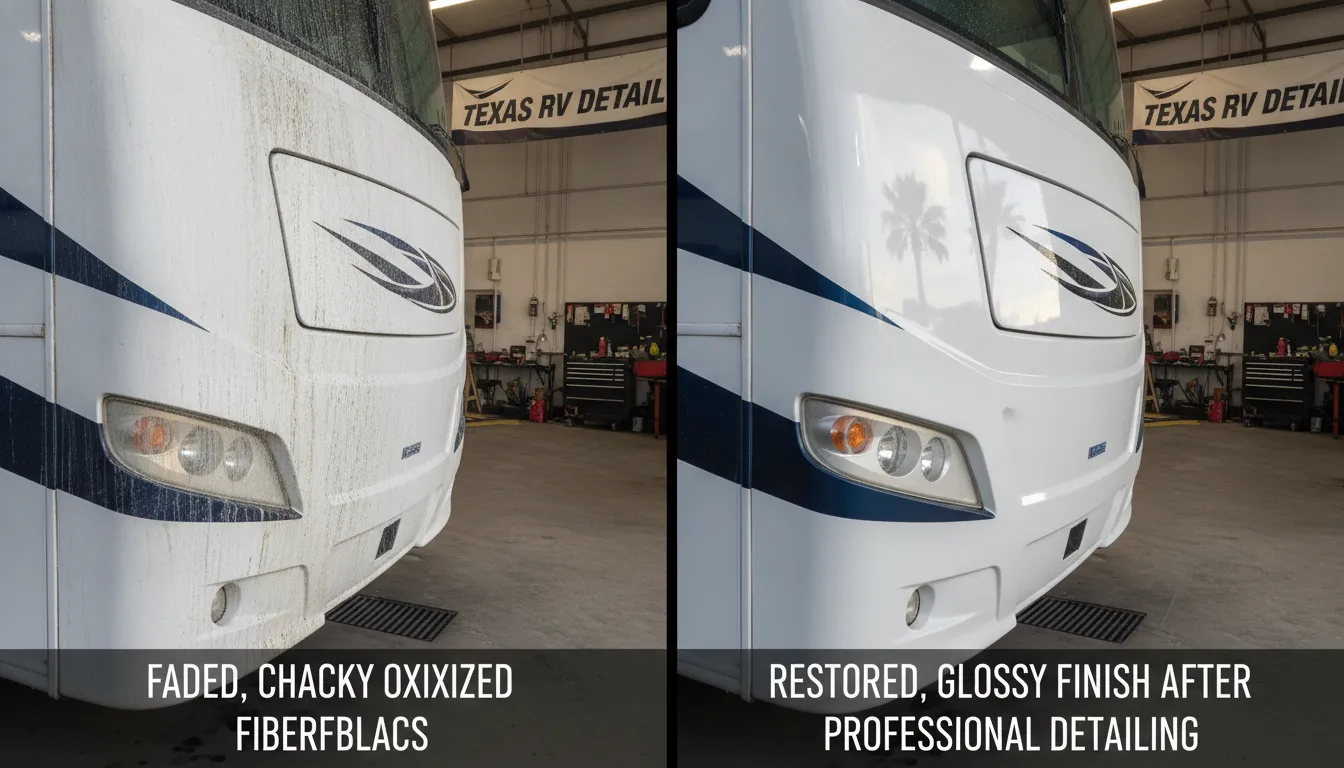
A dull, chalky white haze on your fiberglass RV is a warning sign of severe UV paint damage. This surface degradation shows that your gel coat has lost its defensive seal. To prevent costly surface repairs, scheduling an appointment with Patriots RV Services at (940) 488-5047 is your best path.
Professional RV washing and detailing North Texas keeps your motorhome or trailer looking pristine while protecting your investment from environmental damage. Regular detailing helps maintain the longevity of your RV exterior and paint finish by removing road grime, tree sap, and bugs before they etch into the surface. At Patriots RV Services, our premium service center offers thorough hand washing, machine polishing, waxing, oxidation removal, and advanced ceramic coatings. Because solar ultraviolet (UV) radiation causes degradation in synthetic materials and plastics over time, regular cleanings and protective coatings act as essential stabilization interventions. This continuous shield extends the service lifetime of your paint and gel coat. Since our pricing model uses a direct per-foot rate based on your vehicle size, you get precise, transparent rates for your custom detailing needs.
Protecting a large motorhome or travel trailer requires professional care that matches the harsh local environment. You need to understand how the intense heat and sun degrade your vehicle gel coat. We will look closely at these environmental risks in How North Texas Weather Damages Your RV's Exterior, starting with the chemistry of solar heat and surface degradation.
RV Washing And Detailing North Texas: How North Texas Weather Damages Your RV's Exterior
Owning an RV in Denton or North Texas exposes your vehicle to harsh weather patterns. The local climate features high summer heat, intense sun, heavy dust, and seasonal storms. These factors work together to degrade your RV's outer shell. Without regular care, this constant exposure ruins the paint, cracks the seals, and lowers the value of your vehicle.
The Chemistry of Sun and UV Damage
The hot Texas sun is the biggest threat to your RV's exterior paint and gel coat. Solar ultraviolet (UV) radiation damages synthetic materials and plastics by breaking down their chemical bonds. According to a study on material longevity in PMC, this radiation shortens their useful service life. When these UV rays hit the fiberglass gel coat, they degrade the resin binder that holds the material together. This chemical breakdown leads to oxidation, which shows up as a dull, chalky white powder on the surface. When this occurs, you need professional RV oxidation removal to restore the shine and stop deeper damage.
Thermal Expansion and Seal Breakdown
North Texas weather is famous for wild temperature swings. Local temperatures often shift by dozens of degrees in a single day. This constant thermal cycle causes the metal, fiberglass, and plastic parts of your RV to expand and contract at different rates. This movement puts intense stress on the caulking and sealant beads around your roof, windows, and slide-outs. Over time, these protective barriers dry out, shrink, and crack. When seals fail, rainwater from heavy storms can seep into the walls, leading to wood rot and costly structural repairs.
The Impact of Local Grime and Tree Sap
Local physical elements also speed up the wear on your RV exterior. Wind blows dry North Texas dust across the highway, which acts like sandpaper against your paint when you travel. Oak and pecan trees drop sticky sap that bakes onto the roof under the summer sun. This baked sap traps heat and eats through the clear coat. Road grime and crushed insects also contain acidic compounds that etch into the gel coat if left unwashed. Getting regular RV washing and detailing North Texas services removes these harmful materials before they cause permanent damage.
Why DIY Washing Falls Short for RVs
Washing an RV yourself might seem like a simple way to save money. But these large rigs have unique needs that standard home cleaning gear cannot handle. Attempting a home wash or visiting a local commercial wash often leads to costly exterior damage that ruins the value of your motorhome or trailer.
Physical clearance and safety risks
Most automatic car washes have a low overhead clearance of about seven feet. Since a standard motorhome stands 11 to 14 feet tall, standard drive-through washes are physically impossible to use. Washing the top sections at home requires climbing high ladders with wet, soapy hoses, which creates a major fall hazard. Without stable scaffolding and a secure work area, reaching the roof of a large vehicle is highly dangerous for any homeowner.
Paint damage from harsh tools
Standard household sponges and mops easily trap road dirt and tiny rocks. As you drag these tools across your vehicle, they act like sandpaper and leave deep scratches in the paint. Commercial truck washes use stiff nylon bristles that are designed for rugged commercial trailers, but these spinning brushes are too harsh for fiberglass. They quickly wear down the gel coat and leave ugly swirls on your exterior finish.
Furthermore, improper cleaning soaps can trigger chemical damage. Standard dish soaps or cheap vehicle detergents have high pH levels that strip away protective waxes. When the fiberglass loses its protective barrier, solar ultraviolet radiation causes accelerated degradation in synthetic materials, shortening their overall lifespan as shown in research by the National Institutes of Health (NIH). Using the wrong soap directly exposes your paint to North Texas weather.
The problem with hard water spots
Water in the Denton area has high mineral content that leaves stubborn calcium spots as it dries. Professional detailers use water filtration systems to strip out these minerals before the wash. Without professional-grade filters and large microfiber drying tools, a DIY wash will leave hard mineral spots baked onto the hot fiberglass. These spots are highly difficult to remove without professional machine polishing.
DIY washing vs professional detailing
Choosing between a weekend DIY wash and hiring a professional service comes down to safety, equipment, and results. Professional shops have the right gear to protect your fiberglass finish and preserve the resale value of your vehicle.
| Factor | DIY Wash Method | Professional Detailing |
|---|---|---|
| Height Clearance | Difficult ladder access with fall risks | Fixed facility with safe high-reach platforms |
| Wash Tools Used | Standard mops, sponges, and stiff brushes | Soft lamb wool mitts and grit-guard buckets |
| Soap Chemistry | Harsh dish soaps or high-pH detergents | Premium pH-neutral fiberglass soaps |
| Water System | Untreated North Texas tap water | Deionized water filtration systems |
| Polishing & Protection | None or basic hand-applied retail wax | Professional machine polishing and sealant |
If you want to keep your motorhome looking new, investing in professional RV washing and detailing services is the safest approach. Professional care prevents the permanent paint scratches and gel coat oxidation that make an RV look old before its time.
What Professional RV Detailing Actually Includes
Professional care goes far beyond a quick rinse with a garden hose. To safeguard your investment, professional shops use a methodical process to clean, correct, and protect every exterior surface. This structured approach helps maintain the longevity of your coach, shielding it from the harsh Texas climate.
At Patriots RV Services, our team uses a precise sequence to eliminate road grime and preserve the underlying gel coat. For local owners, getting RV washing and detailing services at our facility ensures that every square inch of the vehicle receives deep cleaning and paint protection.
The six-step restoration process
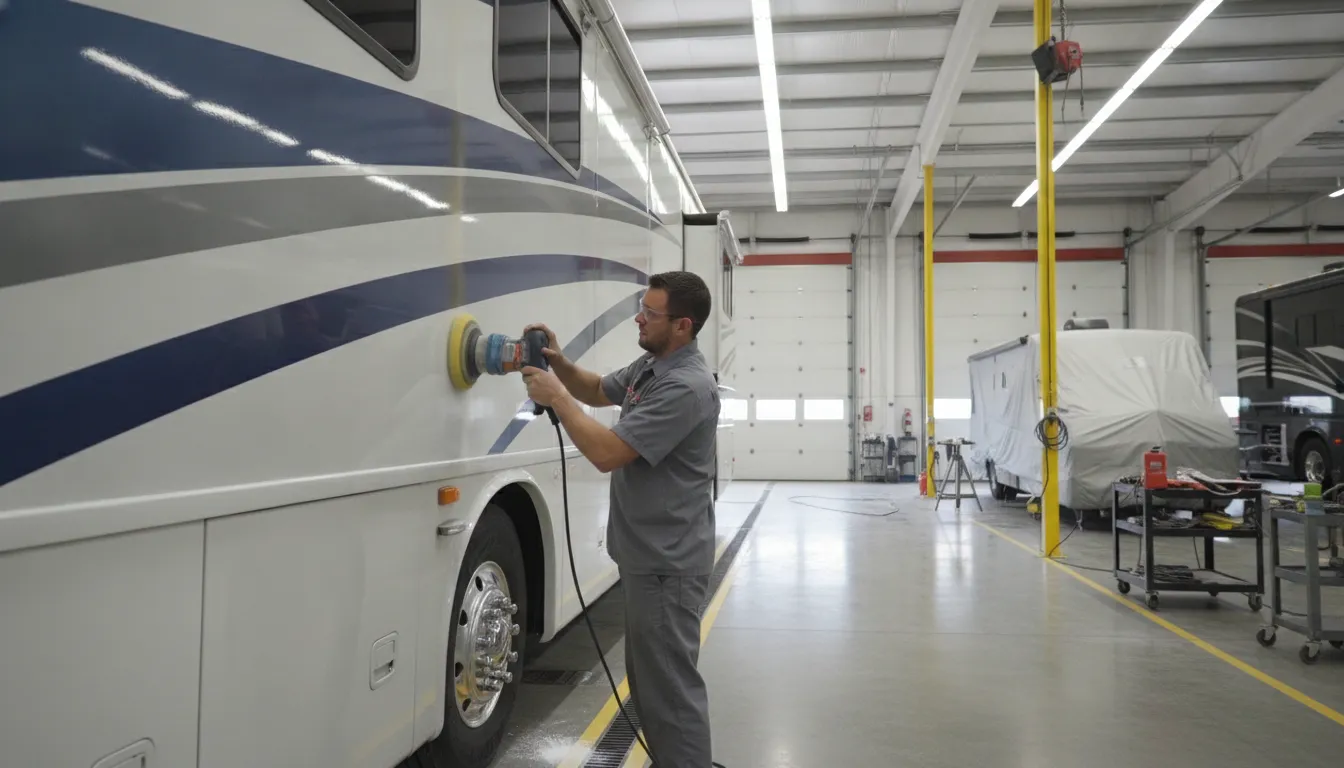
Our detailing process follows a strict sequence of steps to ensure your RV receives thorough cleaning and deep protection.
- Pre-rinse and debris removal: A comprehensive rinse flushes away loose dirt, mud, and road salt before any wash mitts touch the surface. Technicians apply specialized, non-abrasive cleaners to dissolve stubborn bug splats and tar on the front cap safely.
- Foam bath and hand wash: Technicians apply a thick layer of pH-neutral foam to the entire vehicle. This foam clings to the vertical walls, breaking down surface oils and environmental contaminants without stripping existing sealants.
- Clay bar decontamination: Technicians slide a professional clay bar across the lubricated surface to pull embedded particles out of the pores of the fiberglass. This step leaves the exterior glass-smooth, creating the ideal foundation for protective coatings.
- Machine polishing and correction: If the surface looks dull, technicians use orbital polishers and fine compounds to remove light scratches and early signs of oxidation. This mechanical correction step restores depth, clarity, and shine to the paint or gel coat.
- Protective coating application: Technicians apply a high-grade sealant, wax, or advanced ceramic coating to the smooth exterior. According to a study on material longevity in PMC, protective coatings are vital interventions to combat solar UV-induced damage and extend the lifetime of exterior materials.
- Final inspection and trim detailing: The process finishes with a detailed inspection of every seam, window seal, and chrome trim piece. Technicians clean exterior glass, dress the tires, and apply UV inhibitors to rubber seals to prevent dry rot.
Understanding detailing pricing
Unlike standard cars, recreational vehicles vary wildly in length, height, and overall surface area. Because of these size differences, professional shops do not use flat-rate pricing. Instead, detailing services are priced using a clear per-foot model. This pricing structure depends directly on the length and size of your specific vehicle, ensuring you only pay for the exact surface area that receives care.
Oxidation Removal vs. Paint Correction vs. Standard Waxing
To keep your motorhome looking good, you must know the difference between standard care and paint restoration. Simple surface wash and wax jobs do not fix deep UV damage. If your paint looks dull or chalky, you need more than a basic wax coat. In North Texas, the hot sun breaks down the outer layer of fiberglass gel coats and paint. We offer expert RV paint services to help you find and fix this damage before it ruins your vehicle's value.
Standard Washing and Waxing
A basic wash and wax is best for clean, shiny vehicles that only need simple protection. Technicians wash off road dirt, bugs, and dust, then apply a liquid or paste wax. This layer shields your paint from water and light sun rays for two to four months. A basic wash from local providers like MoBull Detailing starts at about $10 per foot. This is a great preventative service, but it will not remove scratches or restore faded areas.
Oxidation Removal and Paint Correction
If your RV has a dull, white, chalky look, the resin binder in the gel coat has broken down. According to research published in PMC, solar UV radiation degrades these synthetic materials over time, which cuts their useful lifespan. To fix this, you need oxidation removal. Techs use an abrasive compound and a high-speed buffer to shave off the dead gel coat layer. They follow this step with a fine polish to restore the gloss. For a deluxe wash, compound buffing, and polishing, pricing typically ranges from $20 to $25 per foot, as seen in deluxe options like KJ Mobile Details.
Choosing the Right Level of Care
Choosing the right plan depends on the age and wear of your RV. If your paint is bright, keep it safe with a standard wash and wax every three to six months. If your paint is cloudy, you must schedule paint correction first. Putting wax over dry oxidation is a waste of money because the wax cannot stick to dead resin. A full restoration prep removes the damage so your new sealant or ceramic layer can form a solid bond with the real paint beneath.
| Service Level | What It Does | How Long It Lasts | Estimated Price |
|---|---|---|---|
| Standard Wash & Wax | Removes surface dirt and adds a light protective wax layer. | 2 to 4 months | About $10 per foot |
| Oxidation Removal | Buffs off dead gel coat resin to restore the natural shine. | 2 to 4 years | About $20 to $25 per foot |
| Full Detailing & Polish | Deep compound buff, polish, and high-grade seal or ceramic coat. | Varies by coat type | About $250 to $590 total |
Ceramic Coating: Is It Worth It for North Texas RV Owners?
North Texas weather is notoriously harsh on recreational vehicles. The extreme heat and intense sun can degrade paint and fiberglass surfaces in just a few seasons. For many owners, traditional wax is no longer enough to fight off these environmental threats. Investing in a professional ceramic coating is one of the most reliable ways to protect your vehicle from the elements.
How Ceramic Coatings Protect RV Paint
A ceramic coating is a liquid polymer that is applied by hand to the exterior of an RV. It chemically bonds with the factory paint or gel coat to form a hard, semi-permanent layer of protection. This chemical bond means the coating does not wash off or break down like traditional paste wax. Solar ultraviolet (UV) radiation is the leading cause of exterior degradation on synthetic materials and gel coats. According to research published in PMC Materials, solar UV rays and high temperatures shorten the service lifetimes of outdoor materials unless protective interventions are used. A high-quality ceramic coating blocks these harmful rays, keeping your RV paint from fading or chalking in the Denton sun.
Comparing Ceramic Coatings and Traditional Wax
While traditional wax lasts only two to four months, a ceramic coating can protect an RV for two to five years. Wax sits on top of the paint and melts under the high heat of North Texas summers. In contrast, ceramic coatings withstand temperatures well above normal weather limits. This durability reduces the need for frequent reapplications, making it a highly practical option. Additionally, ceramic coatings have hydrophobic properties that cause water to bead up and roll off the surface. This slick barrier prevents dirt, bird droppings, and tree sap from baking into the paint. When you need RV washing and detailing North Texas services, a coated vehicle is much easier and faster to clean because grime cannot stick to the surface.
Is the Investment Worth It?
A ceramic coating requires a larger upfront cost than a standard wash and wax. However, the long-term value makes it highly beneficial for local owners. Because a single application lasts for years, you save money on seasonal detailing visits. The coating also acts as a shield against light scratches and chemical stains. This protection preserves the resale value of your motorhome or trailer. If you want to keep your exterior in top condition, you can explore more about ceramic coating and paint protection options. For those who store their vehicles outdoors in North Texas, Oklahoma, or Arkansas, the shielding effect of a professional coating easily justifies the initial price.
How Often Should You Detail Your RV in North Texas?
The intense North Texas sun can quickly degrade your RV's exterior. To protect your investment, you must follow a regular care schedule. Regular upkeep keeps your vehicle looking clean and prevents costly paint and gel coat damage.
Three steps for seasonal care
Weather in Denton and the surrounding area changes with each season, meaning your RV needs different levels of care throughout the year. Setting up a three-step seasonal schedule ensures your motorhome or trailer has constant protection against UV rays, tree sap, and road salt.
- Spring deep detail: Before you head out on your first road trip, get a full wash and wax. This step removes winter dust and applies a fresh protective layer to combat the rising heat of the Texas spring.
- Mid-season summer wash: Intense heat and UV rays quickly thin out standard wax coats. A mid-summer wash and wax reapplication keeps the exterior safe when solar rays are at their strongest.
- Pre-storage fall seal: Before parking your RV for the colder months, clean off road grime and baked-on bugs. Apply a thick sealant or polymer wax to block winter moisture and dirt.
Signs your RV needs detailing now
While seasonal care is a great baseline, you should watch for warning signs that your protective barrier has failed. Checking your vehicle after long trips helps you catch issues before they turn into permanent exterior damage.
First, test how water reacts on the surface of your vehicle. If rain or wash water no longer beads up but flatly clings to the paint, your wax layer is gone. Second, run your hand along the sidewalls; a rough or chalky feel means the gel coat has begun to break down. Finally, look closely at the finish for any signs of fading or white powder, which point to active solar oxidation. If you notice these symptoms, seek professional RV washing and detailing North Texas services immediately.
Why solar intensity dictates your schedule
The main threat to your RV paint in Krum, Denton, and the broader North Texas region is solar ultraviolet (UV) radiation. Scientific studies show that UV rays damage synthetic exterior materials and shorten their useful life (PMC10088630). This constant exposure breaks down the resins in your RV's gel coat and leads to severe oxidation (Patriots RV Services).
If you store your RV outdoors without a cover, you will need to detail it more often to maintain its finish (Patriots RV Services). Vehicles parked in full sun require a wash and new wax every three to four months. If you keep your RV under a cover or in a garage. A deep detail twice a year is usually enough to prevent paint wear and keep the exterior strong.
Frequently Asked Questions
Why is professional RV detailing important for longevity?
According to research in PMC, solar ultraviolet radiation degrades synthetic materials and plastics, shortening their useful life. Regular detailing removes road grime, bugs, and dirt. It applies critical protective barriers like wax or coatings. This process stops early fade, cracks, and oxidation to keep your motorhome or trailer strong and looking like new.
What is the average price for RV washing and detailing?
According to Patriots RV Services, professional detailing costs depend on the length and size of your vehicle. Shops use a clear per-foot rate to price these services. A basic wash is much cheaper than deep paint correction. Full detailing with machine polishing or oxidation removal requires more labor and has a higher price.
What are the benefits of a ceramic coating on an RV?
A ceramic coating provides advanced shield protection for your RV exterior. Traditional wax lasts only a few months, but ceramic coatings last for years. They block harsh UV rays and stop paint oxidation. The slick surface repels water, dirt, and road grime. This makes your routine washing much faster and keeps a deep shine on your coach.
Do you offer mobile RV detailing in Denton and North Texas?
No, Patriots RV Services does not offer mobile detailing. We perform all high-end wash, paint polish, and ceramic coating jobs at our fixed facility in Krum, Texas. This shop environment lets our crew control dust, temperature, and light. We use professional tools and lifts to deliver clean, long-lasting results that mobile setups cannot match.
Ready to protect your rig with expert detailing?
Leaving road grime, bugs, and harsh sun on your exterior paint causes deep oxidation that ruins your coach finish over time. Delaying professional care makes these surface stains much harder and more costly to fix down the road. Booking your service now stops environmental damage early, keeps your gel coat looking clean, and preserves the resale value of your investment. Our team in Krum works fast to get your rig shiny and ready for your next trip without any long dealership wait times. We are ready to help you save money and protect your vehicle today.
Ready to schedule your RV detailing appointment at Patriots RV Services? Call (940) 488-5047 to schedule your RV detailing appointment at Patriots RV Services.