
PRVS Blog
RV Air Conditioner Upgrade Guide: When to Replace Your Unit
When an RV air conditioner runs longer, cycles the generator more often, or leaves the interior warm despite clean filters, the problem may be more than routine maintenance. North Texas heat places sustained demand on aging compressors, and inefficient units can work harder while consuming more power.
An RV air conditioner upgrade replaces an aging cooling unit with a modern, more efficient model that can improve cooling performance, reduce electrical demand, and operate more quietly. Replacement makes the most sense when repair costs exceed the unit's value, cooling remains unreliable, or compressor failure is likely. Call Patriots RV Services at (940) 488-5047 for an evaluation in Denton and North Texas.
Ready to find out if your RV AC needs an upgrade? Schedule a professional evaluation with Patriots RV Services in Denton, TX today by calling (940) 488-5047 or visiting our RV AC repair services page.
Before choosing a replacement, separate correctable airflow or maintenance issues from signs of a failing system. The symptoms below can help you decide whether repair is still practical and what to review before investing in a new unit.
Signs It Is Time for an RV Air Conditioner Upgrade
An aging RV air conditioner rarely fails without warning. Watch for patterns in cooling performance, operating cost, and mechanical noise, especially before a North Texas summer puts the system under continuous load.
Cooling is inconsistent or airflow is weak
If the RV feels comfortable near one vent but warm in other areas, and the unit runs for long periods without reaching the thermostat setting, the system may be losing capacity. Weak airflow can also result from a dirty filter, blocked duct, or restricted return. Those items should be checked first, but persistent low airflow after basic service can indicate a worn blower or declining compressor performance. Inconsistent cooling is particularly frustrating in North Texas, where high ambient temperatures demand dependable capacity.
Electricity use, generator time, or noise keeps increasing
Higher electricity bills, more frequent generator cycling, or noticeably longer run times are common signs that an aging AC unit is losing efficiency. North Texas heat forces an inefficient system to work longer and harder, which can shorten its remaining operational life. Excessive rattling, grinding, vibration, or compressor noise is another warning sign. Modern RV AC units often operate more quietly than older models, so a persistent mechanical noise should not be dismissed as normal wear.
The unit is aging and repairs are becoming repetitive
Routine cleaning of coils and filters can delay replacement, but maintenance cannot restore a failing or worn compressor. Consider the unit's age alongside its service history. One isolated repair may be reasonable, but repeated repairs, declining cooling, and rising operating costs create a different cost decision. When repair costs begin to exceed the value of an aging unit, replacement is often the more practical solution. A new unit can address reliability and efficiency rather than extending a cycle of temporary fixes.
Not sure whether your symptoms call for a repair or an upgrade? Contact Patriots RV Services at (940) 488-5047 for an evaluation through our RV AC repair services.
Modern RV AC Types: Finding the Right Fit for Your Rig
An RV air conditioner upgrade is not limited to replacing one rooftop box with another. The right system depends on your floor plan, duct layout, available amperage, generator or inverter capacity, and how often you camp without shore power. High-efficiency models can improve cooling performance while reducing power consumption, but each design makes different tradeoffs.
| Type | Best for | Noise level | Efficiency | Amp draw |
|---|---|---|---|---|
| Standard rooftop, ducted | RVs with existing ceiling ducts and multiple living zones | Moderate, depending on blower and installation | Good with matched ducting and correct sizing | Moderate to high startup demand |
| Standard rooftop, non-ducted | Smaller RVs with a simple, open interior layout | Moderate to high near the interior ceiling assembly | Good when airflow is unobstructed | Moderate to high startup demand |
| Ductless mini-split | Owners prioritizing quieter operation and zoned comfort | Often low inside the living area | Strong, with efficient variable operation | Varies, often favorable for steady operation |
| Heat pump | RVs needing cooling plus electric heating in moderate weather | Similar to its compressor and blower design | Efficient when outdoor temperatures support heat-pump operation | Moderate to high, depending on model and mode |
| Inverter-driven | RVs using generators, battery systems, or limited shore power | Typically smoother and quieter than fixed-speed operation | High potential because motor speed adjusts to demand | Lower running draw, with model-specific startup requirements |
Rooftop, ductless, and heat pump choices
Ducted rooftop units distribute air through existing ceiling passages, while non-ducted units discharge directly into the room. A ductless mini-split can reduce ceiling noise and provide more targeted control, but it requires a suitable mounting location and a carefully planned refrigerant route. Heat pump models add heating capability, although they are not a substitute for a furnace in every weather condition.
Why inverter and low-amperage designs matter
Inverter-driven compressors adjust motor speed to match the current cooling demand. That avoids running at full output for every cycle and can reduce energy consumption compared with non-inverter equipment. Low-amperage AC options are also useful when an RV has limited electrical capacity. They can be a better fit for smaller shore-power connections or carefully sized generator and battery systems, but the starting and continuous loads still need to be verified.
Because equipment compatibility, roof sealing, wiring, and controls all affect the result, have the system evaluated before ordering. Patriots RV Services can help compare the available designs through its comprehensive RV services and professional installation options.
Choosing the Right BTU Rating for North Texas Summers
RV rooftop air conditioners commonly come in 13,500 BTU and 15,000 BTU configurations. The higher rating is not automatically the better choice. Your RV's length, floor plan, insulation, window area, roof condition, and electrical capacity all affect the cooling load. In North Texas, intense summer heat places sustained demand on the system, so the correct capacity matters more than simply choosing the largest available unit.
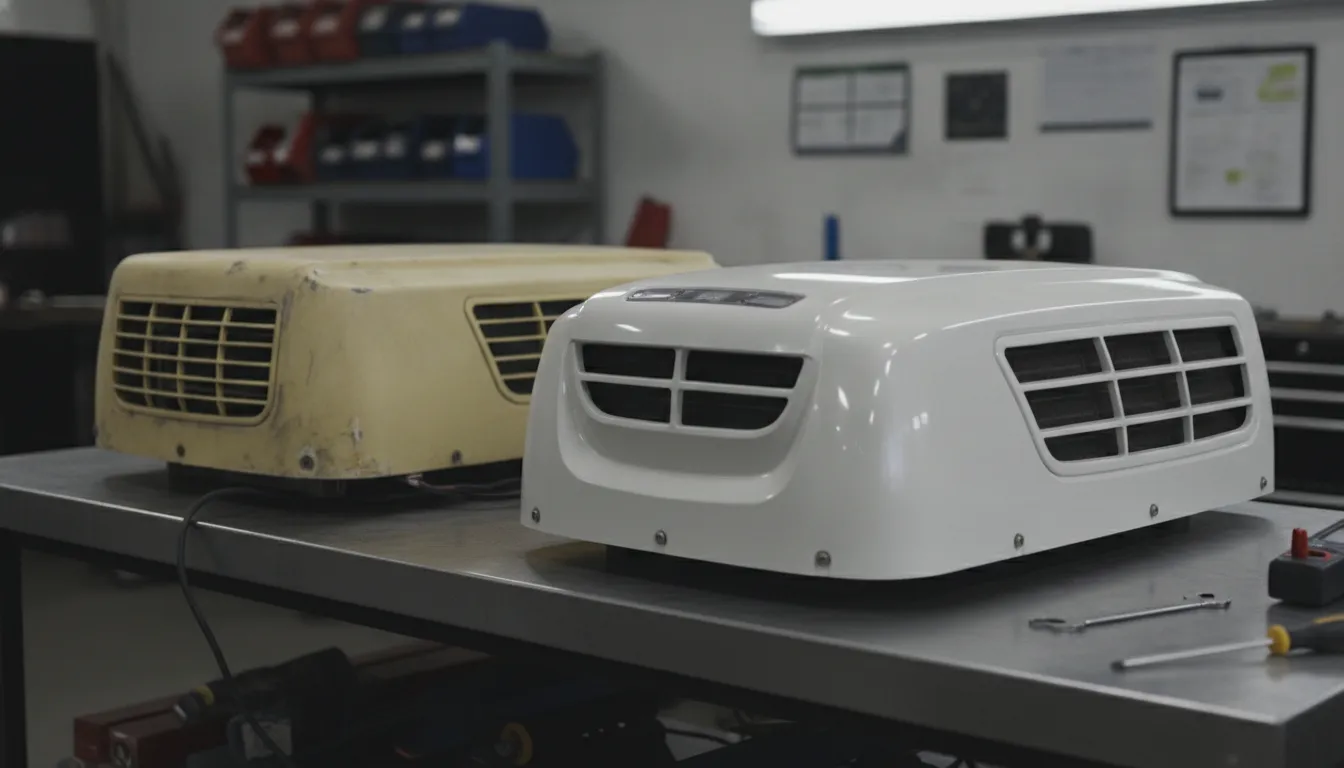
Why North Texas heat changes the calculation
High ambient temperatures force an inefficient air conditioner to run longer and harder, which can shorten its operating lifespan. A properly selected unit has enough capacity to pull the interior temperature down without remaining under extreme load throughout the afternoon. Before an RV AC system upgrade, a technician should evaluate the existing system, the RV layout, and the condition of the roof and insulation.
Humidity is another part of the sizing decision. Effective air conditioning in a humid climate requires moisture removal, not just cold air. Correct sizing supports both energy efficiency and dehumidification. An oversized unit may cool the thermostat area quickly, then shut off before it has run long enough to remove sufficient moisture. This short-cycling pattern can leave the RV feeling damp even when the temperature appears acceptable. An undersized unit may run continuously and still fail to maintain a comfortable interior.
Balancing capacity, efficiency, and electrical demand
A 15,000 BTU unit may be appropriate for a larger or poorly insulated RV, while a 13,500 BTU model can be the better match for a smaller, well-insulated floor plan. The decision should also account for startup requirements and the condition of the RV's electrical supply. A higher-capacity unit that exceeds the available system capacity is not a practical upgrade.
Newer high-efficiency models can reduce overall power consumption, which helps preserve battery life during boondocking or solar-supported camping. That benefit is strongest when the unit is correctly sized and airflow is not restricted. For a North Texas RV air conditioner upgrade, professional load assessment helps balance cooling performance, humidity control, equipment life, and power use instead of relying on BTU rating alone.
Make sure your new RV AC is sized correctly for North Texas summers. Schedule a consultation with Patriots RV Services at (940) 488-5047 to discuss BTU sizing and your cooling needs.
What to Expect During an RV AC Installation
A professional installation is more than removing one rooftop unit and setting another in its place. The technician must confirm that the new equipment fits the RV, works with its electrical infrastructure, and is protected from roof leaks and moisture intrusion.
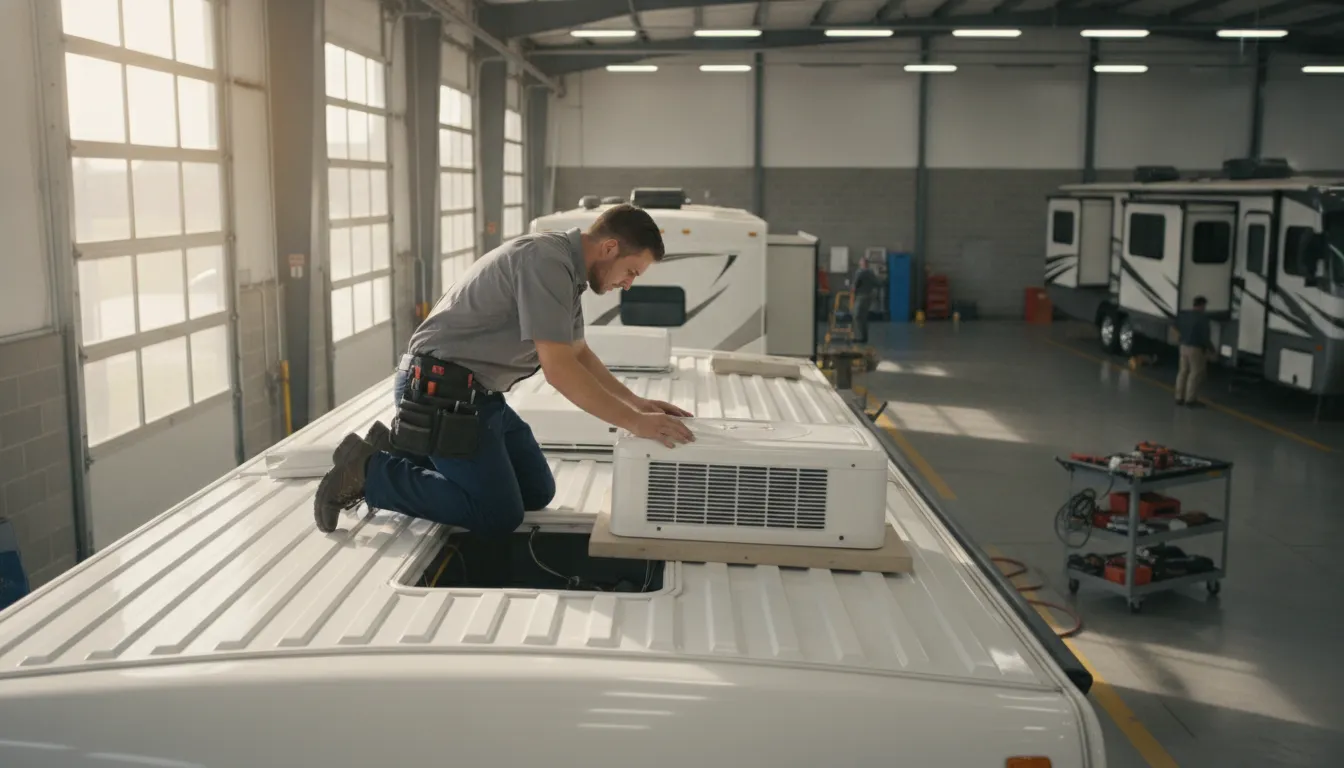
- Assess the existing AC and electrical system. The process begins with an inspection of the current air conditioner, thermostat, wiring, breaker, and related components. The technician evaluates whether the RV's electrical system can support the starting load of the replacement unit. This is especially important when installing a higher-capacity model, because an existing circuit may not be adequate for its startup requirements.
- Verify the supply lines and connections. Electrical supply lines must be properly sized, secure, and in good condition. Worn wiring, loose connections, or damaged insulation can limit AC performance and create avoidable electrical risk. The technician verifies the incoming power path, grounding, controls, and connections before the new unit is placed into service.
- Inspect the roof opening and surrounding membrane. Because the AC sits in a roof opening, the membrane, sealants, and surrounding structure should be checked during replacement. Deteriorated materials can compromise the installation even when the new unit is working correctly. If damage is found, RV roof repair may be needed before installation is completed.
- Install the correct gasket and seal. A properly fitted gasket creates the weather-resistant seal between the rooftop unit and the RV. Professional installation helps prevent moisture from entering the ceiling assembly, where it can cause staining, deterioration, or hidden structural damage. The seal should be compressed evenly without excessive tightening that could distort the roof or gasket.
- Check insulation and add surge protection. Insulation around the roof and windows affects how hard the new AC must work. Pairing an efficient unit with adequate insulation helps reduce unnecessary cooling load. A surge protector is also recommended to protect sensitive AC controls from voltage events when the RV is connected to campground or generator power.
- Test operation and complete the handoff. After installation, the technician checks airflow, thermostat response, electrical draw, drainage, sealing, and operating performance. Patriots RV Services handles the full process, from system assessment through final testing, so the upgrade is matched to the RV rather than treated as a one-size-fits-all replacement.
How Does an RV AC Upgrade Improve Your Camping Experience?
Upgrading your RV air conditioner does more than lower the interior temperature. A modern system can change how you use your RV during hot weather and how much energy you consume while doing it.
- More consistent cooling throughout the RV. Newer units with improved fan and duct designs distribute air more evenly, reducing hot spots in sleeping areas or the rear of the coach.
- Lower generator run time. More efficient AC units cool the space faster and cycle less frequently, which means the generator runs fewer hours per day and uses less fuel.
- Quieter operation inside and outside. Advances in compressor and blower technology make modern AC units noticeably quieter, which improves conversations, sleep quality, and campground relationships.
- Better compatibility with solar and battery systems. Inverter-driven and low-amperage AC units can run on smaller electrical systems, making boondocking with air conditioning more practical for off-grid RVers.
A properly executed upgrade also protects your RV from moisture damage related to aging roof seals and worn gaskets, which extends the life of the interior ceiling assembly.
Pairing Your AC Upgrade with Other RV System Improvements
A cooling replacement delivers more value when it is evaluated as part of the RV's complete utility system. A high-efficiency air conditioner can reduce electrical strain, but the benefit depends on the condition and capacity of the battery bank, inverter, wiring, roof assembly, and insulation. Reviewing these systems together helps prevent one upgraded component from being limited by an older supporting system.
Match cooling efficiency to available electrical capacity
Efficient cooling reduces the demand placed on batteries, inverters, generators, and supply lines. That lower load can improve overall electrical performance and reduce excessive cycling during hot weather. Before installation, technicians should verify the AC starting load, available shore power, battery capacity, inverter output, and condition of the electrical supply lines. This is especially important for RV owners who spend time away from campground hookups.
Pairing the new unit with RV solar and off-grid upgrades can expand usable energy capacity and make higher-efficiency cooling practical for longer periods. Solar generation, lithium battery storage, and properly sized power electronics must be designed as a system. The goal is not simply to add more equipment, but to provide stable power for the cooling demand and the other appliances operating at the same time.
Reduce heat gain through the roof
An efficient AC still has to overcome heat entering through an aging or poorly insulated roof. Proper insulation helps the unit reach the thermostat setting without running continuously. During an AC replacement, inspect the roof membrane, sealants, and mounting area. Needed RV roof repair should be addressed before the new unit is installed so moisture intrusion does not compromise the interior or the equipment. Insulation around the roof and windows can further improve temperature control.
Modernize the RV as one system
Coordinating cooling, electrical, roof, and maintenance work creates a more reliable upgrade than treating each repair as an isolated project. An updated AC and utility system can also improve buyer confidence and long-term resale value because modernized systems are easier to evaluate and more practical to operate. Patriots RV Services can help organize this work through comprehensive RV maintenance, with recommendations based on the RV's age, layout, power configuration, and intended use.
Frequently Asked Questions
What are the signs that my RV air conditioner needs an upgrade?
Inconsistent cooling, weak or uneven airflow, increasing electricity use, frequent generator cycling, and excessive noise can indicate that the unit is losing efficiency. If cleaning filters and coils does not restore performance, or repair costs are approaching the value of the aging unit, replacement may be the better option. North Texas heat places additional demand on inefficient systems.
What is the difference between an RV AC airflow upgrade and a full unit replacement?
An airflow upgrade improves how existing equipment distributes conditioned air. It may address blocked ducts, leaks, dirty filters, or an inefficient plenum. A full replacement removes the old cooling unit and installs a newer model, which can improve cooling capacity, noise levels, and power consumption. The right choice depends on the condition of the compressor, airflow components, electrical system, and roof seal.
Can I replace a standard 13,500 BTU RV AC with an 18,000 BTU unit?
Possibly, but the roof opening, electrical supply, starting load, duct design, and cooling requirements must be checked first. A common roof opening is 14.25 by 14.25 inches, but opening size alone does not confirm compatibility. Proper sizing also affects energy efficiency and dehumidification, which matter in North Texas humidity. A professional evaluation helps avoid installing a unit that does not match the RV's capacity or power infrastructure.
What does an RV AC soft start kit do?
A soft start kit reduces the compressor's startup demand, helping limit the initial electrical surge. This can make startup easier for a smaller generator or a limited electrical service, but it does not increase the AC unit's cooling capacity. The RV's wiring, breaker, generator, and new unit should still be evaluated together before installation.
Ready to Schedule Your RV AC Upgrade?
A professional assessment can help match the replacement unit to your RV's electrical capacity, cooling needs, and North Texas conditions. Schedule your RV AC upgrade consultation with Patriots RV Services in Denton, TX. Call (940) 488-5047 to discuss your current system and the right installation path.