
A small leak in your propane line can turn a family camping trip into a life-threatening emergency. Checking your fuel system before every drive is one of the best ways to reduce the risk of fire, gas exposure, and a canceled trip. Before your next trip, schedule a professional pre-trip RV inspection with Patriots RV Services in Denton, TX.
Many owners feel nervous about handling gas systems, but a few quick checks provide peace of mind. This guide explains what to inspect, which warning signs require immediate action, and when to call a qualified technician.
RV propane system safety checklist: the pre-trip walkaround
Before you hit the road, you must check your fuel system. A simple RV propane system safety checklist helps you find small issues before they become big risks. This check takes only a few minutes but keeps your kin safe on your next trip. Doing this check every time you leave is part of being a smart owner. Look for signs of wear on every part of the system. Propane leaks can lead to fires or carbon monoxide harm if you do not catch them early. Frequent checks ensure your general RV services and repairs stay up to date. You want to find problems while you are still at home or at the shop, not on the side of the road.
Sight checks for tanks and lines
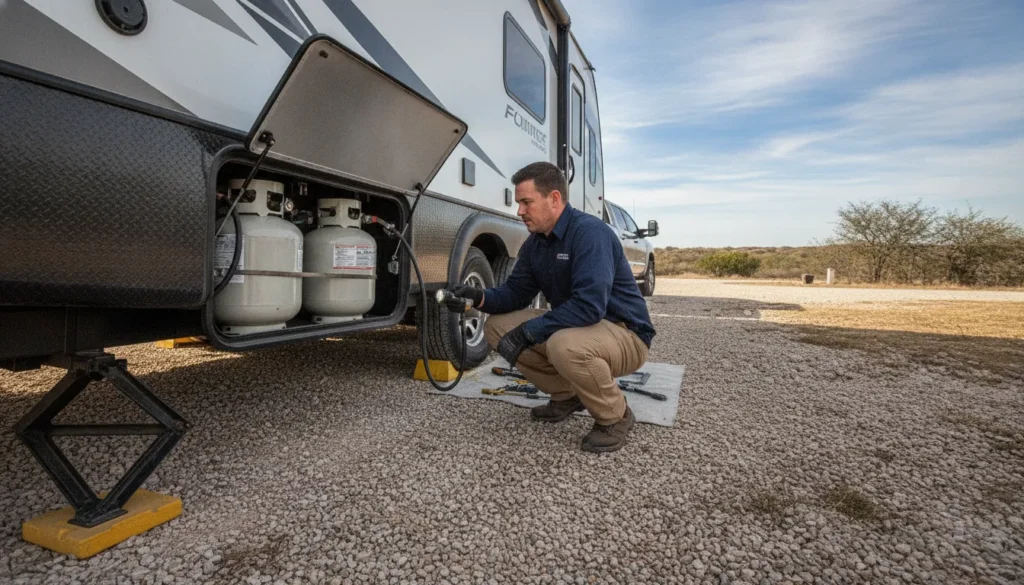
Start your walk at the gas storage spot. Most RVs have tanks set on the front or in a side space. These tanks must stay secure while the rig is moving. If a tank moves, it can pull on the gas lines and cause a leak. Inspect the parts with your eyes only. Do not touch, adjust, or test a propane part that looks worn or damaged.
- Check the tank mounts. Look for loose bolts or rusted straps without pulling on the tank. A shifting tank can damage a gas line while you drive. Have a qualified technician correct any loose, rusty, or weak parts before travel.
- Inspect the hoses. Look at the rubber lines for any cracks or dry rot. Check the regulator to make sure it is not oily or covered in dirt. If the hoses feel stiff or brittle, they need to be fixed right away to stop a burst.
- Clear the vents. Bugs like to build nests in propane vents and covers. Remove any trash that could block the flow of air. Check the exhaust ports for any black soot. Soot can mean the gas is not burning clean and might cause carbon monoxide issues.
- Perform a smell test. Use your nose to check for the scent of rotten eggs near the tanks. Propane suppliers add an odorant, commonly ethyl mercaptan, so people can recognize a possible leak. Never ignore this smell.
- Check the shutoff valve. Make sure you can reach the main gas valve quickly. You must be able to turn it off fast in a danger. If the valve is stuck or hard to turn, you should have it fixed before you use the system.
Using your nose to find leaks
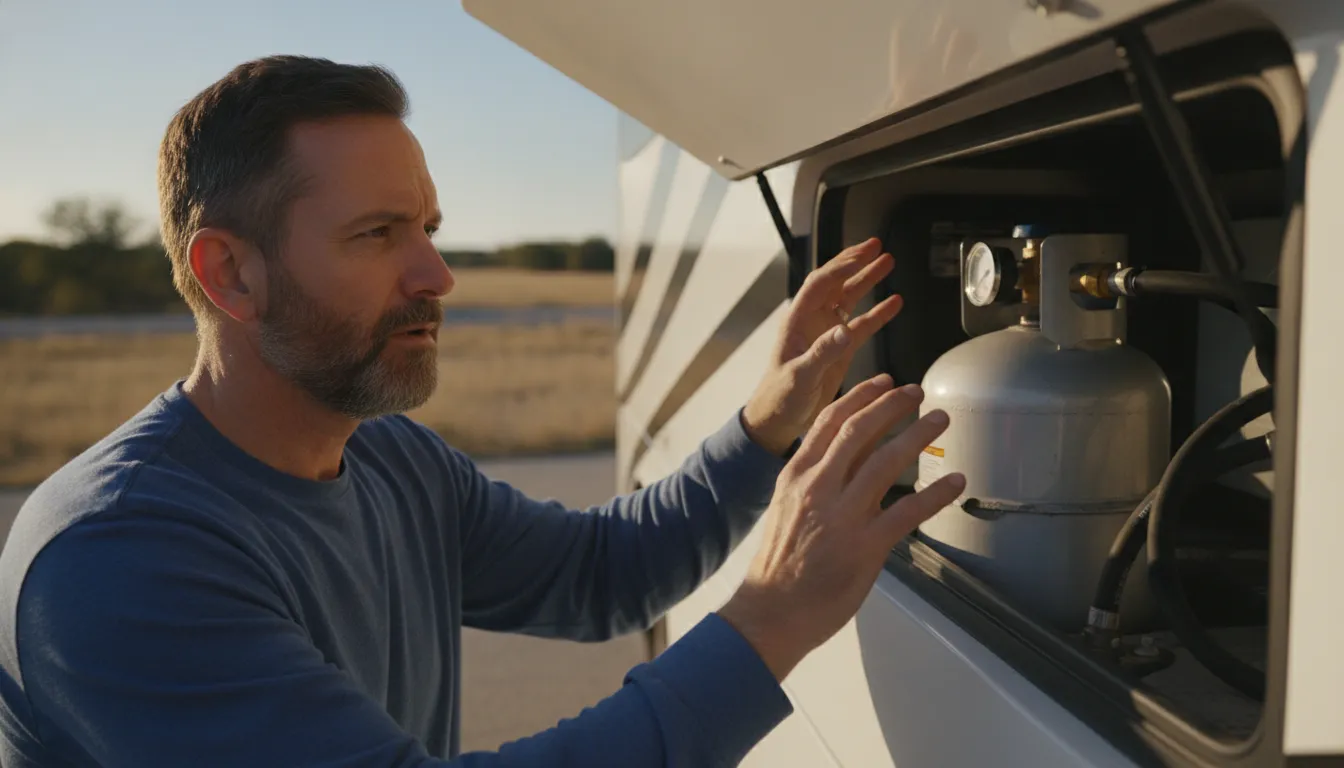
Your sense of smell is your best tool for gas safety. Propane itself has no odor, so makers add a chemical that smells like sulfur. If you catch even a faint whiff, do not light any matches or turn on any switches. A small spark can start the gas and cause a fire. Keep a clear path to your tanks so you can reach the valves at all times. Never use a flame or lighter to test for a gas leak. Do not tighten fittings, apply soap, or try to repair a suspected leak yourself. If you smell gas, hear a hiss, or see damage, move everyone away and call emergency services or a qualified RV technician from a safe location. Have a trained professional check the system at least once a year. If you smell gas, act fast. Do not operate switches, appliances, phones, or anything else that could create a spark while inside or near the RV. Get everyone away from the rig. Shut off the supply only if the valve is safely accessible and you can follow the maker’s directions. Call emergency services or a qualified RV professional from a safe location.
What are the warning signs of an RV propane leak?
Propane is a key part of the RV lifestyle. It powers your stove, furnace, and water heater. While it is useful, a leak can be a major threat to your safety. Knowing the signs of a leak is the first step in your RV propane system safety checklist. A leak can lead to fires or even carbon monoxide poisoning if not caught early. You should check your gas lines for kinks or cracks often to prevent these risks.
How to spot the smell of gas
Propane has no scent on its own. Gas firms add an odorant so people can notice a possible leak. It may smell like rotten eggs or sulfur. If you catch a whiff of this odor, act right away. Do not search for the source, touch stove controls, or check pilot lights. Move everyone away from the RV and call for help from a safe location. If you smell gas, treat it as a possible leak and do not attempt to check the stove or locate the source yourself. Do not waste time trying to find the source yourself. Small leaks can hide in tight spots or behind walls. If the odor is strong, you should not use any tools or light switches. Even a small spark can cause a blast. Instead, focus on getting everyone out of the rig and into the fresh air as fast as you can.
Using your safety alarms
Most modern rigs come with gas alarms. These tools sit near the floor because propane is heavier than air. The alarm will sound a loud beep if it finds gas. It is vital to keep these tools in good shape. You should test your alarms each month to be sure they work. Dust or low batteries can keep them from doing their job when you need them most. Carbon monoxide is another risk linked to your propane system. This gas has no smell and can be deadly. It can build up if your heater or stove does not vent well. Make sure your CO alarm is also part of your monthly checks. If any alarm goes off, treat it as a real crisis. Never ignore a beep or pull the fuse to stop the noise. Your life may depend on these small tools.
Immediate steps to stay safe
If you suspect a leak, follow a strict safety plan. Get everyone out of the RV immediately. Do not operate doors, windows, switches, appliances, or other equipment if doing so could create a spark. Once you are outside, turn off the main gas supply at the tank if you can reach it safely. Do not use your phone or a flashlight while you are still inside the rig. Wait until you are a safe distance away before you call for help. Keep an expert RV repair contact in your phone for times like these. An expert has the right tools to find the leak and fix it. They will check all your fittings and lines to make sure the rig is safe to use again. It is also a good plan to have a full check of your gas system once a year. This keeps small issues from becoming big risks while you are on the road.
How should you check propane and carbon monoxide detectors?
Checking your detectors is a key part of any RV propane system safety checklist. These tools are your first line of defense against gas leaks and toxic fumes. You must verify that both your propane gas and carbon monoxide alarms are in top shape before you start your next trip. This simple step can keep your family safe while you enjoy the open road.

Test the alarm sound
The most basic way to check your detectors is to use the test button. Most units have a button on the face that you press and hold. When you do this, the alarm should make a loud, clear sound. This shows that the parts inside are working. You should test your alarms every month to ensure they stay active. If the sound is weak or does not happen at all, the unit needs a fast fix.
Check power and lights
RV detectors often run on the coach battery or have their own small batteries. Look at the status light on the front of the unit. A steady green light usually means it has power and is sensing the air. If the light is red, orange, or flashing, there may be a fault. Carbon monoxide buildup can result from using a propane heater or lantern in a space that does not have enough fresh air. Make sure your batteries are fresh and that your 12-volt system gives steady power to the units.
Look for expiration dates
Every RV detector has a set life span. Most sensors for propane and carbon monoxide only last five to seven years. Look for a date of build or a “replace by” date on the back or side of the alarm. If the unit is past its date, it may not go off even if a leak is there. Do not rely on your sense of smell to tell if the air is safe. If you find a fault you cannot fix, you should have a trained technician inspect your RV to find the cause.
Appliance behavior that means stop and schedule service
Your RV units use gas to keep you warm, chill your food, and heat your water. Watching how these units run is a key part of your RV propane system safety checklist. When a unit starts to act odd, it often means there is a fault with the fuel mix or the burner. Do not try to take these units apart or fix gas lines yourself. Gas work needs an expert touch to keep your family safe and prevent fires while you camp.
Look for flame color changes
A healthy gas flame should be steady and blue. If you see a yellow or orange flame, the gas is not burning well. This weak flame can cause soot to build up on your stove or inside your furnace. Soot is a black dust that shows the fuel is not fully burned. This is a sign of bad burning and can lead to a fire or a risky clog. You should stop using the unit if the flame looks thin, lazy, or flickers too much.
Watch for lighting and odors
Some appliances make a brief sound when starting. A loud bang, delayed ignition, repeated failure, soot, or unstable flame means you should stop using the appliance and schedule service. If you smell propane, do not touch appliance controls or switches. Move everyone away and call for help from a safe location.
Check for vents and shutdowns
Most gas units need a clear vent to let out old air and exhaust gas. If you see dark stains near the vent or feel high heat, the vent may be blocked by a nest or dirt. A unit that shuts down over and over is also a big red flag for any owner. This often happens when a safety sensor finds a leak or a lack of fresh air. A trained pro should check your RV at least once a year to keep all systems safe. Not sure whether an appliance warning sign is safe? Call Patriots RV Services at (940) 290-7800 for a professional inspection before using it again.
| Unit Part | Normal Behavior | Stop and Service Sign |
|---|---|---|
| Flame Color | Sharp blue flame | Yellow or orange flame |
| Lighting | Quick and quiet light | Loud bang or long delay |
| Smell | No gas odor | Rotten egg or gas smell |
| Unit Status | Stays on until done | Shuts down a lot |
| Vent Area | Clean and warm | Sooty or very hot |
Storage and travel precautions for RV propane
Safe storage and travel are key parts of your RV propane system safety checklist. Propane is a strong fuel that helps you cook and stay warm, but it can be risky if you do not handle it with care. You must follow a few simple steps to keep your family and your rig safe on the road. Whether you are at a camp site or on the road, knowing how to manage your fuel is vital for a good trip.
Safe storage for propane tanks
When you store propane tanks, always keep them in an upright spot. This keeps the safety valve at the top where it can work as it should. You should never store a tank inside your RV, a van, or in a closed garage. Instead, find a place outside with plenty of air flow. If gas leaks in a tight space, it can lead to a fire or make people sick. Making sure the tank does not tip over is also a must for safe storage. Heat is a big worry for propane storage. High heat can cause the pressure inside the tank to go up. This might force gas out through the safety valve. Keep your tanks away from direct sun or hot tools. It is also vital not to fill your tanks too much. Leave enough room for the gas to expand as the air gets warm. A tank that is too full has no room for this change. This can lead to a leak or a burst line.
Propane safety during travel
It is a best practice to shut off the propane while you travel or when you are not using it. Many experts say you should turn off the main valve at the tank before you pull out of your spot. Some states have laws that make this a must. You often need to do this in tunnels or on big bridges. You should also turn the gas off when you pull into a fueling station. A small spark near a pump can be a huge risk if your gas lines are open and active. Check the rules from your RV maker and the local laws where you plan to travel. Some rigs have safety valves that stop the flow of gas if a line breaks. But even with these tools, turning the gas off at the source is the safest choice for any driver. If you need to keep your fridge cold, try to use a power setting or just keep the door shut. Owners who travel without hookups may also want to explore RV solar and off-grid upgrades as part of a broader energy plan. Most fridge units will stay cold for a few hours without the gas running if you do not open them often.
Checking for leaks and damage
Before you start any long trip, take the time to look at your gas lines and tanks. Look for any kinks, rust, or signs of wear on the hoses. Do not use a flame, household tool, or DIY method to test joints and pipes. If you find a problem, do not try to fix it on your own. A leak is a major hazard that needs a pro to handle it. You should have a pro look at your rig at least once a year as part of your winter ready service or spring check. If you smell gas while traveling, stop in a safe location, move everyone away from the rig, and call emergency services or a qualified RV professional from a safe distance. Shut off the supply only if the valve is safely accessible and you can follow the manufacturer instructions. Doing these simple steps will help you enjoy your trip and keep your RV in great shape for years to come.
When should you stop troubleshooting and call a professional?
Keeping up your rig is part of owning an RV. A good RV propane system safety checklist helps you find small problems before they grow. But some repairs are too risky for a home fix. You must know when to put down your tools and call for help.
Checking for hose wear and rust
Your propane lines face a rough life on the road. You should check your supply lines often for kinks or cracks. Sunlight and heat can make rubber hoses dry and brittle over time. If you see deep cracks or fraying, do not try to patch them with tape. Damaged lines can lead to fires or carbon monoxide poisoning if they leak. Rust and corrosion are big threats to your gas system. Rust on the tank or metal parts can thin the walls of the pipes. This makes a leak much more likely. If your tank has deep pits or the regulator looks crushed, it is time for a pro. A faulty regulator can let too much pressure into your appliances. This is a major fire risk.
Dealing with alarms and suspected leaks
Working alarms are your first line of defense. You should test your smoke and CO alarms every month to keep your loved ones safe. If an alarm goes off and you cannot find the cause, do not just take out the batteries. A faulty propane appliance can leak deadly gas into your RV. This is a sign that your system needs a full check by an expert. If you smell gas, do not check the stove, pilot lights, or other possible sources yourself. Get everyone away from the rig, avoid switches or devices that could create a spark, and call for help from a safe location. Do not try to find the leak yourself if the source is not clear.
Why you need an expert for collision damage
Even a small bump can jar your gas lines loose. After any impact, arrange RV collision repair and a system safety inspection before using propane again. If your RV is in a wreck, you should have the propane system tested before you use it again. Hidden cracks in the lines or loose parts are hard to see with the naked eye. Experts use special tools to find tiny leaks that a soap test might miss. Our team at Patriots RV Services can help keep your rig safe. We serve owners in Denton and across North Texas with expert care. If you find a fault in your system, visit our RV services and repairs page to book a check. A yearly check by a trained expert is the best way to stay safe on the road.
Your final propane safety check before departure
Before you hit the road, you should go through a final RV propane system safety checklist. Pair it with a diesel chassis inspection when preparing a diesel motorhome for a longer trip. This small step helps keep your loved ones safe and prevents fires on the road. Propane is a vital fuel for many RV owners, but it needs careful use. A quick walk-through helps you stay calm during your trip.
Detector and alarm tests
Start by checking your carbon monoxide and smoke alarms. You should test your alarms every month to make sure they work. These units are your first line of defense against leaks or fires. Make sure the power cells are fresh before you leave home. If a detector beeps or fails a test, replace it right away. Propane leak detectors also need your care. These sensors sit near the floor because propane gas sinks in air. Dust or pet hair can block them, so keep the area clean. A working sensor can find a leak before you even smell it. If you do smell gas, you should air out the unit and get everyone out fast.
Visual tank and line checks
Walk around your RV and look at the propane tanks. Check the mounting brackets to make sure the tanks are tight and will not shift. Look for signs of rust or damage on the tanks themselves. You should also check propane supply lines for kinks or cracks. Damage to these lines can lead to a big leak during your drive. Test the joints with a soap and water mix or a leak device. If you see bubbles, you have a leak that needs a fix. It is best to have a pro look at any issues before you start your trip. You can book full RV services and repairs to get a full system check-up. A pro can find small leaks that are hard to see with the naked eye.
Road safety and appliance rules
The best way to stay safe is to shut off the propane while you travel or when not in use. This keeps gas from flowing if a line breaks in a crash. Make sure all stove burners are off and pilot lights are out. It is also wise to keep things that burn away from the stove area. Check that the fridge and water heater are set to their travel mode. Make sure your fire extinguisher is ready and easy to reach. You should have a dry chemical model that can stop oil or electrical fires. Keep your papers and safety books in a spot where you can find them. Following these steps helps you focus on the fun of the trip. A safe RV is a happy RV, and a final check is key.
Frequently Asked Questions
How often should an RV propane system be checked?
Experts say you should get a pro check once a year. A trained worker in Denton needs to look at the whole system for leaks, cracks, or wear. Include propane inspection in your North Texas RV winter preparation before temperatures drop. Regular checks find small issues before they get scary. Per the U.S. Fire Administration, these yearly tests keep your lines in good shape. Patriots RV Services can help keep your mission critical RV in top form.
Should RV propane be on or off while driving?
Turn off your propane tank before you start to drive. Keeping the gas on while the RV moves ups the risk of fire or blasts if you have a crash. The Texas Department of Insurance tells travelers to keep the gas shut off during the trip. You should only turn it back on once your vehicle is parked and you are ready to use it.
Can bad propane gear cause carbon monoxide in an RV?
Yes, broken propane gear can make deadly gas. This happens most often when a unit does not get enough fresh air or if it does not work right. The FEMA Fire Safety Handout says that bad gas tools are a common source of harm. You should always use working alarms and keep your vents clear to stay safe. Never use a heater in a space with no air flow.
What is the best way to check for propane leaks at home?
You can check for leaks at home by using a gas leak spray on all your fittings. If you see bubbles, you have a leak that needs a fix. You should also look at your lines for cracks or damage. Per the Texas Department of Insurance, regular checks of your tank and lines help prevent leaks. If you find a leak, turn the gas off and call an expert.
Ready to schedule an RV propane system inspection and pre-trip service?
A gas leak on the road is a major risk that can lead to fire. If you wait until you are far from home to find a leak, you might face high costs and long delays. Testing your lines now ensures your stove and heat work well for your whole family. Our crew finds the small faults you might miss so you can drive with a safe mind. We check every seal and tank to keep your rig in top shape for the road. Do not take a chance with gas when a simple check can keep your rig safe. Ready to stay safe? Call (940) 290-7800 to schedule your RV propane system inspection and pre-trip service today.