
PRVS Blog
RV Solar Installation Cost: 6 Factors to Compare
RV solar installation cost can change quickly because the quote must account for far more than panels. Your daily power goals, battery capacity, inverter needs, roof layout, existing wiring, safety equipment, and professional testing all affect the final scope. Understanding those variables helps you plan an off-grid system that works reliably without paying for equipment you do not need.
Schedule an RV solar and off-grid evaluation with Patriots RV Services.
RV solar installation cost depends on your power needs and the quality of the parts you choose. A battery-maintenance system generally needs fewer components and less integration work than a large off-grid build. Higher-demand systems may require more panels, lithium battery capacity, heavy wiring, protection equipment, and careful testing. Expert labor is also a major factor because shops must manage roof safety risks and complex electrical hookups. Costs vary widely based on your power needs, so a pro check is the first step. You must also think about the cost of an inverter if you want to run household gear like coffee makers. A good setup ensures your mission-critical tools work every time you leave the main grid behind. Expert shops provide warranties on parts and labor that DIY projects often lack.
Planning an upgrade requires a look at your current power habits and your RV's roof space. Every owner has different goals for their off-grid travel, and these choices change the final bill. Many factors play a role when you ask, What determines RV solar installation cost? The path begins with
What determines RV solar installation cost?
Every RV solar setup is unique. Because of this, the RV solar installation cost varies based on your power goals and the current state of your rig. We look at several factors to build a system that meets your "Mission Critical" needs without wasting your budget.
Your daily power needs
The biggest cost driver is how much power you plan to use. If you only want to keep your lights on, a small system may work. But if you want to run a microwave or toaster, you will likely need a pure sine wave inverter. These units often need at least 2000 watts of capacity to handle high-draw appliances safely. Your choice of battery also shifts the price, as lithium banks cost more than AGM but last much longer.
Roof space and layout
Your RV roof dictates how many panels we can fit. A complex roof with many vents or AC units makes the job harder. This is why we check roof materials and slopes before we start. The type of roof material and the layout of accessories will guide how we mount the panels. These factors ensure the system is safe and stays in place during your travels.
Electrical system upgrades
Many older RVs need new wiring or more safety parts to handle solar power. We follow safety steps to find and fix hazards in the design phase. This proactive method, often called Prevention through Design, helps keep your rig safe from electrical issues. Upgrading your current wiring or adding a new charge controller will add to the total labor and part costs. For a tailored plan, you can get a a tailored solar and lithium upgrade that fits your specific coach.
Start with your off-grid energy goals
Your energy goals establish the baseline for every RV solar quote. A weekend traveler who needs lights, fans, and device charging has a different scope than a full-time boondocker running kitchen appliances or remote-work equipment. Defining loads and off-grid duration first prevents undersizing, overspending, and avoidable rework.
Planning is the first step for any new power setup. You must know what you need before you buy gear. This helps you avoid high costs later.
At our shop near Denton, we see many owners who buy too much or too little. A clear plan keeps your build on track and within your budget. It also helps us find your total RV solar, off-grid, and boondocking upgrades needs.
Audit your daily power needs
You should start with a full list of your gear. Think about your fridge, lights, and fans. Do you use a microwave or a coffee pot? Each tool draws a set amount of juice.
Knowing this helps you size your battery bank. It also plays a big role in your final RV solar installation cost. If you skip this part, you might run out of power in the woods.
Using a safe design plan helps keep you and your rig out of harm. The CDC notes that safety methods during the design phase can stop hazards before they start.
This is why we look at your roof and wiring first. We want your system to be safe and strong. Our team in North Texas treats every job as a mission critical task.
Map out your travel habits
How do you plan to use your RV? Some people stay at parks with full hookups. Others want to live off the grid for weeks.
Your travel style changes how much solar you need. If you boondock often, you will need more panels and bigger batteries. Knowing your goals now will save you time and money on your setup.
- List every device. Write down every item that needs power. Include small things like phone chargers and large gear like the AC unit.
- Find the watt draw. Look at the tags on your gear to see how many watts they use. This number tells you how hard your system must work.
- Track your time. Guess how many hours you will run each tool per day. This helps you find your total daily amp-hour needs.
- Check your shore power. Think about how often you will plug into a wall. If you are always off-grid, you need a robust solar kit.
- Set your off-grid time. Decide how many days you want to live without a charge. This is your goal for being truly free on the road.
Once you have these facts, you can pick the right parts. You won't waste cash on things you don't need. A good plan makes the setup go fast and keeps your power steady. We help folks across Oklahoma and Arkansas get the best results for their rigs.
Talk with our Denton team about a properly sized off-grid power system.
How system components shape the quote
Panels, batteries, charge controllers, inverters, cable, fuses, breakers, and monitoring equipment work as one power system. Changing the capacity or type of one component can require changes elsewhere. A reliable quote therefore prices the complete, compatible design rather than treating each part as an isolated purchase.
The total RV solar installation cost depends on how the parts work together. Each part has an exact job in the power chain. If one part is too small, the whole system can fail to meet your needs. We look at every piece to make sure your setup is ready for the road. Our mission critical approach means we pick parts that last.
Power collection and storage
Solar panels are the first step. They catch sunlight and turn it into power. The number of panels you need depends on your roof space and daily power use. Most people start with a single panel kit to keep costs low. Panel count and mounting needs both affect the quote. If you have a big rig, you might need four or more panels to stay charged.
The battery bank is where you store that power for later use. This is often the most costly part of a a professionally planned off-grid system. You can choose AGM batteries or lithium ones. Lithium costs more upfront but lasts much longer. Battery type, safe mounting, cable size, and existing gear can all change the scope. Lithium is lighter and lets you use more of the stored energy.
Converting and managing energy
A charge controller sits between the panels and batteries. It keeps the batteries from getting too much power at once. This part is key for the health of your system. Large systems need bigger controllers to handle more flow from the sun. This adds to the gear price in your quote. We make sure the controller fits the max output of your panels.
The inverter is the next big piece of gear. It turns battery power into the type of power your wall plugs use. The correct inverter size depends on which AC loads may run at the same time and their start-up demand. Choosing the right size ensures you can run your tools without a trip to the shop for repairs.
Safety and protection gear
We use a method called Prevention Through Design to keep things safe. This means we find and stop risks during the design phase. We check your roof slope and materials before we start any work. This helps us pick the best way to mount the gear so it stays put. You can read more about solar safety design from the CDC.
We also add fuses and breakers to the system. These parts protect your RV from power fires or shorts. An expert team will also look at the strength of your roof. This is vital for a safe build that can handle the wind as you drive. These safety steps are part of the labor and overhead costs in a quality quote. We do not skip these steps because your safety is our top goal.
| Feature | Basic DC System | Full AC/DC System |
|---|---|---|
| Primary Use | Lights and fans | Microwaves and AC |
| Inverter Needed | No or small | 2000W or larger |
| Battery Type | AGM or Lead Acid | Lithium (LiFePO4) |
| Quote Effect | Fewer AC integration needs | More wiring, protection, and testing |
| Off-Grid Depth | Short trips | Long-term living |
Why installation complexity changes the scope
Installation complexity affects both labor and required materials. Crowded roofs, aging sealants, difficult cable routes, older electrical equipment, and limited battery space can add design and installation steps. A hands-on inspection identifies those conditions before work begins and makes the quote more accurate.
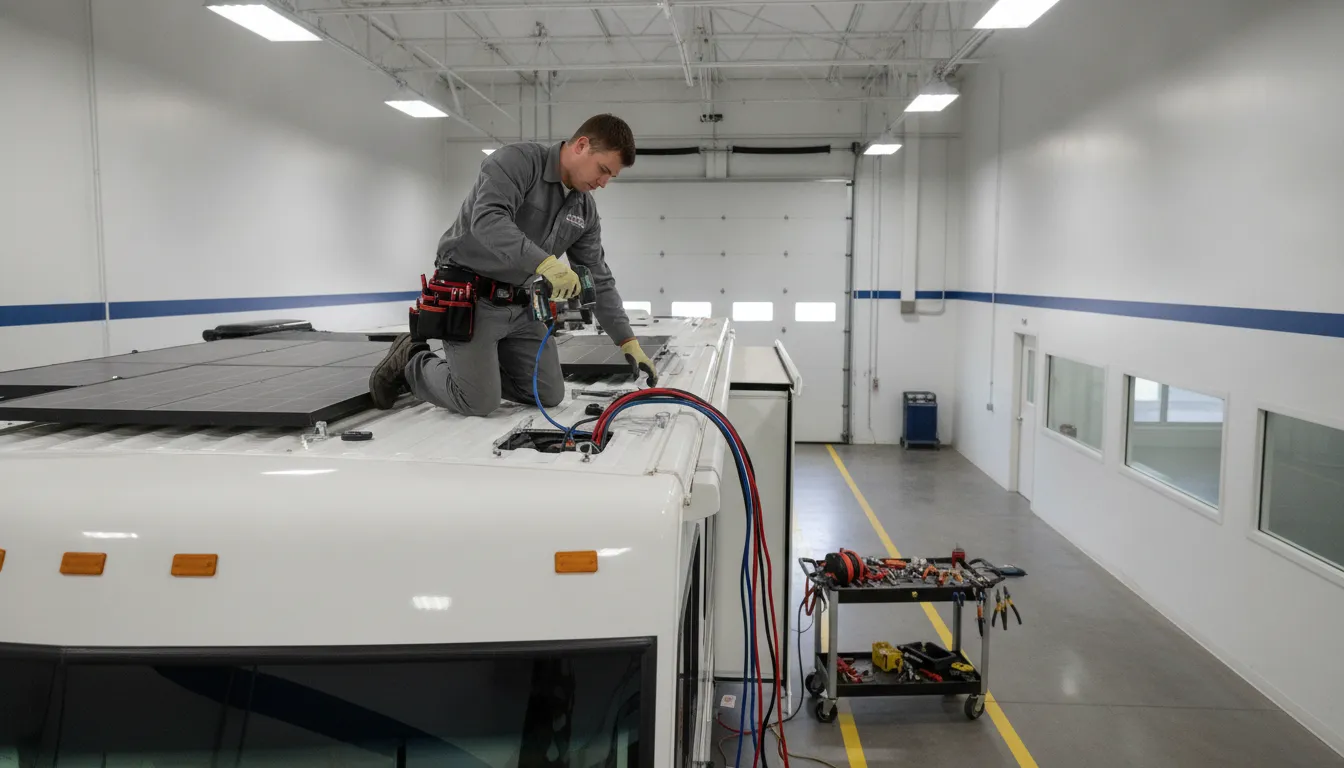
The real layout of your rig is a big part of your RV solar installation cost. Every unit is not the same. Some rigs have many hard parts that change the work. A roof with lots of open space is easy to build on. But most RVs have vents and air units that get in the way. These blocks make it hard to place the panels. They also change how we run the wires down. You can learn more about RV solar costs from our guide.
Managing tight roof space
Fitting large panels onto a small roof takes a very good plan. We must work around fans, skylights, and roof racks. This often means using small parts or custom mounts to fill the gaps. These odd roof states can lead to safety hazards during the work. For instance, steep slopes or weak spots change how a team must move. We must also look at the state of the roof skin before we start. Fixing old seals or soft spots adds more time and cost to the build.
Shade is another big block for solar power. A small vent can cast a shadow that shuts down a whole panel. We must map the roof to find the sunniest spots. This plan keeps your gear running at its best. It takes more time to get this right on a tight roof.
Complex electrical integration
Wiring a new system into an old rig is often a tough task. We must find the best path for heavy wires to reach your batteries. This phase often means drilling through walls or floors without hitting other lines. The scope grows if your current rig needs an upgrade to handle the new power load. This is common in older units that were not built for solar. A Patriots RV Services' off-grid solutions makes sure that your system works without fail. This part of the job needs high-level skills to keep every wire dry and safe.
Testing and long term safety
A good build is about more than just making power. It is about making sure the system lasts for years on the road. We test every part to ensure it can handle high heat and heavy rain. Expert teams use top-grade seals to stop leaks before they start. This level of expert work helps you avoid high fix costs later on.
Our mission-critical approach means we check every fuse and wire twice. We also run a full load test to see how the system handles your gear. This care keeps your power running well as you travel to new spots.
Request a professional RV inspection before choosing solar components.
System-sizing examples for different RV lifestyles
System-sizing examples are useful planning profiles, not one-size-fits-all packages. Weekend travelers, extended-stay campers, and full-time off-grid users place very different demands on panels, batteries, and inverters. Comparing those profiles helps clarify which equipment and installation steps may influence your quote.
Many RV owners want to know how much power they need. Every traveler is different, so solar plans must fit your exact life on the road. We look at these plans as profiles rather than set kits. Your final RV solar installation cost will depend on your roof space and power goals. A custom plan ensures you do not waste money on parts you do not use.
Starter systems for weekend travel
Some RV owners want to keep their batteries full during short trips. This setup is for people who mostly use shore power but want to camp off-grid for a night or two. A basic rooftop DC system still needs a custom quote based on the rig and its existing equipment. It often includes one 190-watt solar kit and a small bank of AGM batteries. This level of power is enough for LED lights, water pumps, and charging small gear.
While the parts cost is easy to track, the labor to install them is just as vital. A professional solar and battery installation options ensures that roof seals stay tight and safe. Expert teams check your roof layout and roof type before they put on any gear. This step is a key part of safe work and long-term use. Based on CDC safety rules, workers must check roof slopes and use the right lifting methods. This helps to prevent risks to the crew and your RV during the build.
Balanced power for extended stays
If you spend weeks away from the plug, you may need to run AC tools like a microwave or a coffee maker. These items need a pure sine wave inverter to turn battery power into home power. The inverter must be sized for the planned loads and their start-up demand. To support this load, most people choose lithium batteries. Lithium costs more at first but holds more power and lasts much longer than AGM types.
A balanced AC/DC power system has more design and installation steps than a basic charging setup. This covers the complex wiring needed to link your solar panels, inverter, and battery bank. A pro team will also give you a warranty on their work. This peace of mind is worth a lot when you are far from home in North Texas or Arkansas.
Full off-grid power for heavy users
High-demand users often live in their RVs full-time or work while they travel. They may need to run big fridges or even air units for a short time. These systems require a large solar array and a big battery bank. The goal is to match the power you get from the sun with the power you use each day. You must balance your solar input with your battery storage to stay powered up.
Large systems use many solar panels and high-power lithium batteries. These builds are complex and need a custom plan for each RV. Costs vary widely because every user has a different goal. Picking your system size now saves you from costly changes later. A full check of your current power use is the best way to start your off-grid journey. This ensures your RV is ready for any mission, no matter where the road leads.
How future expansion affects today's plan
Planning for future expansion can reduce the need to replace otherwise functional equipment later. Extra controller capacity, accessible wiring routes, appropriate cable size, serviceable roof spacing. And room for another battery may increase today's scope but make future upgrades simpler and less disruptive.
Thinking about your power needs for next year can save you a lot of money right now. Many owners start with a small setup to keep their batteries full. But they often find they want more power after a few trips. If you do not plan for this, the total RV solar installation cost can jump when you try to add more parts later. A smart plan leaves room for growth so you do not have to pay for the same labor twice.
Leaving room for more power
You should pick parts that can handle more load than you need today. Small controllers save a few dollars now. But adding a panel later might break a small unit. You would then have to buy a new one and pay for more shop time. It is much better to get a controller with room for extra power from the start. This makes your off-grid RV power services much easier to grow.
You also need to think about your inverter size. If you want a microwave later, you will need a pure sine wave inverter. It should handle at least 2,000 watts to be safe. Buying a small one now and a big one later just wastes your budget. Planning for these needs is part of a method called Prevention through Design. This approach helps find and fix risks before work starts, as noted by the Centers for Disease Control and Prevention. It keeps your system safe and ready for new parts.
Planning for easy care and new parts
The way your panels sit on your roof matters for more than just looks. You must leave space for a person to walk and work. If panels cover the whole roof, a tech cannot reach your vents or AC unit to fix them. Good design looks at the roof layout to keep the site safe for workers. This is vital for professional RV solar panel installation where safety and access are top goals.
Wiring is another part where you can save on future rework. We suggest using larger wires than your current system needs. Thick wires can carry more power without getting too hot. If you add more panels later, you will not have to rip out your old wires. This keeps your long term costs low. A clear layout also helps us find and fix small issues before they turn into big breaks.
Your battery bank needs a home that can grow too. Lithium batteries are a great choice because they hold a lot of power. But they still need proper mounting and airflow. If you leave extra room in your battery box, adding a second battery takes very little time. This design keeps your RV ready for any mission. It ensures your power system stays sturdy for the life of your rig.
What should you bring to an RV solar quote?
Bring your RV's year, make, and model; a list of daily electrical loads. Expected hours of use; desired off-grid duration; and details about existing batteries, inverter, generator, or solar equipment. Clear information helps the technician size the system, inspect compatibility, and prepare a quote around your real travel goals.
Getting a quote for your power needs is a big step. A good quote is more than just a list of parts and prices. It is a full plan for your rig's power future. To get the best results, you should come ready with some key facts. This helps our team find the right RV solar installation cost for your specific goals.
Your power goals and habits
Before you talk to an expert, think about how you use your RV. Do you plan to spend most of your time at parks with power? Or do you want a RV solar and boondocking upgrades that lets you stay in the wild for weeks? Make a list of the tools you use every day. Note things like your coffee maker, laptop, or microwave.
Your habits change how much power you need. A small system might just keep your batteries full. A larger system can run your AC or a large fridge. Knowing what you need to run helps us size your inverter and battery bank. A hands-on inspection helps turn those needs into a clear scope.
Technical details of your rig
Next, gather facts about your RV itself. We need to know the make, model, and year. It also helps to know if your rig is "solar ready." This means the factory might have put in some wiring already. Check your current battery bank too. We need to see if you have lead-acid or lithium batteries now. Knowing your roof space is also key for panel layout.
Bring photos of your roof and your main electrical panel. These pictures show us how much room we have to work with. They also show any roof vents or fans that might be in the way. This info helps us start the design process. If you have a solar controller already, let us know the brand and model. But keep in mind that a final price needs a real look at your RV in person.
Why a professional inspection is a must
A true quote needs a hands-on look at your RV. We must check your roof for any damage before we add panels. Experts must look at roof materials and slopes to find the best way to mount hardware safely. This step is vital to make sure the work lasts for years and does not cause leaks.
We also look at your current wiring. Some older rigs need new wires to handle high power loads. We check the health of your roof as well. This inspection ensures that your solar setup is safe and fits your needs. We also check for any signs of old leaks that might need care first. We never give a fixed price without a full design. This keeps you from having hidden costs later on.
Frequently Asked Questions
These answers address the most common planning questions from RV owners researching solar installation. Because each rig, travel style, and electrical system differs, a hands-on inspection remains the most reliable way to define the scope and receive an accurate quote.
How much does professional RV solar installation cost?
There is no useful fixed price without knowing the RV, desired loads, battery goals, roof layout, and existing electrical system. A professional quote should separate equipment choices from the labor needed for mounting, wiring, protection, integration, and testing. Large systems that run big tools like air units will cost much more. These need extra batteries and strong inverters.
What factors influence the total cost of installing solar on an RV?
Your power needs are the main thing that changes the final price. A simple kit to charge phones is much cheaper than a system for a microwave or a fridge. Experts from Patriots RV Services say that costs vary based on what tools you use. You must also think about your roof type and size. These facts help find how much work it takes to mount panels safely.
Can I install my own RV solar system?
You can set up your own system if you have the right skills and tools. A DIY job can save you money on work but brings risks for your roof and wires. Pro shops give you a warranty to protect your cash over time. As Go Power! Solar states, you must know how to work with wires to avoid fires. Most owners choose expert help to keep the system safe and sound.
How much do RV solar batteries and inverters cost?
Battery and inverter prices depend on the size and type of the parts. Capacity, compatibility, safe mounting, cable, protection, monitoring, and existing gear all affect the quote. These parts are a large part of your cost. Top gear helps your system last longer and work better in the Texas heat.
Plan your off-grid upgrade with Patriots RV Services
A professional RV solar quote should connect your travel goals to a safe, compatible, and serviceable system. Patriots RV Services evaluates the rig, explains the choices that affect cost. And builds a practical scope for Denton and North Texas RV owners who want dependable off-grid power.
A useful quote starts with your travel goals, your RV, and a careful look at the existing electrical system. Patriots RV Services helps owners in Denton and across North Texas plan practical solar, battery, and off-grid upgrades without relying on a one-size-fits-all package.
Call (940) 488-5047 to discuss your RV solar installation cost factors and schedule an evaluation.