

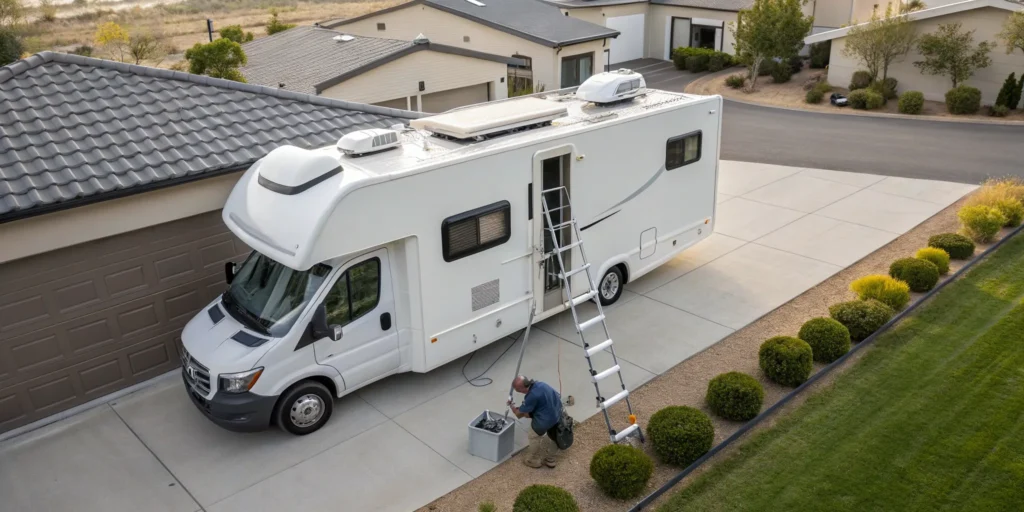
Your RV’s air conditioner is giving you signs. Is the airflow weak? Is the air blowing out warm? Do you hear strange humming or grinding noises? These aren’t random occurrences; they are clues to what’s going wrong. When you find your motorhome AC not cooling, playing detective is the first step toward a solution. This article acts as your diagnostic guide, helping you interpret the symptoms and narrow down the potential causes. We’ll explore everything from dirty coils and refrigerant issues to ductwork leaks, giving you the knowledge to understand the problem and decide on the best course of action.
Key Takeaways
- Start with simple troubleshooting: Before assuming a major problem, check the easy fixes first. Confirm your thermostat is on “Cool” and “Auto,” clean your air filters, and make sure you are connected to a sufficient power source.
- Prioritize preventative maintenance: A little upkeep goes a long way in avoiding AC failures. Simple habits like cleaning filters and coils, sealing air ducts with foil tape, and using a quality surge protector will help keep your unit running efficiently.
- Know when to call a professional: For complex issues like refrigerant leaks, strange compressor noises, or faulty electrical parts, it is safest to call an expert. A professional can accurately diagnose the problem and prevent you from voiding a warranty or causing more expensive damage.
Why Isn’t My Motorhome AC Cooling?
When the Texas sun is beating down, the last thing you want is for your motorhome’s AC to quit on you. It’s not just uncomfortable; it can completely derail a trip. If you’re cranking the AC but only getting lukewarm air, don’t panic. Often, the cause is something you can identify, and sometimes even fix, yourself. Before you start taking things apart, let’s walk through some of the most common reasons your RV air conditioner might be struggling. Understanding what’s happening inside and outside your rig is the first step to getting that cool, refreshing air flowing again.
Is Your AC Underperforming? The 20-Degree Rule
Here’s a simple diagnostic you can do right now: the 20-degree rule. A healthy RV air conditioner should cool the air by about 15 to 20 degrees Fahrenheit from the temperature it pulls in (the return air) to the air it blows out (the supply air). Grab a digital thermometer and measure the air temperature at your return vent and then at the coldest supply vent. If the difference is much less than 15 degrees, it’s a clear sign your AC unit isn’t working efficiently. This simple test helps you confirm there’s a real problem with the unit itself, not just the summer heat winning the battle.
How Outside Factors Affect Cooling Performance
Sometimes the problem isn’t just inside the AC unit. External factors can have a huge impact on its cooling power. For example, if the airflow feels weak, you might have ice buildup on the evaporator coil, which blocks air from passing through. Another common issue at campgrounds is an inadequate power supply. If your AC receives low voltage, it can struggle to run and even damage the compressor, a problem that often requires professional RV AC repair services. Remember, RVs have less insulation than a house, so dirt and debris on the coils and filters can quickly reduce performance. Regular cleaning is a key part of good RV services and repairs.
Common Reasons Your Motorhome AC Isn’t Cooling
When your RV’s air conditioner starts blowing warm air on a hot Texas day, it’s more than just an inconvenience. It’s a problem that needs a solution, fast. The good news is that many common AC issues have straightforward causes. From simple maintenance oversights to electrical problems, understanding what might be wrong is the first step toward getting that cool air flowing again. Let’s walk through the most frequent culprits behind a malfunctioning motorhome AC.
Dirty Air Filters & Clogged Coils
One of the most common and easily fixed reasons for poor cooling is a dirty air filter. Your AC unit pulls air through filters to cool it, and over time, these filters collect dust, pet hair, and other debris. When they get clogged, airflow is restricted. This not only reduces the AC’s cooling ability but can also cause the evaporator coils to freeze up, stopping the cooling process entirely. You can usually access the filters by removing the intake grates inside your RV. A quick wash with soap and water is often all it takes to restore proper airflow and get your unit working efficiently again. Regular cleaning is a key part of any RV services and repairs routine.
Low Refrigerant or Leaks
If your filters and coils are clean but the air still feels warm, you might have a refrigerant issue. Unlike the AC in your house, an RV air conditioner is a sealed system. This means it doesn’t have service ports for adding more refrigerant (or Freon). If your unit is low on refrigerant, it’s almost always because of a leak somewhere in the system. You’ll notice the compressor is running and the fan is blowing, but the air just isn’t getting cold. Finding and fixing a refrigerant leak is not a DIY job. It requires specialized tools and expertise, so it’s best to schedule a professional RV AC repair service to handle it safely and correctly.
Blocked or Leaky Ductwork
Sometimes the problem isn’t with the AC unit itself but with the ductwork that distributes the cold air throughout your motorhome. It’s surprisingly common for these ducts, which run through the ceiling, to have poor seals or develop leaks. When this happens, that precious cold air escapes into the roof cavity instead of blowing out of your vents. In some cases, gaps can also pull warm air from the “attic” space into the system, forcing your AC to work harder for less effective results. Inspecting and sealing your ductwork can make a huge difference in cooling performance and is an important part of overall RV maintenance.
Faulty Capacitor or Compressor
Electrical components can also be the source of your AC troubles. The start capacitor is a small but vital part that gives the compressor the electrical jolt it needs to start up. If you hear the fan turn on but the compressor only hums or stays silent, a bad capacitor is a likely suspect. Replacing a capacitor can be a DIY job if you’re comfortable with electrical work, but the compressor is a different story. The compressor is the heart of your AC system, and if it fails, you’re looking at a major repair. These types of electrical issues are often best left to the pros to diagnose and fix.
Not Enough Power
Your RV’s air conditioner is a power-hungry appliance that needs a steady supply of 110-120 volts to run correctly. If you’re at a crowded campground where many RVs are drawing power, the voltage can sometimes drop. When the voltage falls below about 105 volts, your AC’s compressor may struggle to start or shut down completely, leaving you with only the fan running. Using a surge protector with a voltmeter can help you monitor the power supply. For a more permanent fix, especially if you enjoy boondocking, investing in an RV solar setup can provide consistent, reliable power for your AC and other appliances, no matter where you are.
Incorrect Thermostat Settings
Before you start taking things apart, it’s always a good idea to double-check the simplest solution: the thermostat settings. It’s easy to accidentally switch the fan to “On” or “Manual” instead of “Auto.” When the fan is set to “On,” it will run continuously, even when the AC’s compressor cycles off. This means it will blow unchilled, ambient air through your vents between cooling cycles, making it feel like the AC isn’t working properly. Make sure your thermostat is set to “Cool” and the fan is on “Auto” to ensure it only runs when the unit is actively cooling the air. This simple adjustment can sometimes solve the problem instantly.
Ice Buildup on the Evaporator Coil
Does your AC start out cold but then airflow weakens and the air turns warm? You might have ice building up on the evaporator coil. This can happen for a few reasons, such as restricted airflow from a dirty filter or running the AC on its highest setting in extremely humid conditions. The ice essentially blocks the coil, preventing air from passing through to be cooled. The fix is simple: turn the AC unit off and let the fan run for a while to help the ice melt. Once it’s clear, you can turn the AC back on, but be sure to address the underlying cause, like cleaning the filter, to prevent it from happening again.
How to Troubleshoot Your Motorhome AC
When your motorhome’s AC stops blowing cold air on a hot Texas day, it’s more than an inconvenience; it’s a problem that needs a fast solution. The good news is that you don’t always have to rush to a repair shop. Many common AC issues can be diagnosed and even fixed with a few simple troubleshooting steps. Before you start sweating, let’s walk through a logical process to figure out what’s going on with your unit.
We’ll start with the easiest and most common culprits and work our way toward the more complex ones. This step-by-step approach can save you time, money, and a lot of frustration. Remember to always prioritize your safety. If you ever feel unsure or a step seems too technical, that’s the perfect time to put down the tools and call in a professional. Ready to get started? Let’s get that cool air flowing again.
Step 1: Check Your Thermostat Settings
I know it sounds almost too simple, but you’d be surprised how often the fix is right at your fingertips. Before you assume the worst, take a close look at your thermostat. Is it set to “Cool” and is the temperature set lower than the current temperature inside your RV? Sometimes a setting gets bumped accidentally. Also, check the fan setting. If the fan is set to “On” or “Manual” instead of “Auto,” it will run continuously, even when the cooling cycle is off. This can make it seem like the AC isn’t working when it’s just circulating room-temperature air.
Step 2: Measure the Temperature Difference
Here’s a pro tip for checking your AC’s health: the 20-degree rule. A properly functioning RV air conditioner should produce air that is about 18-22 degrees cooler than the air it takes in. You can test this yourself with a simple digital thermometer. First, measure the temperature of the air going into the return air vent (the intake). Then, measure the temperature of the cold air blowing out of the supply vents. If the difference is less than 18 degrees, it confirms your AC isn’t cooling as efficiently as it should be, and you can proceed with the next steps.
Step 3: Inspect & Clean the Air Filters
A clogged air filter is one of the most common reasons an AC unit underperforms. Your AC’s filters are designed to trap dust, pet hair, and other debris, but over time they can become so full that they restrict airflow. This forces your AC to work much harder to cool your space. Locate the intake grate on your interior AC unit, remove the cover, and take out the foam filter. If it’s dirty, you can usually wash it with mild soap and water. Just be sure it’s completely dry before you put it back. If the filter is old or falling apart, it’s best to replace it.
Step 4: Clean the Condenser & Evaporator Coils
If clean filters don’t solve the problem, it’s time to check the coils. Your AC has two sets of coils that are critical for heat exchange: the evaporator coils (inside) and the condenser coils (on the roof). Over time, these can get caked with dirt and grime, which acts like an insulating blanket and prevents them from cooling effectively. For this job, you’ll need to turn off all power to the unit. Carefully clean the fins with a soft brush and a can of no-rinse coil cleaner. This simple maintenance can make a huge difference in your AC’s performance and is a key part of any RV AC repair service.
Step 5: Look for Ductwork Leaks or Blockages
Is your AC running but the cool air just isn’t making it to you? The problem might be in your ductwork. The ducts that carry cold air from the AC unit to your vents can develop leaks or blockages. Cold air might be escaping into your roof cavity instead of cooling your living space. Inspect the ducts for any gaps, especially where they connect to the main unit and the vents. The factory-installed tape often degrades over time. If you find any leaks, you can easily seal them up with HVAC foil tape, ensuring all that precious cold air gets where it’s supposed to go.
Step 6: Test Your Power Supply & Voltage
Your RV’s air conditioner is a power-hungry appliance. It needs a stable and sufficient power source to run correctly. If you’re plugged into a standard 15-amp household outlet with an adapter, it might not be enough to start the AC’s compressor. Ideally, you should be connected to a 30-amp or 50-amp service. Low voltage from a crowded campground or a long extension cord can also prevent the compressor from running and can even cause damage. If you’re comfortable using a multimeter, check the voltage at your outlet. If it’s below 108 volts, the low power is likely your problem.
Step 7: Inspect the Capacitor & Compressor
If you’ve tried everything else and your AC fan runs but the air isn’t cold, you might have an issue with the capacitor or the compressor itself. The start capacitor gives the compressor the electrical jolt it needs to get going. A common sign of a failed capacitor is a humming sound from the AC unit without the compressor kicking on. While replacing a capacitor is a possible DIY job, it can be dangerous as they can hold a powerful electrical charge even when unplugged. This is often the point where it’s safest and smartest to call for professional RV AC repair to avoid injury or further damage.
RV AC Maintenance Tips to Keep Things Cool
A little bit of prevention goes a long way, especially when it comes to your RV’s air conditioner. You don’t want to be stuck sweating on a hot Texas afternoon because of a problem you could have easily avoided. Taking care of your AC isn’t complicated, and these simple maintenance habits will help ensure you have reliable, cold air all season long. Think of it as a small investment of your time to protect your comfort on the road.
Clean Filters & Coils Seasonally
One of the easiest and most effective things you can do for your AC is to keep it clean. A dirty filter is a common culprit for poor cooling because it restricts airflow, forcing your unit to work harder for less results. Most RVs have a washable foam filter behind the main intake grille. Just pop it out, wash it gently with soap and water, and let it dry completely before putting it back. While you’re at it, take a look at the coils. A gentle cleaning of the outdoor and indoor coils can make a world of difference in your AC’s performance.
Inspect & Seal Your Ductwork
Does your AC seem to run forever without actually cooling your space? You might have leaky ducts. In many RVs, the ductwork is just a channel carved into the styrofoam ceiling insulation, and the connections can be leaky from the factory. This allows precious cold air to escape into the roof cavity instead of blowing into your living area. Take some time to inspect your system. You can often improve airflow significantly by using foil tape to seal any gaps or loose connections you find inside the main AC plenum. A well-sealed system ensures all that cool air gets where it’s supposed to go.
Protect Your AC with a Surge Protector
RV park power can be unpredictable. When a campground is full on a hot day, the demand can cause voltage to drop, creating a “brownout” condition that is incredibly damaging to your AC’s compressor. To safeguard your unit, you should always use an Electrical Management System (EMS) or a high-quality surge protector. An EMS actively monitors the power and will cut the connection if the voltage is too low or too high. It’s a smart investment that can save you from a very expensive RV AC repair down the line.
Cover the Unit in the Off-Season
When you’re not using your RV, your rooftop AC unit is exposed to the elements. Sun, rain, and debris can take a toll over time. The plastic shroud can become brittle from UV exposure, and leaves or dirt can clog up the works. Using a breathable, purpose-built RV AC cover during storage is a simple way to protect your investment. It keeps the unit clean and shielded from the sun, extending its life and ensuring it’s ready to go when you are. Just remember to take the cover off before you turn the AC on for the season.
Schedule an Annual Professional Check-Up
Even with diligent DIY maintenance, it’s a great idea to have a professional look at your system once a year. A trained technician can perform checks that are beyond the scope of most owners, like testing refrigerant levels, checking electrical components for wear, and performing a deep cleaning of the coils and drain pan. This is the best way to catch small issues before they become major failures on the road. Our team can give your AC a complete inspection, ensuring it’s running at peak efficiency for the hot months ahead. A professional check-up provides peace of mind, letting you travel with confidence.
Repair or Replace? Signs You Need a New RV AC
Deciding whether to repair your struggling RV air conditioner or replace it entirely can feel like a big decision. While a simple fix can sometimes get you back on the road quickly, there are moments when investing in a new unit is the smarter, more reliable choice in the long run. If your AC is constantly letting you down, it might be time to stop patching the problem and consider a full replacement. Knowing the signs can save you from future headaches, unexpected expenses, and sweaty, uncomfortable trips. If you’re facing any of these issues, getting a professional opinion on your RV AC repair services can help you make the best choice for your rig.
It’s Old or Breaks Down Often
Like any appliance, your RV’s AC unit has a lifespan. If your unit is getting up there in years and you find yourself calling for repairs more and more often, it’s a clear sign that it’s on its last legs. Think about it: the costs of repeated service calls can quickly add up to the price of a new, reliable unit. While a newer AC might still be under warranty, making repairs an easy choice, an older unit that fails frequently is a different story. Constant breakdowns are not just expensive; they’re inconvenient and can ruin a trip. Upgrading gives you peace of mind and a dependable source of cool air.
Your Energy Use Is Climbing
Have you noticed your generator working overtime or your power bills at campgrounds getting higher? An aging or failing air conditioner can be the culprit. As internal components wear out, the unit has to work much harder to cool your RV, causing it to draw significantly more power. This inefficiency not only costs you more in energy but also puts extra strain on your RV’s entire electrical system. In some cases, low voltage at a campground can even damage your AC’s compressor. A new, energy-efficient model will cool your space more effectively while using less power.
It’s Making Weird Noises or Blowing Warm Air
Your RV’s AC should be relatively quiet, so any new, strange sounds are a major red flag. Grinding, squealing, or loud humming noises often signal serious mechanical problems. For instance, if the fan is running but you hear a hum from the compressor, it could mean a critical component like the capacitor has failed. And of course, the most obvious sign of trouble is when the unit is blowing warm or room-temperature air. While this could be a simple issue, it often points to a bigger problem, like a failed compressor or a refrigerant leak, which usually means a replacement is necessary.
You See Damage, Corrosion, or Leaks
Take a moment to visually inspect your rooftop AC unit. Do you see any cracks in the casing, significant rust, or corrosion on the coils? Physical damage can compromise the unit’s performance and efficiency. Leaks are an even more serious concern. Unlike home systems, RV air conditioners are sealed units, so if it’s low on refrigerant, it means there’s a leak that can’t be easily refilled. In this case, replacement is almost always the only solution. Water leaking from the unit is also a bad sign, as it can lead to serious water damage and the need for RV roof repair.
When to Call a Professional for RV AC Repair
While tackling a DIY project can be satisfying, some RV AC issues are best left to the experts. Knowing when to step back and call for help can save you time, prevent further damage, and ensure the job is done right. If you’ve tried the basic troubleshooting steps and your motorhome still feels like a sauna, it’s probably time to let a professional take a look. Complex electrical components and refrigerant systems require specialized tools and knowledge to handle safely. Don’t risk turning a small problem into a major, expensive repair. Trusting a certified technician gives you peace of mind that your AC will be running efficiently for your next adventure.
Signs the Job Is Too Big for DIY
It’s frustrating when your AC is running, but the air coming out is weak or warm. This could mean ice has formed on the evaporator coil, a sign of a more complex issue than just a dirty filter. Another red flag is when the coils are clean and the compressor is running, but the unit still blows warm air. This often points to a refrigerant leak, which absolutely requires professional service. These problems go beyond simple cleaning or a thermostat adjustment. If you encounter these symptoms, it’s a clear signal that the job is too big for a DIY approach and it’s time to call in a specialist.
Will a DIY Fix Void Your Warranty?
Before you pull out your toolbox, think about your warranty. If your RV or AC unit is still relatively new, it’s likely covered by a manufacturer’s warranty, which often lasts up to two years. Attempting to fix it yourself, even with the best intentions, could void that coverage entirely. This means if you can’t solve the problem, you might be on the hook for the full cost of a professional repair or even a replacement unit. Always check your warranty paperwork first. If you’re covered, your best move is to contact an authorized repair center to handle the issue and keep your warranty intact.
What to Expect During a Professional Inspection
When you call a technician, they’ll perform a thorough diagnostic check to pinpoint the exact cause of the problem. This isn’t just a quick look; it’s a deep dive into your AC’s health. The inspection typically involves checking for low refrigerant levels, testing electrical components like the compressor and capacitor, and looking for any underlying issues that basic troubleshooting might miss. Getting reliable RV AC repair services ensures an accurate diagnosis, so you aren’t wasting money on the wrong fix. A professional can identify the root cause and recommend the most effective solution to get your AC cooling properly again.
Get Expert RV AC Repair in Denton, TX
When the Texas heat is blazing, a broken motorhome AC is more than an inconvenience; it’s a trip-ruiner. You’ve checked the filters and reset the thermostat, but the air is still blowing warm. While DIY troubleshooting is a great first step, some AC issues are best left to the pros. Attempting complex electrical work or handling refrigerant without the right training can lead to bigger, more expensive problems down the road. Don’t risk turning a small fix into a major replacement.
This is where calling in an expert makes all the difference. A professional technician has the specialized tools and knowledge to accurately diagnose the root cause, whether it’s a refrigerant leak, a faulty compressor, or a tricky electrical issue. Getting a proper diagnosis saves you time, money, and the headache of a repair that doesn’t last. For those in North Texas, our team offers reliable RV AC repair services to get your system running cold again, fast.
Choosing a local Denton, TX, repair shop means you’re getting service from technicians who understand the demands of our hot summers. At Patriots RV Services, we’re not just experts in AC systems; we’re your neighbors. As a veteran-owned business, we pride ourselves on providing honest, thorough RV services and repairs you can trust. We’ll inspect your entire system, explain the problem clearly, and get the job done right so you can get back to your adventure with confidence.
Related Articles
- Reliable RV AC Repair Services in Dallas, TX | Patriots RV Services
- RV Roof Maintenance and Repair | Patriots RV Services
- How to Repair RV Roof Leak: Quick and Easy Solutions – Patriots RV Services
- How to Repair RV Roof: A Complete Guide for RV Owners – Patriots RV Services
- How Do You Replace an RV Roof Vent? – Patriots RV Services
Frequently Asked Questions
My RV AC is blowing air, but it’s not cold. What’s the simplest thing I can check first? Before you worry about a major issue, always start with two simple checks. First, look at your thermostat. Make sure it’s set to “Cool” and the fan is on “Auto,” not “On.” If the fan is set to run continuously, it will blow room-temperature air between cooling cycles. Second, check your interior air filter. If it’s clogged with dust and debris, it can severely restrict airflow and cause the unit to freeze up. A quick cleaning is often all it takes to get the cold air flowing again.
How do I know if my AC problem is a simple fix I can do myself or if I need to call a professional? A good rule of thumb is to handle the cleaning and leave the complex components to the pros. Cleaning filters, sealing obvious ductwork gaps with foil tape, and gently cleaning coils are all great DIY tasks. However, if you suspect a refrigerant leak, hear loud humming or grinding noises, or think an electrical part like the capacitor or compressor has failed, it’s time to call for professional help. These issues require specialized tools and knowledge, and attempting a fix can be unsafe or cause more damage.
What are the most important maintenance tasks I can do to prevent my RV AC from breaking down? Consistent, simple maintenance is your best defense against a broken AC. The most important habit is to clean your interior air filters regularly, perhaps every month or two during heavy use. You should also make it a seasonal habit to inspect and clean the rooftop condenser coils to keep them free of leaves and grime. Finally, always use a high-quality surge protector or EMS to shield your AC from unpredictable campground power, which can damage sensitive electrical components.
My RV air conditioner is pretty old. Is it worth repairing, or should I just replace it? This is a common dilemma. Consider two factors: the cost of the repair and the frequency of breakdowns. If your unit is more than 10 years old and this isn’t the first time it has failed, a replacement is often the smarter long-term investment. The costs of repeated service calls can quickly add up. A new, modern unit will not only be more reliable but also more energy-efficient, saving you power and giving you peace of mind on your trips.
Could the power at my campground be the reason my AC isn’t working correctly? Absolutely. RV air conditioners need a lot of stable power to run, and campground electrical grids can sometimes be unreliable, especially when full. If the voltage drops too low (a condition called a brownout), your AC’s compressor may struggle to start or shut down completely to protect itself. This can leave you with just the fan running. Using a voltmeter or an Electrical Management System (EMS) can help you identify if low voltage is the culprit.