
PRVS Blog
RV Generator Maintenance Checklist for Texas Trips
A weak RV generator can turn a North Texas getaway into a roadside service call. Use this RV generator maintenance checklist before you leave Denton, Krum, or anywhere in the DFW area so you can catch warning signs while the coach is still parked.
Quick answer: An RV generator maintenance checklist is a pre-trip sequence for checking oil, filters, fuel lines, leaks, battery condition, electrical connections, cooling areas, exhaust, and load response. Start the generator, test it with real coach demand, record anything unusual, and schedule service before small symptoms become trip-stopping failures.
Generator issues rarely wait for a convenient moment. They usually show up when the air conditioner is running, the refrigerator needs steady power, or you are parked far from the service center you trust. A checklist gives you a repeatable process, not a guessing game.
Patriots RV Services is a veteran-owned RV repair and service center on US-380 in Krum, west of Denton. The team helps RV owners avoid months-long dealership waits with practical maintenance, diagnostics, and repair support for North Texas travel conditions.
RV generator maintenance checklist for North Texas trips
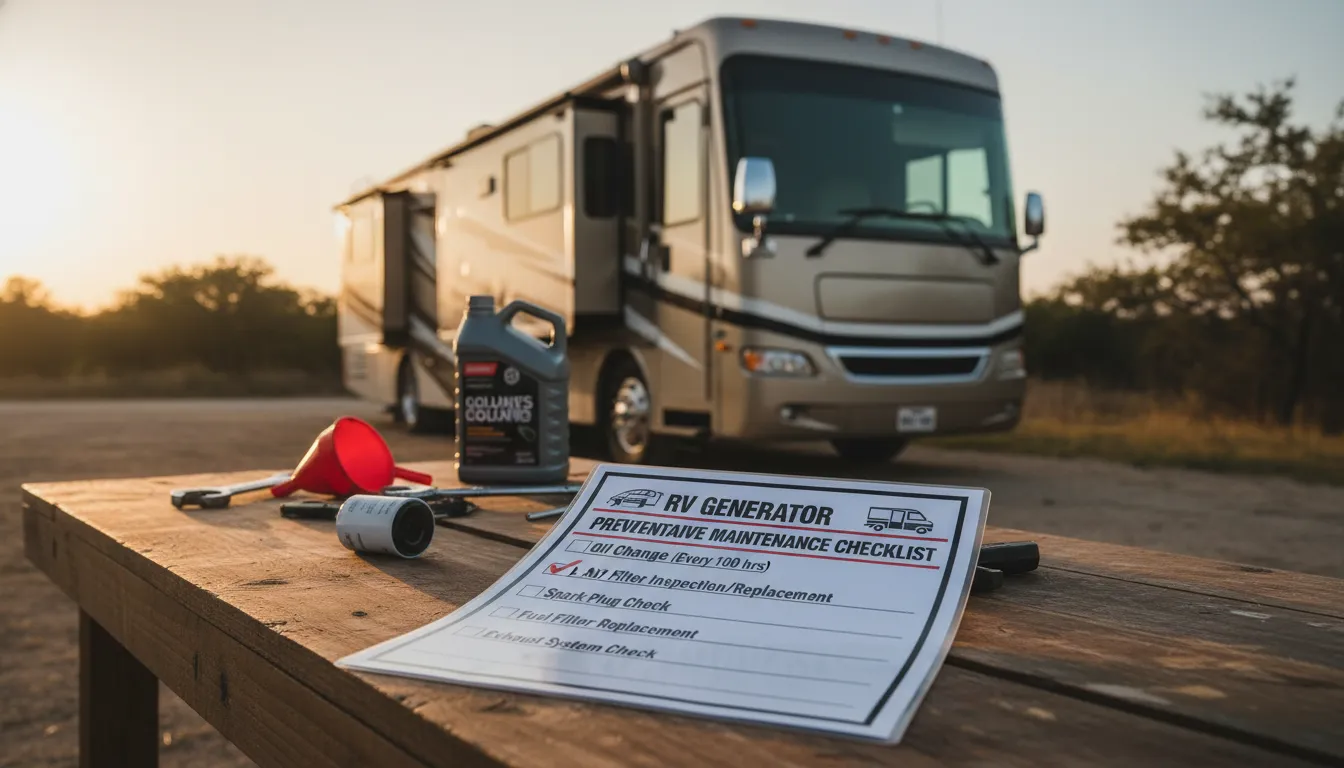
Quick answer: Before a North Texas trip, confirm the generator's service history, inspect oil and filters, check airflow and exhaust, look for leaks, verify battery and cable condition, run the unit, and test it under load. Write down the hour-meter reading and any changes in sound, smell, vibration, or power output.
This first pass should happen before the RV is packed. It is much easier to diagnose a generator at home, in storage, or at a service bay than it is to troubleshoot it on the shoulder of I-35 or at a crowded campground.
Start with the service baseline
Read the generator hour meter and compare it with the service schedule in your owner's manual. Different generator models have different intervals, so the manual is the source of truth. Record the current hours, the last oil change, the last filter replacement, and the date of the last professional inspection.
If you bought a used RV, do not assume the previous owner kept the generator current. Start a new log and treat missing history as a reason to inspect more carefully. A simple notebook or phone note is enough if it includes the date, hours, work performed, and any symptoms you noticed.
Check airflow, exhaust, and battery connections
Walk around the generator compartment before starting the unit. Look for leaves, mud dauber nests, loose insulation, or debris near air intake and exhaust areas. North Texas storage lots can be dusty, and airflow problems can make a generator run hotter than it should.
Inspect battery cables and visible electrical connections for corrosion, loose terminals, cracked insulation, or obvious damage. Do not reach into moving parts or open components you are not qualified to service. The goal is to identify visible concerns and decide whether the generator is safe to test.
Run a safe power test before departure
Start the generator in a ventilated outdoor area, then let it warm up. Listen for rough running, stumbling, or repeated shutdowns. Once it is stable, add electrical demand gradually. Many RV owners use the air conditioner, microwave, or electric water heater as part of a practical load test because those appliances show whether the generator can carry real trip demand.
If the generator bogs down, trips breakers, flashes warning lights, smells like fuel, or creates unusual exhaust, stop the test and schedule service. Patriots RV Services can inspect the generator and related coach systems through its RV service and repair team before the problem follows you onto the road.
Oil, filter, and air checks that prevent trip delays
Quick answer: Oil, oil filter, and air filter checks protect the generator engine. Verify the oil level when the unit is off and cooled as directed by the manual, inspect the oil condition, look for leaks, and replace clogged filters before a trip. Dirty oil and restricted airflow can cause heat, wear, and weak performance.
These are basic checks, but they prevent a large share of avoidable generator trouble. A generator may start in the driveway with old oil or a dirty filter, then struggle later when the weather is hot and the coach is pulling a heavier load.
Oil level and condition
Check the oil level according to the owner's manual. Use the correct dipstick procedure, wipe and recheck if needed, and only add the recommended oil type. Too little oil can cause damage. Too much oil can also create problems, so avoid topping off without checking the proper level.
Look at oil color and smell. Dark oil by itself does not always mean failure, but oil that smells burnt, looks gritty, or appears contaminated deserves attention. Look beneath the generator and around accessible panels for fresh drips or residue. A small leak at home is a warning. A leak on the road can become a shutdown.
Filter and air intake checks
Inspect the air filter if your generator design allows safe access. A filter packed with dust, insects, or oil can restrict airflow and reduce performance. Replace it if it is dirty, damaged, or past its interval. Do not clean or reuse a filter unless the manufacturer specifically allows it.
Fuel filters matter too, but they are not always a simple owner task. If your generator has trouble starting, surges under load, or shuts off after a few minutes, a restricted fuel filter or fuel delivery issue may be involved. That is the point where a technician should inspect the system.
When a technician should take over
Stop DIY troubleshooting if you smell fuel, see fluid leaks near hot components, find damaged wiring, or notice warning lights and error codes you cannot confirm in the manual. Generator systems combine fuel, exhaust, heat, and electricity. Guessing can create safety risks and more expensive repairs.
For service beyond basic owner checks, schedule professional RV generator maintenance in the Denton area. Patriots RV Services can help determine whether the issue is isolated to the generator or connected to a broader RV electrical concern.
How do you load test an RV generator before leaving Denton?
Quick answer: Load test an RV generator by starting it in a safe, ventilated area, letting it warm up, then gradually turning on appliances that represent real travel demand. Watch for bogging, surging, breaker trips, warning lights, unusual vibration, or shutdowns. Stop the test if anything feels unsafe.
A load test is one of the most useful parts of this RV generator maintenance checklist because it answers a practical question: can the generator power the coach when shore power is not available? A no-load start is helpful, but it does not prove the generator can handle the air conditioner on a hot Texas afternoon.
Before you add a load
Turn off major appliances before starting. Keep the exhaust area clear. Make sure people and pets are away from the exhaust path. Follow the generator manual for warm-up time and switch procedures. If the generator already struggles before you add demand, do not continue the test.
Once the generator settles, add one load at a time. Start with a moderate demand, then add a larger appliance if the manual and coach setup allow it. Watch how the generator responds. A healthy generator should adjust without repeated surging, harsh vibration, or sudden shutdown.
A gradual load-test sequence
- Start the generator and let it warm up according to the owner's manual.
- Turn on one moderate electrical load and listen for a stable response.
- Add a larger load, such as an air conditioner, if your system allows it.
- Let the generator run long enough to confirm steady output.
- Remove loads gradually, then allow a short cool-down period before shutdown.
The exact sequence depends on your coach and generator model. Use this as a practical structure, not as a replacement for the manual. If you are unsure whether a specific appliance is safe for the test, ask a qualified RV technician first.
Warning signs that end the test
Stop the test if the generator stalls, trips breakers, flashes warnings, smells hot, smells like fuel, or produces unusual exhaust. Also stop if the coach loses power or appliances behave erratically. A failed load test is not a reason to push harder. It is a reason to schedule service.
Fuel problems that make generators stall on the road
Quick answer: Fuel problems can cause hard starts, surging, stalling, and weak output. Check the fuel level, fuel age, visible line condition, and fuel type before travel. Gasoline, LP, and diesel generator setups have different service needs, so follow the manual and call a technician for leaks, smells, or repeated shutdowns.
Fuel trouble often appears when the generator is under load. The unit may start in storage, then stumble later when it needs to carry the air conditioner. That is why fuel checks belong in the pre-trip process, not just in annual maintenance.
Start with fuel level and condition
Some RV generators will not run once the coach fuel tank drops below a certain level. This design helps prevent the generator from emptying the driving fuel supply. Confirm that your coach has enough fuel for the generator to operate, especially before a long travel day.
If the RV has been stored, consider fuel age. Old gasoline can create starting and running problems. Diesel and LP systems have different concerns, but they still need inspection. If a generator starts and then quits repeatedly, fuel delivery should be part of the diagnosis.
Fuel filter and gasoline-unit clues
A restricted fuel filter can mimic other generator problems. The generator may start, run briefly, surge, then stall. You may also notice reduced power when the generator is asked to carry a load. If the filter is due by hours or time, replacement may be part of routine service.
Do not ignore fuel odors. Gasoline smell, LP smell, wet fittings, or staining around fuel components should stop the checklist immediately. Turn off the generator and get professional help. Fuel leaks are not a roadside experiment.
LP and diesel checks
LP generators need proper supply and safe connections. Diesel generator checks should include fuel condition, visible leaks, and the manufacturer's service intervals. Either system can develop problems that are not obvious from the outside.
If fuel symptoms repeat, schedule an RV generator service appointment and describe exactly when the issue happens. The more detail you provide, the faster a technician can narrow the cause.
DIY checks vs professional RV generator service
Quick answer: RV owners can safely handle basic visual checks, hour tracking, oil-level checks, air-filter inspection, and cautious load testing when the manual allows it. Professional service is the better choice for leaks, fuel smells, wiring damage, repeated shutdowns, fault codes, weak output, or anything involving disassembly.
A good checklist should keep you from doing too little or too much. The goal is not to turn every RV owner into a generator technician. The goal is to identify safe owner checks and know when the repair belongs in a shop.
Safe owner checks
- Record generator hours: Compare the hour meter with the service schedule.
- Inspect oil level: Follow the manual and check the generator when safe.
- Look for visible leaks: Note oil, fuel, or coolant residue.
- Check airflow areas: Remove debris around intake and exhaust zones.
- Listen during startup: Record new noises, surging, or vibration.
- Test under load: Add electrical demand gradually and stop if the generator struggles.
DIY checks and service boundaries
Do not bypass safety switches, open sealed components, modify wiring, or keep restarting a generator that shuts itself down. Those shutdowns may be protecting the equipment or the RV. Continuing to force the unit can turn a manageable problem into a larger repair.
If the issue seems connected to breakers, transfer switches, coach wiring, or weak power inside the RV, the generator may not be the only concern. Patriots RV Services can also help diagnose RV electrical system problems that show up during generator testing.
When to schedule service
Schedule service when the generator is overdue, when the history is unknown, when a load test fails, or when you notice any fuel, exhaust, electrical, or vibration concern. It is also wise to schedule service before a long summer trip, before boondocking, or before depending on the generator for medical equipment or pet comfort.
| Checklist finding | What it may mean | Best next step |
|---|---|---|
| Low or dirty oil | Overdue maintenance or leak risk | Confirm manual specs and schedule service if needed |
| Surging under load | Fuel, airflow, or control issue | Stop testing and request diagnostics |
| Breaker trips | Generator or coach electrical problem | Inspect generator and RV electrical system |
| Fuel smell | Possible leak or unsafe fuel condition | Turn unit off and call for service |
| Repeated shutdowns | Fault protection or mechanical issue | Do not force restarts; schedule service |
Warning signs your RV generator needs attention now
Quick answer: Get RV generator service now if you notice hard starting, repeated shutdowns, surging, knocking, strong vibration, breaker trips, warning lights, error codes, fuel odors, exhaust changes, oil leaks, or weak power. These symptoms should be fixed before a North Texas road trip, not monitored from a campground.
Small changes matter because generator problems can get worse under heat and load. A generator that sounds slightly different today may become unreliable when it is powering the coach for hours.
Changes during startup and operation
A generator should not fight to start, shut down again and again, or surge while appliances are running. Listen for new rattles, knocking, squealing, or a harsh vibration. Watch for breaker trips and error codes. If your model stores fault codes, write them down before clearing anything.
Weak output is also a warning. If lights flicker, appliances struggle, or the generator cannot carry loads it handled before, do not assume the problem will resolve itself. Power quality issues can affect the rest of the coach.
Leaks and smells
Fluid leaks, fuel odor, hot electrical smell, or unusual exhaust should stop the checklist. Turn the generator off and keep people clear of the area. These symptoms can involve safety risks, and they deserve professional diagnosis.
North Texas heat can intensify odors and stress components, especially after storage. If you smell something different during the first pre-trip run, treat it as useful information. Record it and share it with the service team.
Details to record before service
Write down the generator model, hour-meter reading, fuel type, recent service history, and the exact symptom. Note whether the issue happens at startup, after warm-up, under load, or during shutdown. If it is safe, take a short video of the sound or warning light.
Good notes help the technician move faster. They also reduce the chance of a no-symptom visit where the generator behaves normally in the shop but fails again on your trip.
How often should an RV generator be serviced?
Quick answer: Service timing depends on the generator model, fuel type, hours of use, and storage conditions. Many RV owners use 100 to 150 running hours or at least annual service as a planning range, but your owner's manual controls the exact interval. Track both hours and calendar time.
Generators can need service even when they are not used often. Storage does not stop fuel, seals, filters, and connections from aging. In some cases, low use creates its own problems because the generator is not exercised enough.
Oil and filter timing
Use the owner's manual to confirm oil type, filter part numbers, and interval. If you travel in high heat, run the generator under heavy air-conditioning load, or store the RV for long periods, ask a technician whether your maintenance schedule should be more conservative.
A generator with unknown history should be inspected before a major trip. Starting fresh with documented service gives you a reliable baseline for future checklists.
Checks between full services
Between full services, keep using the pre-trip checklist. Check oil level, inspect filters when accessible, look for leaks, clear debris, and run the generator under a safe load. These checks do not replace maintenance, but they help catch changes early.
For RV owners who travel from Denton to state parks, lake trips, tailgates, or longer routes through Texas and Oklahoma, generator reliability is part of trip planning. It is no different than tire pressure or roof seals.
Regular exercise during storage
Follow the manual for generator exercise guidance. The purpose is to keep the system operating and to reveal problems before the next trip. Run it safely, under appropriate load, and in a ventilated outdoor area.
Frequently Asked Questions
Quick answer: The most common RV generator maintenance questions involve service intervals, oil changes, air-filter replacement, regular exercise, and warning signs. The safest answer is to follow your owner's manual for model-specific intervals and use professional service when symptoms involve fuel, exhaust, electricity, or repeated shutdowns.
What is the recommended maintenance schedule for an RV generator?
Follow the service intervals in your generator owner's manual because models differ. Before a North Texas road trip, inspect the oil, air filter, fuel lines, battery, exhaust, and electrical connections. Track engine hours and schedule professional service when the generator is due or shows warning signs.
How often should I change the oil in my RV generator?
Many RV generator owners use 100 to 150 running hours, or at least once per year, as a practical planning range. Always confirm the exact interval in your owner's manual. Change it sooner if the oil looks dirty, smells burnt, or the generator has been working hard in Texas heat.
When should I replace the air filter in my RV generator?
Inspect the air filter before every major trip and replace it when it is dirty, damaged, oily, or restricted. Dusty North Texas storage lots and gravel campgrounds can shorten filter life. A restricted air filter can cause rough running, reduced output, or overheating.
Does my RV generator need to be run regularly?
Yes. Regular exercise helps keep fuel moving, keeps seals from drying out, and confirms the generator can carry a load. Follow the owner's manual for run time and load guidance. If the generator struggles during exercise, schedule service before depending on it during a trip.
What are the first signs that my RV generator needs professional maintenance?
Call for professional RV generator maintenance if you notice hard starts, repeated shutdowns, surging, breaker trips, fluid leaks, fuel smells, exhaust changes, warning lights, error codes, or weak power under load. These signs are safer to diagnose before your RV leaves Denton.
Ready to schedule RV generator service before your trip?
Quick answer: If your RV generator is overdue, fails a load test, smells like fuel, trips breakers, or shuts down repeatedly, schedule service before your trip. Patriots RV Services helps Denton and North Texas RV owners catch generator problems before they become roadside delays.
A generator problem can turn a planned getaway into a costly delay once your RV is packed. Starting now leaves time to find the cause, plan repairs, and confirm your generator is ready before departure.
Patriots RV Services is based at 11399 US-380 W in Krum, just west of Denton, and serves RV owners across North Texas. The team focuses on honest assessments, clear communication, and practical repairs that help owners travel with confidence.
Book RV generator service with Patriots RV Services today.
Or call (940) 488-5047 to talk through your generator warning signs before your next trip.