
PRVS Blog
RV Battery Maintenance Checklist for Reliable Travel
RV Battery Maintenance Checklist for Reliable Travel
A quiet battery compartment can hide the problem most likely to interrupt an otherwise well-planned RV trip. Loose connections, heat damage, corrosion, or a battery left partially charged may not become obvious until the lights dim, the slide will not move, or the coach will not start. This practical RV battery maintenance checklist helps owners inspect lead-acid and lithium house batteries before those warning signs become travel-day failures. Want a professional battery and charging-system inspection before your next trip? Call Patriots RV Services at (940) 488-5047 for dependable RV service in Denton, TX. The checklist focuses on safe visual checks, state-of-charge monitoring, storage, heat exposure, and signs that warrant professional testing. It does not replace the instructions from your battery, converter, inverter, charger, or RV manufacturer. Battery banks can deliver dangerous current, so stop and contact a qualified RV technician if you see damaged wiring, swelling, leaking, smoke, unusual heat, or anything you are not trained to handle.
RV battery maintenance checklist at a glance
For reliable travel, inspect the battery compartment before each trip, monitor state of charge during use, keep the area clean and dry, follow the battery maker's storage instructions, and schedule testing when performance changes. Lead-acid and lithium batteries need different care, but both depend on secure connections and a compatible charging system.
- Identify the battery type. Confirm whether the RV uses flooded lead-acid, AGM, gel, or lithium iron phosphate batteries.
- Inspect the compartment. Look for corrosion, moisture, swelling, damaged cases, loose hardware, or discolored cables.
- Monitor state of charge. Use the RV's battery monitor or manufacturer-approved equipment and learn what normal looks like for your system.
- Confirm charging behavior. Note whether the battery charges normally on shore power, while driving, and from solar when equipped.
- Plan for storage and heat. Follow the battery maker's charging and temperature guidance instead of leaving the RV unattended for months.
- Act on warning signs. Have slow charging, rapid discharge, unusual heat, odors, leaks, or repeated low-voltage events professionally diagnosed.
How often should you inspect an RV battery?
Inspect the battery compartment before every trip and after storage, then monitor performance while traveling. A quick visual check can reveal a developing problem before vibration, heat, or heavy electrical demand makes it worse. Open the compartment only when it is safe and accessible. Without touching exposed conductors, check that battery cases look normal and that cables appear secure and undamaged. The compartment should be clean, dry, and free of loose items that could contact terminals. Flooded lead-acid batteries also require periodic electrolyte checks, but only according to the manufacturer's directions and with appropriate protective equipment. After a trip, look again for changes. Fresh corrosion, a new odor, heat discoloration, or a cable that moved deserves attention. Owners who use their RV frequently should also pay attention to trends on the battery monitor. A bank that once supported an overnight stay but now reaches low charge much earlier may need testing even if it still appears clean. Inspection frequency should increase during hot North Texas weather, long storage periods, and repeated off-grid use. Heat accelerates battery aging, while storage allows parasitic electrical loads to drain a bank slowly. If you are unsure how the disconnect switch, converter, inverter, solar controller, or chassis charging circuit affects storage, Patriots RV Services can evaluate the complete system through its RV services and repairs team.
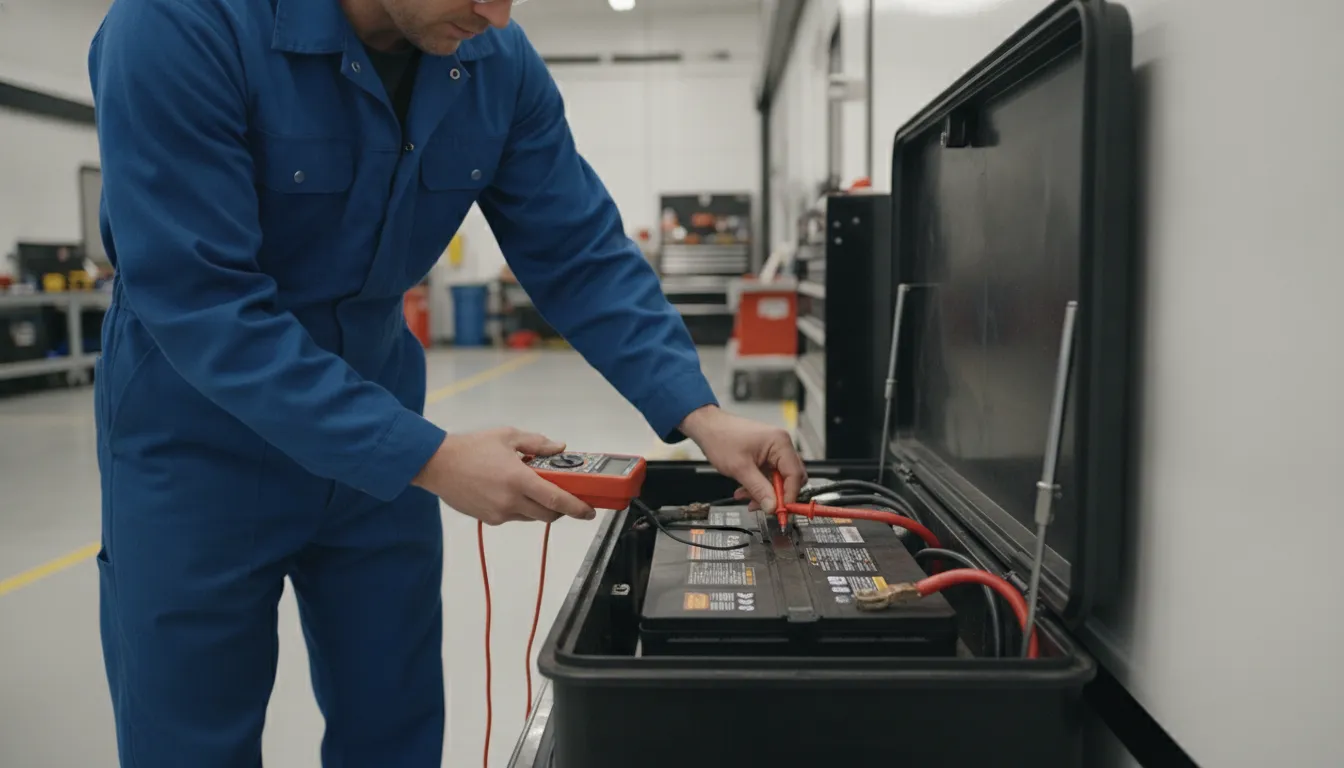
What should you check around terminals and cables?
Check for corrosion, looseness, damaged insulation, moisture, and signs of overheating. These visible clues can indicate resistance, poor contact, water intrusion, or an electrical fault that needs professional correction. Healthy cables should have intact insulation and stable routing. Terminals and lugs should not show heavy white, blue, or green buildup. Blackened material, melted insulation, or a burnt odor can indicate dangerous heat and should be treated as a stop-use warning. Do not place tools or metal objects across battery terminals, and do not attempt cable repairs unless you are trained and have followed the complete system shutdown procedure from the manufacturers. Flooded lead-acid batteries can release corrosive residue and gas during normal use. Keep sparks and flames away, ventilate as directed, and use proper eye and skin protection. AGM and lithium batteries are usually lower maintenance, but their terminals and cables still experience road vibration and thermal cycling. A battery chemistry change also requires more than swapping boxes. Charging profiles, protection devices, cable sizing, and monitoring must work together. If corrosion repeatedly returns or a connection will not remain secure, ask a technician to find the cause. Cleaning a visible symptom without correcting charging, sealing, venting, or connection problems may only postpone a failure.
Lead-acid and lithium battery care compared
Lead-acid and lithium iron phosphate batteries both benefit from clean compartments, secure connections, and correct charging. Their maintenance priorities differ, so identify the installed battery chemistry before following any charging or storage advice.
| Maintenance area | Flooded lead-acid | AGM lead-acid | Lithium iron phosphate |
|---|---|---|---|
| Routine visual check | Inspect case, terminals, venting, and electrolyte per manufacturer guidance | Inspect case, terminals, cables, and mounting | Inspect case, terminals, cables, mounting, and system alerts |
| Charging priority | Avoid prolonged undercharge and use the correct lead-acid profile | Use the correct AGM charging profile | Use lithium-compatible charging equipment and settings |
| Temperature concern | Heat speeds aging; cold reduces available capacity | Heat speeds aging; cold reduces available capacity | Charging in cold conditions may require battery-management protection |
| Storage approach | Follow maker guidance and prevent parasitic discharge | Follow maker guidance and prevent parasitic discharge | Follow maker guidance for state of charge, temperature, and disconnecting |
Flooded lead-acid batteries need the most hands-on attention. Electrolyte levels, venting, and corrosion must be managed according to the battery manufacturer's manual. AGM batteries are sealed and eliminate routine watering, but they still need correct charging and regular inspection. Lithium iron phosphate batteries can offer more usable capacity and faster charging, yet they depend on a compatible charger and a functioning battery management system. Owners considering lithium, solar, or more off-grid capacity should treat the project as a system upgrade. Patriots RV Services designs RV solar, lithium, and off-grid power systems around the coach's actual loads and charging sources rather than installing a battery in isolation. Not sure whether the battery, converter, inverter, or solar controller is causing the issue? Request an off-grid power evaluation from Patriots RV Services.
How do you monitor state of charge safely?
Use the installed battery monitor and the battery manufacturer's guidance to track state of charge. Watch the trend over time instead of relying on one reading taken while appliances or chargers are changing the load. Voltage alone can be misleading because it changes when the battery is charging or powering equipment. A properly configured shunt-based monitor can provide a clearer picture of current flow and estimated capacity, but its readings still depend on correct setup. Lithium batteries may also report information through the battery management system. If the monitor suddenly behaves differently, verify the system rather than assuming the battery alone has failed. Notice how the battery bank behaves during normal routines. Does state of charge fall much faster than it used to? Does the bank stop accepting charge early? Does one charging source work while another does not? Those observations help a technician separate a worn battery from converter, inverter, alternator, solar-controller, or wiring problems. Avoid intentionally running a battery to empty as a test. Repeated deep discharge can shorten lead-acid battery life, and low-voltage events may shut down equipment or trigger protection systems. When performance is uncertain, professional load testing and charging-system diagnosis are safer and more informative.
How do storage and North Texas heat affect RV batteries?
Heat accelerates battery aging, while unattended electrical loads can drain a stored RV. Before storage, follow the battery manufacturer's state-of-charge and temperature instructions, confirm how the disconnect system works, and arrange periodic checks. Parking shade can reduce heat exposure, but a battery compartment still needs the ventilation and clearance specified by the RV and battery makers. Never block vents or add insulation around electrical equipment without professional guidance. Extreme heat, swelling, odor, or unusual temperature during charging requires immediate attention. Storage planning also depends on what must remain powered. Detectors, control boards, monitoring devices, and other parasitic loads may continue drawing current even when major appliances are off. A battery disconnect may not isolate every circuit. Before long-term storage, learn exactly what stays energized and how the installed charger or solar system maintains the bank. Cold-weather travel creates different concerns. Lead-acid capacity drops in low temperatures, while some lithium batteries restrict charging when cold. If your travel plans extend beyond Texas, include the battery system in your seasonal preparation. Patriots RV Services offers a comprehensive RV winter readiness service for owners preparing their coaches for colder conditions.
What are common RV battery failure signs?
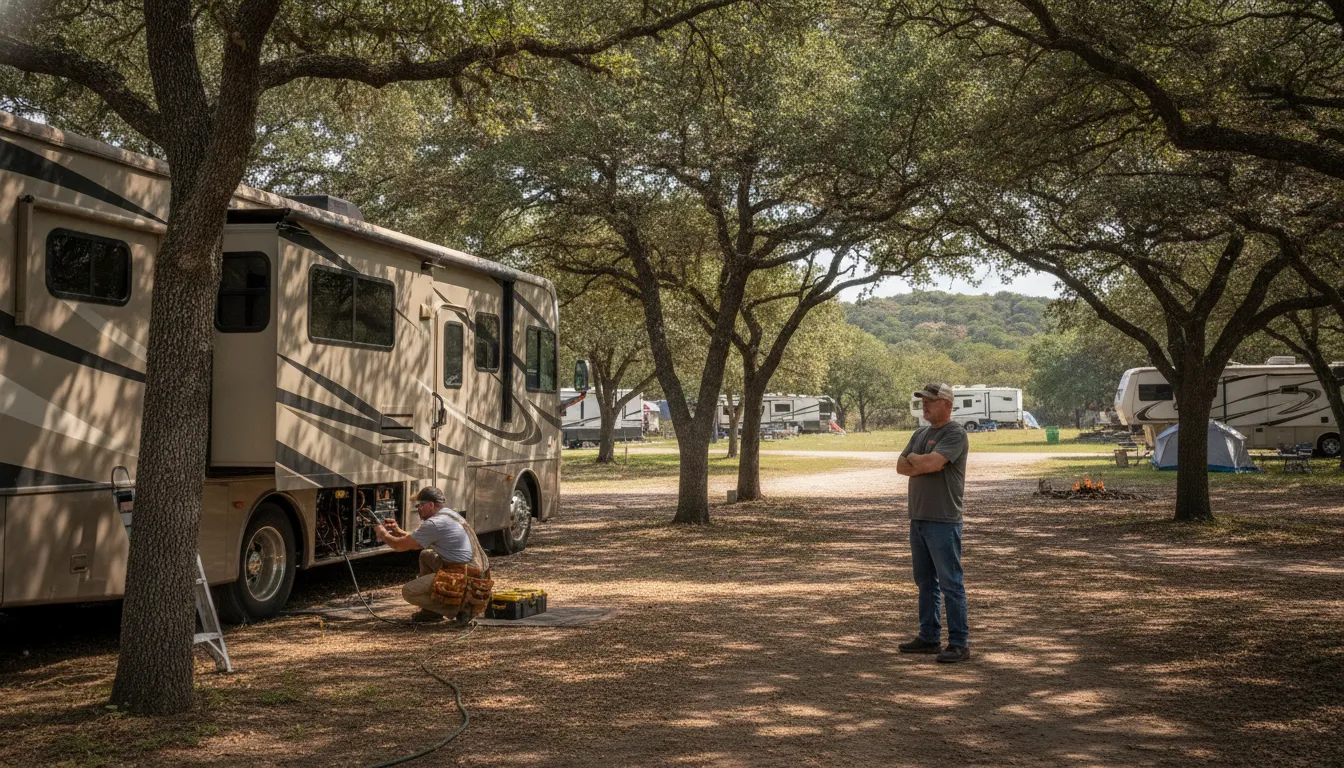
Common warning signs include rapid discharge, slow or incomplete charging, dimming lights, repeated low-voltage alerts, unusual heat, odors, swelling, leaks, and visible cable damage. One symptom can have several causes, so diagnose the whole charging system before replacing parts.
- Capacity drops sooner than expected: The battery may be aging, undercharged, or supporting a new parasitic load.
- Charging takes much longer: The battery, charger, controller, connection, or charging profile may need attention.
- Equipment resets or lights dim: Low voltage or resistance in a cable connection may be affecting delivery.
- The battery or cable feels unusually hot: Stop using the system and seek professional help.
- The case is swollen, cracked, or leaking: Keep clear, avoid sparks, and arrange qualified service.
- A warning returns after a reset: Repeated alerts require diagnosis, not repeated clearing.
A starting-battery problem may also point to chassis charging or connection issues rather than the house battery bank. For motorhome owners, Patriots RV Services provides RV diesel chassis service alongside coach-system diagnostics, making it easier to evaluate related concerns in one visit.
When should an RV battery system be professionally tested?
Schedule professional testing when performance changes, before an important trip, after extended storage, or whenever you see heat damage, swelling, leaks, corrosion that returns, damaged cables, or repeated electrical alerts. Testing should evaluate the battery bank and all relevant charging sources rather than focusing on a single component. A technician can compare real system behavior with the specifications for the installed batteries, converter, inverter-charger, solar controller, and chassis charging circuit. This system-level view matters because replacing a battery without correcting an incompatible charging profile or poor connection can damage the new battery or leave the original problem unresolved. Patriots RV Services supports routine maintenance, electrical diagnosis, and integrated upgrades for RV owners in Denton and across North Texas. The goal is not simply to restore power in the service bay. It is to help the coach deliver predictable power when the owner is traveling, camping, or preparing for storage.
Frequently asked questions about RV battery maintenance
Should I disconnect my RV battery during storage?
It depends on the RV, battery chemistry, charging equipment, and which circuits must remain powered. Follow the RV and battery manufacturers' instructions. If you are unsure what the disconnect switch isolates, have the system checked before long-term storage.
Can solar panels keep RV batteries maintained in storage?
A correctly designed and configured solar system may help maintain batteries, but results depend on available sunlight, system loads, controller settings, and battery chemistry. Confirm that the controller uses the correct profile and that ongoing loads do not exceed production.
How long do RV batteries last?
Service life varies with battery type, temperature, charging quality, depth of discharge, storage, and maintenance. A change in capacity or charging behavior is more useful than a calendar estimate when deciding whether to schedule testing.
Can I replace lead-acid RV batteries with lithium batteries?
A lithium conversion may require compatible chargers, protection, monitoring, cable sizing, and updated settings. Have the complete system evaluated before changing battery chemistry.
Prepare your RV battery system for the next trip
A consistent checklist makes battery care manageable: inspect before travel, monitor state of charge, plan for storage and heat, and respond early when performance changes. If you want a qualified second look, Patriots RV Services can inspect the battery bank and charging system, diagnose warning signs, or plan a lithium and off-grid upgrade. Call Patriots RV Services at (940) 488-5047 to schedule RV battery service in Denton, TX, and travel with greater confidence.