

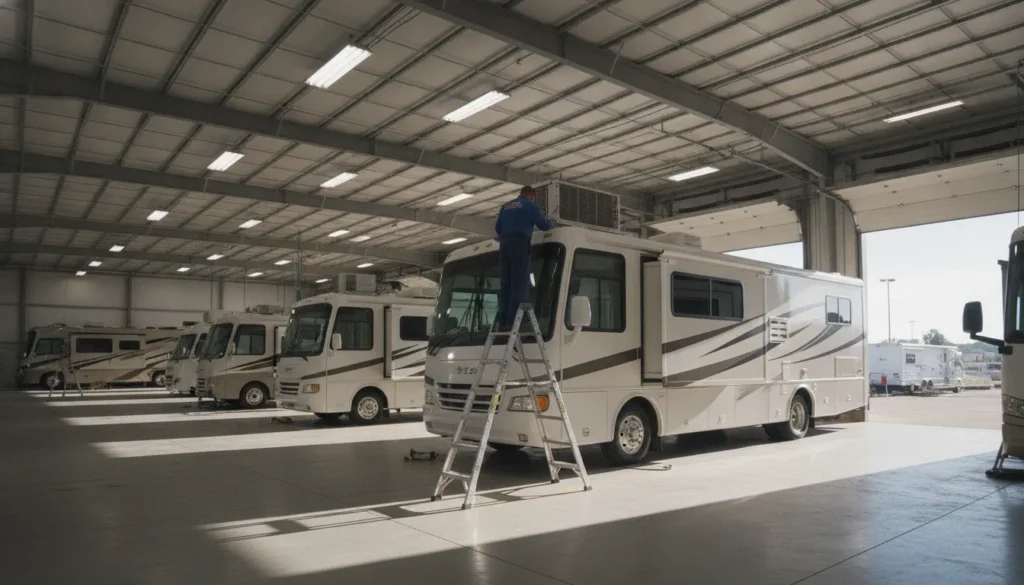
RV AC Repair vs Replacement: Make the Right Call
Sweating through a triple-digit Denton afternoon is a clear sign your RV cooling system is struggling. North Texas summers put extreme stress on aging parts. Knowing when to stop paying for repairs and start looking at new models is essential for staying cool.
The choice between RV AC repair vs replacement depends on the age of the unit and the cost of parts. It also depends on how often the system breaks. Most experts follow a simple rule. Replace the unit if the repair cost is more than half the price of a new one. RV air conditioners often last eight to twelve years according to Patriots RV Services. However, heavy use in high heat can make that time shorter. If your system is over ten years old and has a major part fail, replacement is the best path. This is true if you have a stuck compressor. A new model gives you better cooling and a fresh warranty. This keeps you cool without the stress of more repairs.
Making the right call requires looking at your specific symptoms and maintenance history. To help you weigh your options, we made a guide to RV AC repair vs replacement: The quick decision framework. Use the decision framework below to compare the unit’s age, diagnosis, repair cost, and likely reliability before choosing your next step.
RV AC repair vs replacement: The quick decision framework
RV owners in North Texas know how hot it can get. When your AC fails, you need a fix fast. Choosing between RV AC repair vs replacement is a big task. You want to save money and stay cool. A bad choice could leave you stuck in the heat. You need a clear plan to pick the right path for your rig.
Starting with an expert check
Before you buy a new unit, find out what is wrong. Some issues are easy to fix. A dirty coil or a bad part might be the cause. These items are cheap and easy to swap. But some faults are much more costly. An expert check can show if the fault is small or large. You don’t want to spend money on a fix that won’t last. High heat in North Texas puts a lot of stress on your system. This high thermal load can make your condenser work too hard. Most units in our area must work through long days of direct sun.
A tech will check the coolant levels and the motor. If the unit has a leak, a simple part swap may not work. Some sealed units are hard to fix once they lose gas. Our team looks for these signs early to save you time. We use our skills to find the root cause of the heat in your coach. You can learn more about our process on our RV AC repair services page. We aim to give you the best advice for the local climate.
Using the 50 percent rule
A good rule is to check the repair cost. If the repair costs half as much as a new unit, replace it. New RV AC units often cost between $800 and $2,500. This rule helps you see if a fix makes sense. If your old unit is over 10 years old, parts may be hard to find. A failed compressor on an old unit is a big sign to buy new. Most RV AC units last between 8 and 12 years with good care. If yours is at the end of that range, a swap is often best. You get a fresh warranty and peace of mind for your next trip.
Newer units also use less power. This is great for those who like to camp off the grid. A new unit may also be much more quiet than an old one. This makes sleeping in your RV much better during those warm nights. We can help you pick a model that fits your roof and your needs. You can also see our regular RV AC maintenance guide to help prevent future breaks. Taking care of a new unit is the best way to make it last for years. We want you to stay cool and enjoy your time on the road.
| Factor | Repair | Replace |
|---|---|---|
| Age of Unit | Under 8 years old | Over 10 years old |
| Type of Issue | Bad fan or part | Failed compressor |
| Repair Cost | Less than 50% of new | Over 50% of new |
| Owner Goal | Quick fix for now | Long term cooling |
| Parts Help | Easy to find | Hard to find or old |
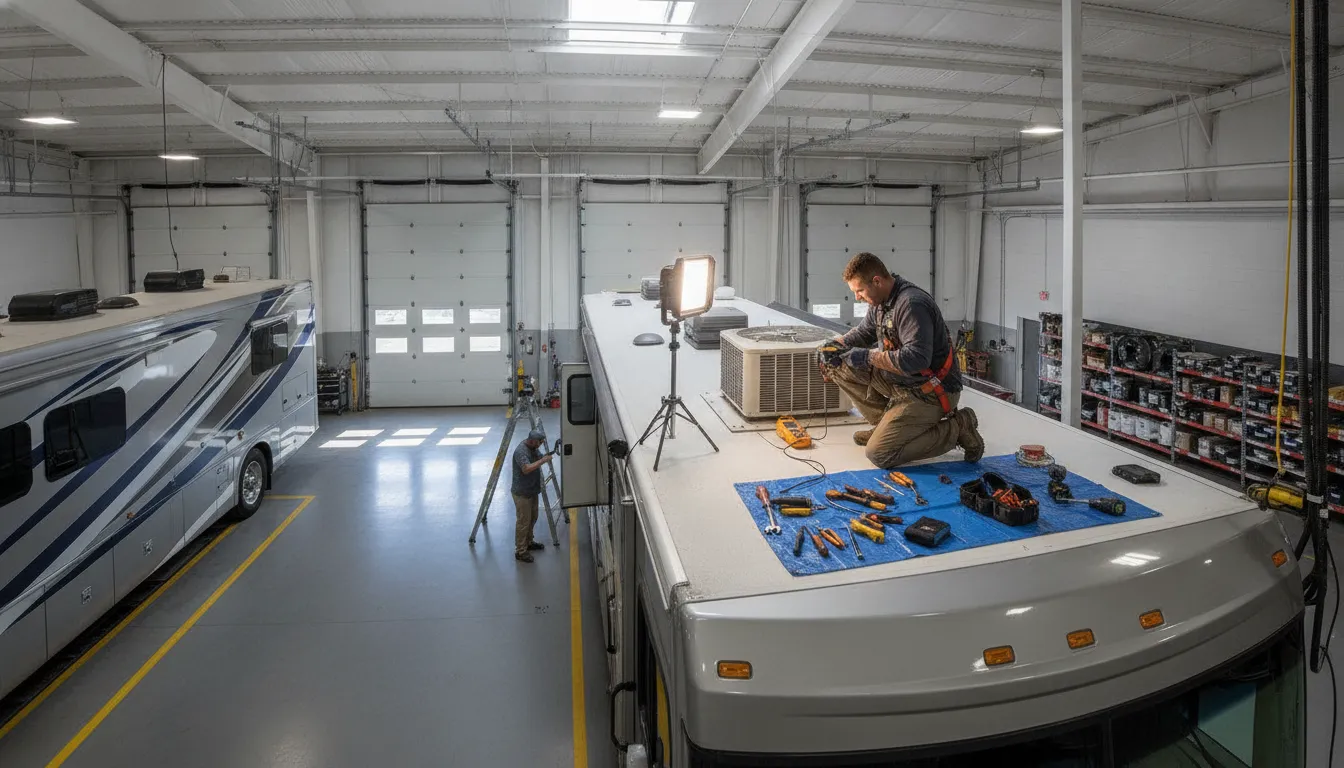
When does RV AC repair make sense?
RV AC repair makes sense when a technician finds an isolated, repairable fault on a younger unit that is otherwise in good condition. A repair is especially practical when parts are available, the estimate is well below replacement cost, and the system has not suffered repeated failures.
Choosing between a quick fix and a new unit can be tough for RV owners. In North Texas, a working AC is not just about comfort. It is about safety when the heat hits high levels. If your unit is fairly new, a repair is often the best path. You should look for clear signs that point to simple fixes rather than a dead system.
Common signs of repairable issues
Many AC problems start with parts that are easy to swap or clean. For example, if you notice weak airflow, the cause might be a clogged filter or dirty coils. Dust and grime can block the air from moving through the unit. This makes the system work harder and cools less. Regular cleaning can often restore full power to your cooling system without much cost.
Power parts like capacitors and thermostats also fail. A capacitor stores power to help the fan or compressor start up. If it fails, your unit might hum but not blow cold air. A faulty thermostat might give wrong readings or fail to start the cooling cycle at the right time. These are common repairs that do not require buying a whole new unit.
Drainage is another area where small fixes go a long way. If you see water dripping inside your RV, the drain pan or tube could be blocked. Clearing these paths can fix the leak and stop water damage to your ceiling or floors. These tasks are often part of regular RV AC maintenance that keeps your system in top shape.
The impact of heat on your system
The weather in North Texas puts a lot of stress on RV cooling systems. High outdoor heat adds to the work that condensers must do. This extra load can reduce how well the unit cools your space. Research shows that high ambient heat can lower the cooling output of air conditioners. This is why a unit that worked in spring might struggle in the peak of summer.
Because our local weather is so harsh, small issues can turn into big ones fast. A minor part breakdown in May could lead to a total system crash in July. Catching these problems early makes repair a smart choice. It saves you money and keeps you from being stuck in the heat during a trip to Denton or beyond. A simple fix today can prevent a breakdown when you need cooling the most.
Why an expert check matters
It is tempting to try and fix an AC unit yourself. But these systems are complex. They involve high voltage and precise gas levels. A wrong move can lead to harm or more damage to the unit. An expert tech has the tools to find the exact cause of the failure with military precision. They look for the root cause instead of just fixing the sign of the problem.
A safe check ensures that you do not spend money on parts you do not need. A pro will check the power draw, test the capacitors, and look for leaks in the lines. They can tell if a motor just needs a new part or if the whole unit is dead. This expert view helps you choose between RV AC repair services and a full unit swap. Trusting a vet-owned shop ensures you get an honest look at your system.
When is RV AC replacement the better call?
RV AC replacement is usually the better call when an older unit has a major component failure, recurring breakdowns, scarce parts, or a repair estimate approaching replacement cost. Replacement can also provide stronger reliability and warranty coverage for owners planning frequent summer travel.
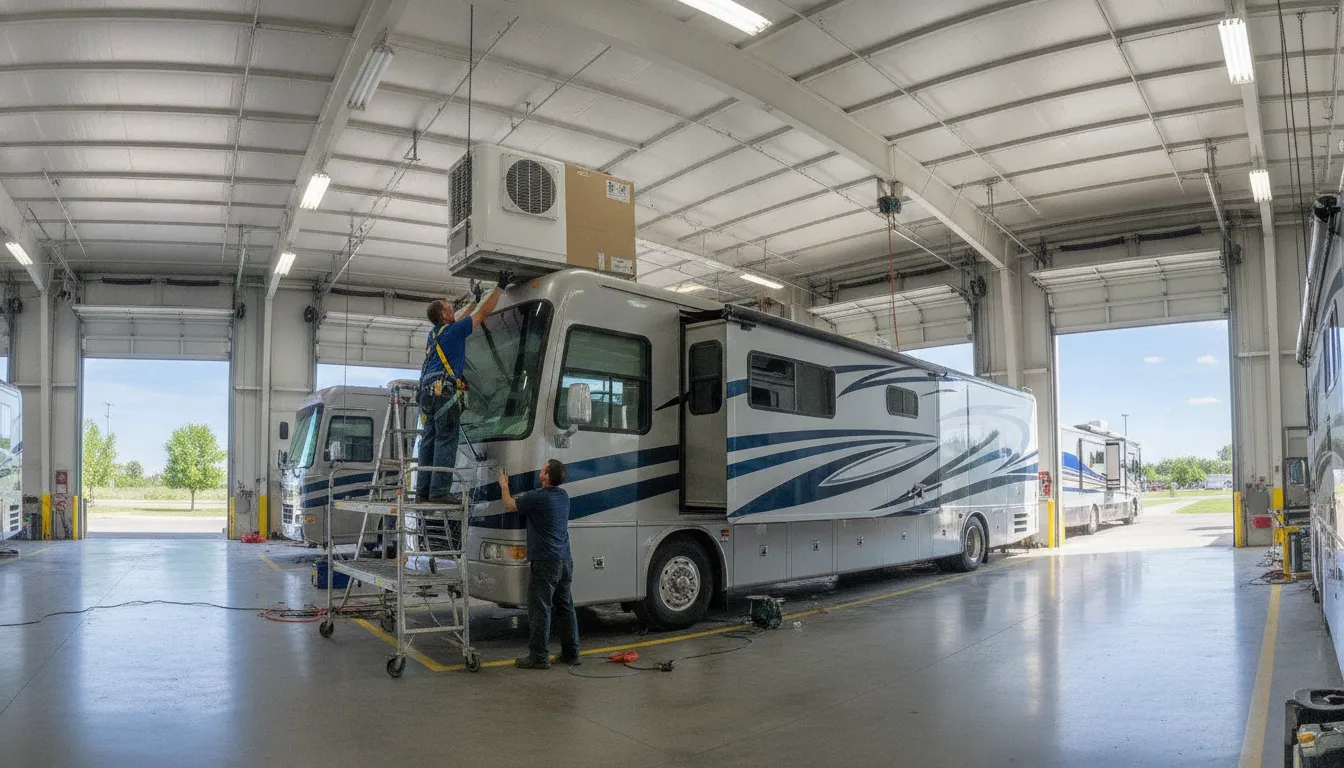
Choosing between RV AC repair vs replacement is a common task for RV owners. In North Texas, a working AC unit is a vital tool for safety and comfort. You must weigh the cost of a quick fix against the long-term value of a new system. For many owners, the choice comes down to trust in the machine and total cost. Making the right move keeps your travels stress-free.
The 50 percent rule for costs
A simple way to choose is to look at the total repair bill. Many experts use a basic rule of thumb for big gear. If the cost to fix the unit is 50 percent or more of the price for a new one, you should buy a new unit. New units for your rig often cost between $800 and $2,500.
Spending half of that on a fix for an old unit is often a poor use of funds. Using a repair vs replacement decision guide helps you see the true value. You must also think about the cost of labor and future trips that a broken unit might ruin.
Critical part failures and age
Some parts are too vital to fix once they reach a certain age. If your RV unit is more than 10 years old and the compressor fails, it is time for a change. Most RV units last between 8 and 12 years with regular RV AC maintenance.
When a main part dies near the end of that span, a repair is usually just a short-term patch. A new unit gives you a fresh start with modern parts and a new warranty. This peace of mind is worth a lot when you are far from home on a hot day.
Power in North Texas heat
Extreme heat in places like Denton adds a lot of stress to any cooling system. High outside heat can increase the thermal load on condensers, which makes the whole unit work harder. In hot and dry areas, this high load can make parts wear out much faster than in cool spots.
If your unit cannot stay cool even after an expert cleaning, it might be at the end of its life. Newer models often use less power and cool your cabin faster than older ones. This upgrade can make your stay much more pleasant during a heat wave.
Consider these signs that a full replacement is your best option:
- The unit has reached the 10 to 12 year mark.
- You have paid for the same repair multiple times.
- The sealed system or compressor has a major leak or failure.
- Replacement parts for your old model are hard to find or gone.
- You see severe rust or bent fins that block air flow.
- The unit no longer cools the RV to a safe level in high heat.
What should a technician check before you decide?
A technician should verify power supply, airflow, thermostat operation, coils, fan motors, capacitors, compressor condition, drainage, and signs of refrigerant-system trouble before recommending repair or replacement. This diagnosis separates a targeted repair from a failing system that is likely to create more expense.
A professional check is the best way to know if you should fix or swap your unit. In the North Texas heat, high ambient temperatures can make it hard for even a good system to cool well. An expert can find out if the problem is a simple part or a dead compressor. This keeps you from spending money on a fix that will not last.
Check the power and airflow
The first steps are often the most simple. A technician will check the volts at your unit to make sure it gets the power it needs. They also look at the filters and coils. Dirt in these areas can block air and make the system work too hard. This is a big part of regular RV AC maintenance that keeps things running smooth.
Inspect the main parts
Next, the pro looks at the parts that do the hard work. They check the motor and the start kit to see if they are still good. They also look at the roof seals to make sure no water or air leaks out. If the unit is old, high thermal loads can wear out these parts fast. Knowing the health of these parts helps you make a choice.
- Test the motor and fans. A technician will check if the fan motor spins freely and draws the right amount of power. They look for wear on the blades and signs of heat damage on the wires.
- Check the startup parts. They test the capacitors and the start kit to see if they help the unit kick on without too much strain. If these parts are weak, the compressor has to work much harder to start.
- Inspect the roof seals and ducting. A loose seal can let hot air from the roof into your RV or let cold air escape. They make sure the unit is tight and the duct tape inside has not peeled away.
- Evaluate the coil condition. Both the inside and outside coils need to be clean and straight. Bent fins or caked-on dust can stop the system from moving heat out of your coach.
- Measure the cold air drop. The expert will check the temperature of the air going in and the air coming out. A healthy unit should show a drop of about 15 to 20 degrees.
Ask about the repair outlook
Before you pay for a fix, ask how long it will last. If your AC is near the end of its 8 to 12 year life, a fix might only be a patch. Ask if the parts are in stock and if the work has a warranty. This helps you use a repair vs replacement decision that fits your needs and your wallet.
How does North Texas heat affect the decision?
North Texas heat increases cooling demand and can expose weaknesses in aging RV AC components, insulation, seals, and airflow. Because summer reliability matters, owners should weigh not only today’s repair estimate but also whether the unit can perform consistently during long periods of high temperatures.
Get an expert RV AC diagnosis before another North Texas heat wave strains your system.
Living in North Texas means dealing with high heat. In cities like Denton, summer days often stay above 100 degrees for weeks. This very hot weather puts a big load on your RV air conditioner. When it gets this hot, your system has to work much harder to keep you cool. This stress can help you choose between RV AC repair vs replacement. A unit that works fine in mild weather might fail when the Texas sun hits the roof. You need to know if your unit can handle the peak of the summer.
Heat stress on parts
High heat increases the load on your AC condenser. This part must shed heat to the outside air to cool the inside of your rig. When the air outside is very hot, it is harder for the condenser to do its job. High heat outside increases this heat load and lowers the cooling power. Over time, this extra work leads to faster wear on parts like the compressor. This can help you choose between a quick fix and a new unit.
In hot and dry places, AC systems must handle big heat loads. This can cause parts to wear out fast. When you face a repair bill in July, look at the age of your unit. If the unit is over ten years old, a fix may only be a patch. A new unit might handle the heat better and use less power from your park hookup. You should also look into regular RV AC maintenance to help your system last. A clean unit runs cooler and lasts longer in the sun.
The RV shell
Your RV is like a metal box in the sun. It does not have as much lining as a house. This means the sun can heat up the inside very fast. You must look at how well your RV keeps the cool air in. Things like thin walls, many windows, and doors allow heat to enter. If your RV has poor lining, even a new AC will struggle. The shell of your rig is just as important as the AC unit itself.
Consider the heat when you look at the cost of a fix. A small AC unit might not be enough for a large rig in North Texas. If your unit is too small, it will run all day and night. This causes the parts to fail sooner. You might find that a new, larger unit is a better choice for your trips. It will cool the space faster and turn off more often. This saves wear on the unit and makes your trip much better. Trusting your gear is key when you travel in the heat.
Check the seals around your roof and windows. Air leaks allow cold air to escape and hot air to come in. This makes your AC work twice as hard. You should fix these leaks before you blame the AC unit. Sun shades for windows and roof coats can also lower the heat inside. These small steps help any AC unit do a better job. If you still feel the heat, it may be time for a pro to look at your system.
How should you compare repair and replacement value?
Compare repair and replacement value by looking at the complete estimate, unit age, recent repair history, parts availability, warranty coverage, expected reliability, and how long you plan to keep the RV. The best choice is the one that controls total ownership cost without sacrificing dependable cooling.
When your RV air conditioner stops working in the North Texas heat, you have a big choice to make. When you weigh the pros and cons of RV AC repair vs replacement, you must look at more than just the first bill. You should look at the total value over the next few years. A cheap repair might fail again soon. A new unit costs more now but can save you from more heat and stress later.
The 50 percent rule for RV AC units
A simple way to start is the 50 percent rule. This rule says that if the cost to fix your unit is half as much as a new one, you should replace it. New RV AC units often cost between $800 and $2,500. If a shop asks for $600 to fix an old unit, that is close to the cost of a new one. In that case, buying a new unit is usually the better money move. It gives you a fresh start with a full warranty.
You also need to think about how well the unit cools. High outside heat makes the unit work very hard. Research shows that high heat levels can make it harder for the unit to shed heat and stay cool. If your current unit is already struggling, a repair might not bring back the power you need. A new, stronger model can handle the North Texas sun much better.
Age and unit state
The age of your unit is a key factor. Most RV air conditioners last between 8 and 12 years. If your unit is older than 10 years, parts will start to fail more often. This is truly the case in hot and dry climates where the system faces heavy loads all day. If your compressor fails on a unit that is a decade old, you should almost always replace it. The compressor is the heart of the system and costs a lot to fix.
Think about the history of your system too. Have you done regular RV AC maintenance over the years? A well-kept unit might be worth a small repair. But if the coils are dirty and the motor is loud, the whole system may be near its end. You do not want to pay for a fix today only to have a different part break next month while you are on a trip.
Warranty and long term plans
Check the warranty on any work you do. Most repairs only have a 90-day warranty on parts. A new unit often comes with two or three years of coverage. This peace of mind is worth a lot when you travel far from home. You should also think about your travel plans for the next few years. If you plan to keep your RV for a long time, a new unit is a solid buy. It increases the value of your rig and keeps you cool.
Before you say yes to a fix, ask your tech about the repair vs replacement decision for your specific rig. Ask how much longer the other parts of the AC will likely last. You want a solution that keeps you on the road without more downtime. In some cases, adding a soft starter to a newer unit can help protect it from power spikes. But for an old, worn-out unit, a full replacement is often the safest path for your wallet.
Frequently Asked Questions
How long do RV air conditioners last?
Most RV air conditioner units work well for about 8 to 12 years. This time depends on how often you use it and how well you take care of it. In hot places like North Texas, the high heat puts more stress on the system. This can make the parts wear out faster. According to Patriots RV Services, regular care can help your AC last as long as possible before you need a new one.
What is the 50% rule for RV AC repair?
The 50 percent rule is a simple way to decide between a fix and a new unit. If the cost to fix your current AC is half as much as a new one, you should replace it. This is often the best choice for older units that may break again soon. Choosing a new unit saves money over time by avoiding more repair bills. This rule helps RV owners in Denton make smart choices for their cooling systems.
Is it worth fixing an RV AC with a failed compressor?
A failed compressor is a major problem that is often not worth fixing. If your AC is more than 10 years old, a new unit is usually better than a repair. New models use less power and cool better in the Texas heat. According to research, high heat makes it harder for old systems to stay efficient. A replacement gives you a fresh start with a full warranty and better performance.
How much does it cost to replace an RV AC unit?
The total cost to replace an RV AC unit usually falls between $800 and $2,500. This price includes the unit itself and the work to install it. The final cost depends on the size of your RV and the brand you choose. Some high-power units for large rigs may cost more. While a new unit is a big spend, it stops the need for constant small repairs. This ensures your rig stays cool during summer trips.
How can I extend the life of my RV air conditioner?
You can help your AC last longer with a few simple steps. Clean your filters and coils once a year to keep air moving well. You should also consider adding a soft starter to your system. This part reduces the stress on your compressor when it starts up. This is very helpful during hot Texas summers when the AC runs often. Taking these steps keeps your system healthy and helps you avoid a costly replacement too soon.
Schedule an RV AC diagnostic service in North Texas
Ignoring RV AC issues in the North Texas heat leads to pricey emergency repairs and ruined trips while making your coach too hot to use. Taking action now ensures your system is ready for the hot summer months before the heat sets in, which saves you money and stops stress. You get a clear, expert answer on whether to fix or replace your unit based on its age so you can stay cool during trips.
Ready for a clear repair-or-replace recommendation? Call (940) 488-5047 to schedule RV AC diagnostic service with Patriots RV Services before your next North Texas trip.